

Release time:
Table of Contents:
1. Introduction: Understanding Feed Grade Chitosan Oligosaccharide
2. How Feed Grade Chitosan Oligosaccharide Works in Agriculture
3. The Advantages and Applications of Feed Grade Chitosan Oligosaccharide
4. Frequently Asked Questions about Feed Grade Chitosan Oligosaccharide
5. Conclusion
In recent years, the agriculture industry has witnessed a surge in the use of innovative products that enhance crop health and productivity. One such product that has gained significant attention is feed grade chitosan oligosaccharide. This natural compound derived from chitin, a substance found in the exoskeleton of crustaceans, has proven to be a game-changer for farmers and growers worldwide. In this article, we will delve into the various benefits and applications of feed grade chitosan oligosaccharide in agriculture.
Feed grade chitosan oligosaccharide acts as a bio-stimulant in agriculture, improving plant growth, disease resistance, and overall crop quality. When applied to crops, it stimulates the production of phytoalexins, which are natural defense compounds that help plants fight against pathogens. This leads to increased immunity and reduced susceptibility to diseases.
Furthermore, chitosan oligosaccharide enhances root development and nutrient absorption in plants. It acts as a chelating agent, binding with essential nutrients in the soil and facilitating their uptake by plants. This improves nutrient availability, resulting in healthier and more vigorous crops.
Feed grade chitosan oligosaccharide offers numerous advantages over traditional agricultural practices. Let's explore some of its key benefits and applications:
By promoting root growth, nutrient absorption, and disease resistance, feed grade chitosan oligosaccharide can significantly improve crop yield. Studies have shown that its application leads to increased harvests and improved crop quality, making it a valuable tool for farmers aiming to maximize their productivity.
One of the remarkable properties of feed grade chitosan oligosaccharide is its ability to act as a natural pesticide. When sprayed on plants, it forms a protective film that deters pests and inhibits their feeding activities. Unlike chemical pesticides, chitosan oligosaccharide is safe for the environment, beneficial insects, and humans, making it an eco-friendly pest management solution.
Plants often face various environmental stressors, including drought, heat, and salinity. Feed grade chitosan oligosaccharide helps plants withstand these challenges by activating stress-responsive genes and improving osmotic regulation. This enhances the plants' ability to cope with adverse conditions and maintain optimal growth even under stress.
Applying feed grade chitosan oligosaccharide to seeds or seedlings can have a profound impact on germination rates and seedling vigor. It promotes uniform and robust seedling emergence, ensuring a healthy start for the crop. This benefit is particularly crucial in areas with challenging soil conditions or where seedling establishment is typically difficult.
Yes, feed grade chitosan oligosaccharide is safe for plants. It is derived from natural sources and does not pose any harm to crops, beneficial insects, or the environment.
While feed grade chitosan oligosaccharide does exhibit pest control properties, it is not a direct replacement for chemical pesticides. However, it can be used as part of an integrated pest management strategy to reduce the reliance on synthetic chemicals.
Feed grade chitosan oligosaccharide can be applied through foliar spraying, seed treatment, or irrigation systems. The application method may vary depending on the crops and target pests or diseases.
Yes, feed grade chitosan oligosaccharide is compatible with organic farming practices. Its natural origin and minimal environmental impact make it an ideal choice for organic growers.
The effects of feed grade chitosan oligosaccharide may vary depending on the crop, application method, and environmental conditions. In general, noticeable improvements can be observed within a few weeks of application.
Feed grade chitosan oligosaccharide offers a multitude of benefits for agriculture, ranging from improved crop yield to sustainable pest control and stress tolerance. Its natural origin, safety, and compatibility with organic farming make it a valuable tool for farmers seeking to optimize their practices. By unlocking the power of feed grade chitosan oligosaccharide, farmers can enhance crop health, increase productivity, and contribute to a more sustainable future for agriculture.
1. Introduction: Understanding Feed Grade Chitosan Oligosaccharide
2. How Feed Grade Chitosan Oligosaccharide Works in Agriculture
3. The Advantages and Applications of Feed Grade Chitosan Oligosaccharide
4. Frequently Asked Questions about Feed Grade Chitosan Oligosaccharide
5. Conclusion
1. Introduction: Understanding Feed Grade Chitosan Oligosaccharide
In recent years, the agriculture industry has witnessed a surge in the use of innovative products that enhance crop health and productivity. One such product that has gained significant attention is feed grade chitosan oligosaccharide. This natural compound derived from chitin, a substance found in the exoskeleton of crustaceans, has proven to be a game-changer for farmers and growers worldwide. In this article, we will delve into the various benefits and applications of feed grade chitosan oligosaccharide in agriculture.
2. How Feed Grade Chitosan Oligosaccharide Works in Agriculture
Feed grade chitosan oligosaccharide acts as a bio-stimulant in agriculture, improving plant growth, disease resistance, and overall crop quality. When applied to crops, it stimulates the production of phytoalexins, which are natural defense compounds that help plants fight against pathogens. This leads to increased immunity and reduced susceptibility to diseases.
Furthermore, chitosan oligosaccharide enhances root development and nutrient absorption in plants. It acts as a chelating agent, binding with essential nutrients in the soil and facilitating their uptake by plants. This improves nutrient availability, resulting in healthier and more vigorous crops.
3. The Advantages and Applications of Feed Grade Chitosan Oligosaccharide
Feed grade chitosan oligosaccharide offers numerous advantages over traditional agricultural practices. Let's explore some of its key benefits and applications:
3.1 Enhanced Crop Yield
By promoting root growth, nutrient absorption, and disease resistance, feed grade chitosan oligosaccharide can significantly improve crop yield. Studies have shown that its application leads to increased harvests and improved crop quality, making it a valuable tool for farmers aiming to maximize their productivity.
3.2 Sustainable Pest Control
One of the remarkable properties of feed grade chitosan oligosaccharide is its ability to act as a natural pesticide. When sprayed on plants, it forms a protective film that deters pests and inhibits their feeding activities. Unlike chemical pesticides, chitosan oligosaccharide is safe for the environment, beneficial insects, and humans, making it an eco-friendly pest management solution.
3.3 Stress Tolerance
Plants often face various environmental stressors, including drought, heat, and salinity. Feed grade chitosan oligosaccharide helps plants withstand these challenges by activating stress-responsive genes and improving osmotic regulation. This enhances the plants' ability to cope with adverse conditions and maintain optimal growth even under stress.
3.4 Seed Germination and Seedling Vigor
Applying feed grade chitosan oligosaccharide to seeds or seedlings can have a profound impact on germination rates and seedling vigor. It promotes uniform and robust seedling emergence, ensuring a healthy start for the crop. This benefit is particularly crucial in areas with challenging soil conditions or where seedling establishment is typically difficult.
4. Frequently Asked Questions about Feed Grade Chitosan Oligosaccharide
4.1 Is feed grade chitosan oligosaccharide safe for plants?
Yes, feed grade chitosan oligosaccharide is safe for plants. It is derived from natural sources and does not pose any harm to crops, beneficial insects, or the environment.
4.2 Can feed grade chitosan oligosaccharide replace chemical pesticides?
While feed grade chitosan oligosaccharide does exhibit pest control properties, it is not a direct replacement for chemical pesticides. However, it can be used as part of an integrated pest management strategy to reduce the reliance on synthetic chemicals.
4.3 How should feed grade chitosan oligosaccharide be applied?
Feed grade chitosan oligosaccharide can be applied through foliar spraying, seed treatment, or irrigation systems. The application method may vary depending on the crops and target pests or diseases.
4.4 Is feed grade chitosan oligosaccharide suitable for organic farming?
Yes, feed grade chitosan oligosaccharide is compatible with organic farming practices. Its natural origin and minimal environmental impact make it an ideal choice for organic growers.
4.5 How long does it take to see the effects of feed grade chitosan oligosaccharide on crops?
The effects of feed grade chitosan oligosaccharide may vary depending on the crop, application method, and environmental conditions. In general, noticeable improvements can be observed within a few weeks of application.
5. Conclusion
Feed grade chitosan oligosaccharide offers a multitude of benefits for agriculture, ranging from improved crop yield to sustainable pest control and stress tolerance. Its natural origin, safety, and compatibility with organic farming make it a valuable tool for farmers seeking to optimize their practices. By unlocking the power of feed grade chitosan oligosaccharide, farmers can enhance crop health, increase productivity, and contribute to a more sustainable future for agriculture.
Related
CONTACT US
language
English
العربية
বাংলাদেশ
Български
Hrvatski
Česky
Dansk
Nederland
 Esperanto
Slovenski
Filipino
Suomi
Français
Maori
 Shqiptare
Georgian
 Euskara
Deutsch
Ελλάδα
ישראל
इंडिया
Magyarország
Ísland
Indonesia
Irlanda
Italia
日本語
Sovensko
Հայաստան
한국
Kyrgyz
ປະເທດລາວ
 Zulu
Zulu
Latvian
Lithuanian
Luxembourgish
 Latinus
Macedonian
Малайская
Maltese
Монгол улс
 Cymraeg
ဗမာ
 தமிழ்
தமிழ்
नेपाल
Norge
ایران
Polska
Portugal
România
Российская
Србија
 Slovak
Србија
 Slovak
Bosanski
Slovenian
Беларус
España
Sverige
Точик
ประเทศไทย
Türk
Azərbaycan
Uzbek
 Afrikaans
Việt Nam
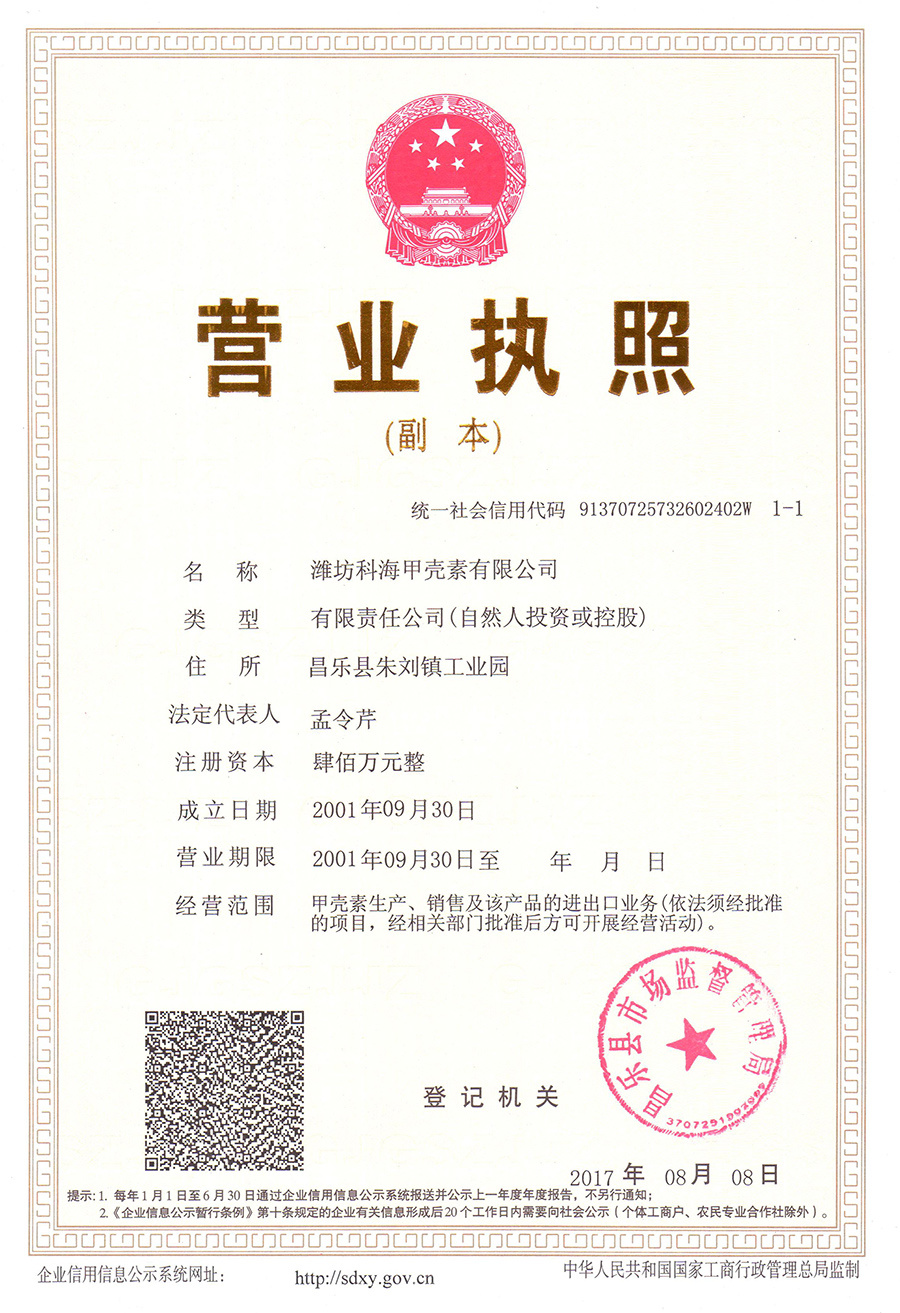
Weifang Kehai Chitosan Co., Ltd
Address: Zhuliu Industrial Park, Changle County, Weifang City, Shandong Province, China
General Manager: Ms Meng Ya
Mr. Meng: 86 13806497089
Ms Meng: 86 15563902222
Mr. Lee: 86 13011668883
Mail:kevinhbr888@gmail.com
General Manager: Ms Meng Ya
Mr. Meng: 86 13806497089
Ms Meng: 86 15563902222
Mr. Lee: 86 13011668883
Mail:kevinhbr888@gmail.com

QR CODE
MESSAGE