

Release time:
Table of Contents:
1. Introduction to Industrial Grade Chitin in Agriculture
2. The Role of Chitin in Plant Health and Growth
3. Enhancing Soil Fertility with Chitin-based Products
4. Chitin as a Natural Defense Mechanism for Crops
5. Boosting Crop Yield and Quality with Chitin
6. Chitin's Contribution to Sustainable Agriculture
7. Overcoming Challenges in Implementing Chitin-based Solutions
8. Frequently Asked Questions (FAQs) about Industrial Grade Chitin in Agriculture
9. Conclusion
1. Introduction to Industrial Grade Chitin in Agriculture
Industrial Grade Chitin, derived from the shells of crustaceans like shrimp and crabs, has emerged as a game-changer in the field of agriculture. This eco-friendly and sustainable biopolymer possesses unique properties that can significantly impact plant health, soil fertility, and crop productivity. In this article, we will explore the untapped potential of Industrial Grade Chitin and its numerous benefits for agriculture.
2. The Role of Chitin in Plant Health and Growth
Chitin, a natural polysaccharide, acts as a vital component in enhancing plant health and growth. When applied to crops, chitin stimulates the natural defense mechanisms of plants, making them more resistant to diseases, pests, and environmental stressors. Additionally, it promotes root development, nutrient absorption, and overall plant vigor, leading to healthier and more robust crops.
3. Enhancing Soil Fertility with Chitin-based Products
Industrial Grade Chitin can be processed into various forms, such as chitosan, chitin flakes, or chitin powder, to maximize its benefits in agriculture. When incorporated into the soil, chitin-based products improve soil fertility by enhancing microbial activity, promoting nutrient cycling, and increasing water-holding capacity. This, in turn, leads to improved plant nutrient availability and overall soil health.
4. Chitin as a Natural Defense Mechanism for Crops
One of the key advantages of Industrial Grade Chitin is its ability to activate the plant's natural defense mechanisms. By stimulating the production of defense-related compounds, chitin acts as a barrier against pathogens, insects, and other harmful organisms. This reduces the reliance on chemical pesticides, minimizing the environmental impact and promoting sustainable farming practices.
5. Boosting Crop Yield and Quality with Chitin
Studies have shown that the application of chitin-based products can significantly increase crop yield and improve produce quality. Chitin stimulates the production of phytohormones, such as auxins and cytokinins, which play a crucial role in plant growth and development. Additionally, it enhances the absorption of essential nutrients, leading to improved crop productivity and nutritional value.
6. Chitin's Contribution to Sustainable Agriculture
In an era where sustainable agriculture practices are gaining momentum, Industrial Grade Chitin offers a viable solution. By reducing the reliance on synthetic chemicals, chitin-based products contribute to environmentally friendly farming methods. Furthermore, chitin can be sourced from waste streams generated by the seafood industry, providing a sustainable and cost-effective alternative to traditional fertilizers and pesticides.
7. Overcoming Challenges in Implementing Chitin-based Solutions
While the benefits of Industrial Grade Chitin in agriculture are undeniable, there are challenges to its widespread implementation. One major hurdle is the lack of awareness and understanding among farmers about the potential of chitin-based products. Additionally, scaling up production and ensuring consistent quality supply can pose logistical challenges. However, with proper education and support, these obstacles can be overcome, paving the way for a more sustainable and efficient agricultural sector.
8. Frequently Asked Questions (FAQs) about Industrial Grade Chitin in Agriculture
Q1: What is the difference between Industrial Grade Chitin and other types of chitin?
Q2: Can chitin-based products replace chemical fertilizers and pesticides entirely?
Q3: Are chitin-based products safe for the environment?
Q4: How can farmers incorporate chitin into their existing agricultural practices?
Q5: What are some successful case studies showcasing the benefits of Industrial Grade Chitin?
9. Conclusion
In conclusion, Industrial Grade Chitin holds immense potential in transforming agriculture into a more sustainable and productive industry. Its unique properties, including its ability to enhance plant health, improve soil fertility, and reduce reliance on synthetic chemicals, make it a valuable asset for farmers worldwide. By unlocking the benefits of Industrial Grade Chitin, we can revolutionize the way we grow crops and ensure a greener future for generations to come.
1. Introduction to Industrial Grade Chitin in Agriculture
2. The Role of Chitin in Plant Health and Growth
3. Enhancing Soil Fertility with Chitin-based Products
4. Chitin as a Natural Defense Mechanism for Crops
5. Boosting Crop Yield and Quality with Chitin
6. Chitin's Contribution to Sustainable Agriculture
7. Overcoming Challenges in Implementing Chitin-based Solutions
8. Frequently Asked Questions (FAQs) about Industrial Grade Chitin in Agriculture
9. Conclusion
1. Introduction to Industrial Grade Chitin in Agriculture
Industrial Grade Chitin, derived from the shells of crustaceans like shrimp and crabs, has emerged as a game-changer in the field of agriculture. This eco-friendly and sustainable biopolymer possesses unique properties that can significantly impact plant health, soil fertility, and crop productivity. In this article, we will explore the untapped potential of Industrial Grade Chitin and its numerous benefits for agriculture.
2. The Role of Chitin in Plant Health and Growth
Chitin, a natural polysaccharide, acts as a vital component in enhancing plant health and growth. When applied to crops, chitin stimulates the natural defense mechanisms of plants, making them more resistant to diseases, pests, and environmental stressors. Additionally, it promotes root development, nutrient absorption, and overall plant vigor, leading to healthier and more robust crops.
3. Enhancing Soil Fertility with Chitin-based Products
Industrial Grade Chitin can be processed into various forms, such as chitosan, chitin flakes, or chitin powder, to maximize its benefits in agriculture. When incorporated into the soil, chitin-based products improve soil fertility by enhancing microbial activity, promoting nutrient cycling, and increasing water-holding capacity. This, in turn, leads to improved plant nutrient availability and overall soil health.
4. Chitin as a Natural Defense Mechanism for Crops
One of the key advantages of Industrial Grade Chitin is its ability to activate the plant's natural defense mechanisms. By stimulating the production of defense-related compounds, chitin acts as a barrier against pathogens, insects, and other harmful organisms. This reduces the reliance on chemical pesticides, minimizing the environmental impact and promoting sustainable farming practices.
5. Boosting Crop Yield and Quality with Chitin
Studies have shown that the application of chitin-based products can significantly increase crop yield and improve produce quality. Chitin stimulates the production of phytohormones, such as auxins and cytokinins, which play a crucial role in plant growth and development. Additionally, it enhances the absorption of essential nutrients, leading to improved crop productivity and nutritional value.
6. Chitin's Contribution to Sustainable Agriculture
In an era where sustainable agriculture practices are gaining momentum, Industrial Grade Chitin offers a viable solution. By reducing the reliance on synthetic chemicals, chitin-based products contribute to environmentally friendly farming methods. Furthermore, chitin can be sourced from waste streams generated by the seafood industry, providing a sustainable and cost-effective alternative to traditional fertilizers and pesticides.
7. Overcoming Challenges in Implementing Chitin-based Solutions
While the benefits of Industrial Grade Chitin in agriculture are undeniable, there are challenges to its widespread implementation. One major hurdle is the lack of awareness and understanding among farmers about the potential of chitin-based products. Additionally, scaling up production and ensuring consistent quality supply can pose logistical challenges. However, with proper education and support, these obstacles can be overcome, paving the way for a more sustainable and efficient agricultural sector.
8. Frequently Asked Questions (FAQs) about Industrial Grade Chitin in Agriculture
Q1: What is the difference between Industrial Grade Chitin and other types of chitin?
Q2: Can chitin-based products replace chemical fertilizers and pesticides entirely?
Q3: Are chitin-based products safe for the environment?
Q4: How can farmers incorporate chitin into their existing agricultural practices?
Q5: What are some successful case studies showcasing the benefits of Industrial Grade Chitin?
9. Conclusion
In conclusion, Industrial Grade Chitin holds immense potential in transforming agriculture into a more sustainable and productive industry. Its unique properties, including its ability to enhance plant health, improve soil fertility, and reduce reliance on synthetic chemicals, make it a valuable asset for farmers worldwide. By unlocking the benefits of Industrial Grade Chitin, we can revolutionize the way we grow crops and ensure a greener future for generations to come.
Related
CONTACT US
language
English
العربية
বাংলাদেশ
Български
Hrvatski
Česky
Dansk
Nederland
 Esperanto
Slovenski
Filipino
Suomi
Français
Maori
 Shqiptare
Georgian
 Euskara
Deutsch
Ελλάδα
ישראל
इंडिया
Magyarország
Ísland
Indonesia
Irlanda
Italia
日本語
Sovensko
Հայաստան
한국
Kyrgyz
ປະເທດລາວ
 Zulu
Zulu
Latvian
Lithuanian
Luxembourgish
 Latinus
Macedonian
Малайская
Maltese
Монгол улс
 Cymraeg
ဗမာ
 தமிழ்
தமிழ்
नेपाल
Norge
ایران
Polska
Portugal
România
Российская
Србија
 Slovak
Србија
 Slovak
Bosanski
Slovenian
Беларус
España
Sverige
Точик
ประเทศไทย
Türk
Azərbaycan
Uzbek
 Afrikaans
Việt Nam
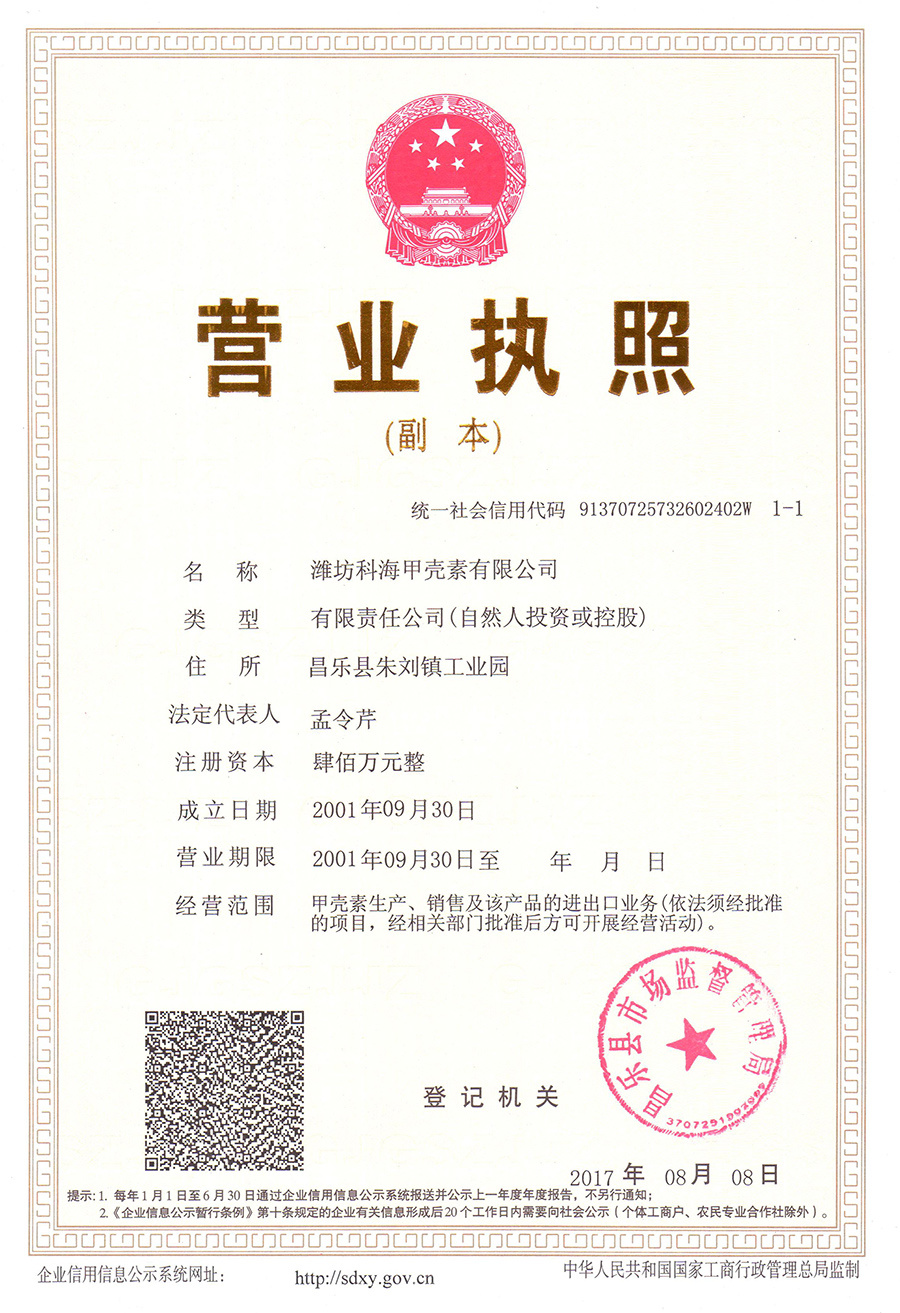
Weifang Kehai Chitosan Co., Ltd
Address: Zhuliu Industrial Park, Changle County, Weifang City, Shandong Province, China
General Manager: Ms Meng Ya
Mr. Meng: 86 13806497089
Ms Meng: 86 15563902222
Mr. Lee: 86 13011668883
Mail:kevinhbr888@gmail.com
General Manager: Ms Meng Ya
Mr. Meng: 86 13806497089
Ms Meng: 86 15563902222
Mr. Lee: 86 13011668883
Mail:kevinhbr888@gmail.com

QR CODE
MESSAGE