

Release time:
Introduction:
In the agricultural food industry, the effective use of food additives is crucial to enhance product quality and safety. One such revolutionary additive is textile grade chitosan. This article delves into the applications and advantages of textile grade chitosan as a food additive in various agricultural products, without mentioning any specific brand or price.
1. Enhanced Preservation and Shelf Life:
Textile grade chitosan, a derivative of chitin found in crustacean shells, has been found to effectively inhibit the growth of bacteria and fungi in food products. Its antimicrobial properties make it an ideal natural preservative, ensuring longer shelf life without the need for synthetic chemicals.
2. Improved Texture and Stability:
When used as a food additive, textile grade chitosan can enhance the texture and stability of agricultural products. Its film-forming properties create a protective barrier that prevents moisture loss, maintains product shape, and improves overall quality. This is particularly useful in the production of processed foods and beverages.
3. Reduced Oxidation and Spoilage:
Oxidation is a common problem in the food industry, leading to spoilage and nutrient loss. Textile grade chitosan, with its antioxidant properties, acts as a shield against oxidation, thereby extending the freshness and nutritional value of agricultural food products. This makes it an excellent choice for manufacturers seeking natural alternatives to synthetic antioxidants.
4. Safe and Environmentally Friendly:
One of the key advantages of textile grade chitosan is its biodegradability and low toxicity. Derived from natural sources, it offers a sustainable and environmentally friendly alternative to synthetic additives. Moreover, chitosan itself has been recognized as safe for consumption by regulatory authorities in many countries, making it a desirable choice for conscious consumers.
5. Wide Range of Applications:
Textile grade chitosan finds applications across various agricultural food products. It can be used as a coating for fruits and vegetables, enhancing their appearance, texture, and protection against microbial contamination. Additionally, it can be incorporated into dairy products, meat, and seafood to improve their stability and nutritional profile. The versatility of textile grade chitosan makes it an invaluable tool for food manufacturers.
Conclusion:
Textile grade chitosan offers a multitude of benefits as a food additive in the agricultural food industry. From improved preservation and texture to reduced oxidation and enhanced safety, it proves to be a revolutionary ingredient. Its environmentally friendly nature and wide range of applications make it a promising choice for those in the food manufacturing industry. Embrace the potential of textile grade chitosan and elevate your agricultural food products to new heights of quality and innovation.
In the agricultural food industry, the effective use of food additives is crucial to enhance product quality and safety. One such revolutionary additive is textile grade chitosan. This article delves into the applications and advantages of textile grade chitosan as a food additive in various agricultural products, without mentioning any specific brand or price.
1. Enhanced Preservation and Shelf Life:
Textile grade chitosan, a derivative of chitin found in crustacean shells, has been found to effectively inhibit the growth of bacteria and fungi in food products. Its antimicrobial properties make it an ideal natural preservative, ensuring longer shelf life without the need for synthetic chemicals.
2. Improved Texture and Stability:
When used as a food additive, textile grade chitosan can enhance the texture and stability of agricultural products. Its film-forming properties create a protective barrier that prevents moisture loss, maintains product shape, and improves overall quality. This is particularly useful in the production of processed foods and beverages.
3. Reduced Oxidation and Spoilage:
Oxidation is a common problem in the food industry, leading to spoilage and nutrient loss. Textile grade chitosan, with its antioxidant properties, acts as a shield against oxidation, thereby extending the freshness and nutritional value of agricultural food products. This makes it an excellent choice for manufacturers seeking natural alternatives to synthetic antioxidants.
4. Safe and Environmentally Friendly:
One of the key advantages of textile grade chitosan is its biodegradability and low toxicity. Derived from natural sources, it offers a sustainable and environmentally friendly alternative to synthetic additives. Moreover, chitosan itself has been recognized as safe for consumption by regulatory authorities in many countries, making it a desirable choice for conscious consumers.
5. Wide Range of Applications:
Textile grade chitosan finds applications across various agricultural food products. It can be used as a coating for fruits and vegetables, enhancing their appearance, texture, and protection against microbial contamination. Additionally, it can be incorporated into dairy products, meat, and seafood to improve their stability and nutritional profile. The versatility of textile grade chitosan makes it an invaluable tool for food manufacturers.
Conclusion:
Textile grade chitosan offers a multitude of benefits as a food additive in the agricultural food industry. From improved preservation and texture to reduced oxidation and enhanced safety, it proves to be a revolutionary ingredient. Its environmentally friendly nature and wide range of applications make it a promising choice for those in the food manufacturing industry. Embrace the potential of textile grade chitosan and elevate your agricultural food products to new heights of quality and innovation.
Related
CONTACT US
language
English
العربية
বাংলাদেশ
Български
Hrvatski
Česky
Dansk
Nederland
 Esperanto
Slovenski
Filipino
Suomi
Français
Maori
 Shqiptare
Georgian
 Euskara
Deutsch
Ελλάδα
ישראל
इंडिया
Magyarország
Ísland
Indonesia
Irlanda
Italia
日本語
Sovensko
Հայաստան
한국
Kyrgyz
ປະເທດລາວ
 Zulu
Zulu
Latvian
Lithuanian
Luxembourgish
 Latinus
Macedonian
Малайская
Maltese
Монгол улс
 Cymraeg
ဗမာ
 தமிழ்
தமிழ்
नेपाल
Norge
ایران
Polska
Portugal
România
Российская
Србија
 Slovak
Србија
 Slovak
Bosanski
Slovenian
Беларус
España
Sverige
Точик
ประเทศไทย
Türk
Azərbaycan
Uzbek
 Afrikaans
Việt Nam
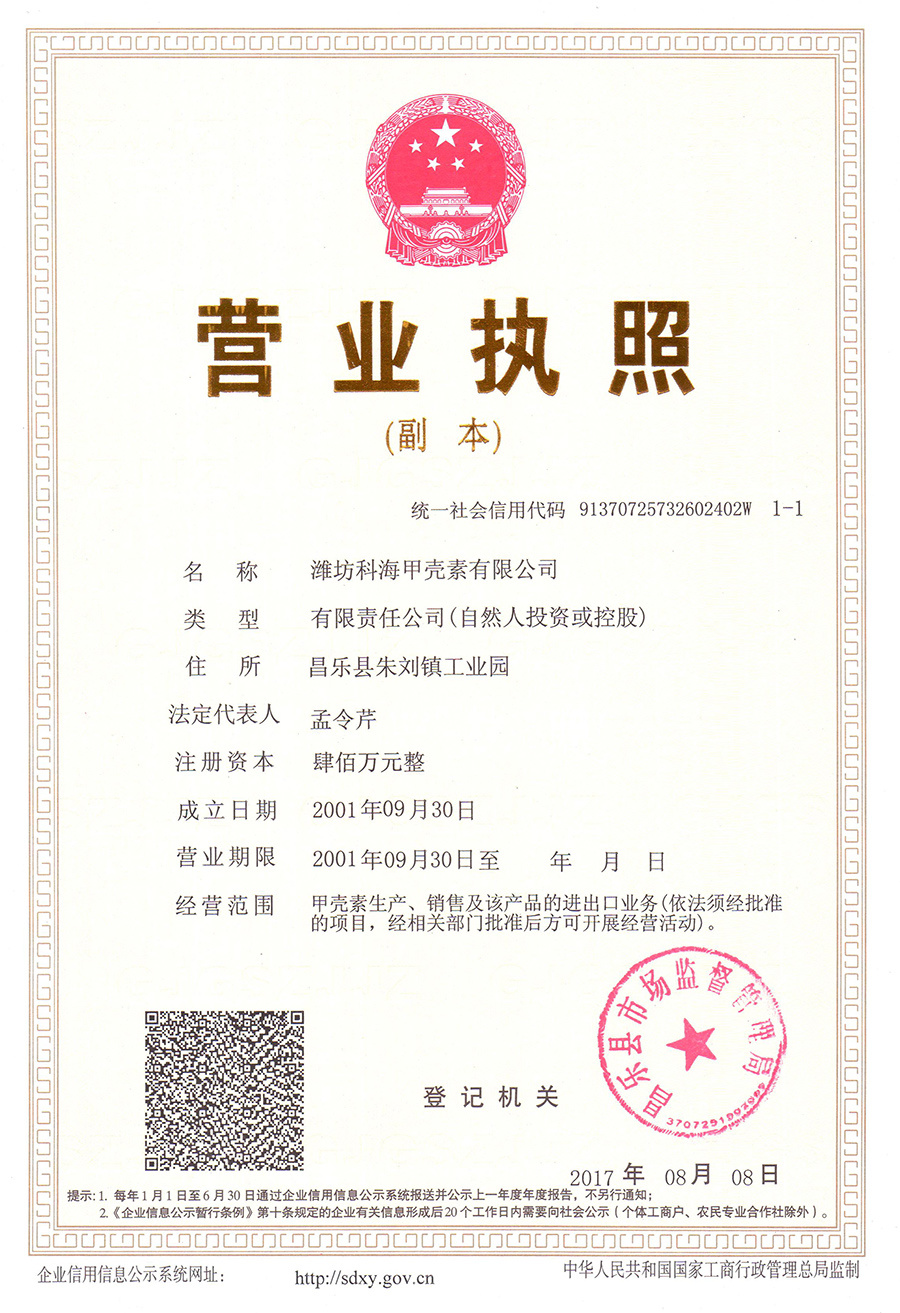
Weifang Kehai Chitosan Co., Ltd
Address: Zhuliu Industrial Park, Changle County, Weifang City, Shandong Province, China
General Manager: Ms Meng Ya
Mr. Meng: 86 13806497089
Ms Meng: 86 15563902222
Mr. Lee: 86 13011668883
Mail:kevinhbr888@gmail.com
General Manager: Ms Meng Ya
Mr. Meng: 86 13806497089
Ms Meng: 86 15563902222
Mr. Lee: 86 13011668883
Mail:kevinhbr888@gmail.com

QR CODE
MESSAGE