

Release time:
Table of Contents
1. Introduction: Textile Grade Chitosan and Sustainable Agriculture
2. The Benefits of Textile Grade Chitosan in Crop Growth
3. Enhancing Soil Health with Textile Grade Chitosan
4. Reducing Chemical Dependency in Agriculture with Textile Grade Chitosan
5. Applications of Textile Grade Chitosan in Sustainable Farming
6. Frequently Asked Questions (FAQs) about Textile Grade Chitosan
7. Conclusion
1. Introduction: Textile Grade Chitosan and Sustainable Agriculture
Textile grade chitosan, derived from chitin found in the exoskeletons of shellfish, is gaining recognition for its potential in revolutionizing sustainable agriculture practices. This natural polymer offers a range of benefits for crop growth, soil health, and environmental sustainability. Let's explore the transformative power of textile grade chitosan in sustainable agriculture.
2. The Benefits of Textile Grade Chitosan in Crop Growth
Textile grade chitosan has been found to enhance crop growth by promoting seed germination, stimulating root development, and improving nutrient absorption. Its natural biostimulant properties aid in the activation of plant defense mechanisms, leading to increased resistance against pests and diseases. Additionally, chitosan has the ability to regulate plant hormones, resulting in improved flowering, fruiting, and overall crop yield.
3. Enhancing Soil Health with Textile Grade Chitosan
One of the key advantages of textile grade chitosan is its positive impact on soil health. When applied to the soil, chitosan acts as a biocontrol agent, suppressing the growth of harmful pathogens and disease-causing microorganisms. This promotes a healthier soil ecosystem, allowing beneficial microbes to thrive and support plant growth. Furthermore, chitosan enhances soil structure and water-holding capacity, reducing the risk of erosion and improving water efficiency.
4. Reducing Chemical Dependency in Agriculture with Textile Grade Chitosan
In conventional agriculture, the excessive use of synthetic chemicals poses numerous environmental and health risks. Textile grade chitosan offers a sustainable alternative by reducing the dependency on harmful chemicals. Chitosan's antimicrobial properties help control plant diseases naturally, minimizing the need for chemical pesticides. This not only protects human health but also mitigates the negative impact on beneficial insects and pollinators.
5. Applications of Textile Grade Chitosan in Sustainable Farming
Textile grade chitosan finds application in various aspects of sustainable farming. It can be used as a seed treatment to improve germination rates and seedling vigor. Chitosan-based biofertilizers promote nutrient availability and uptake, ensuring optimal plant nutrition. Moreover, chitosan can be applied as a foliar spray to enhance plant growth, disease resistance, and stress tolerance. These versatile applications make textile grade chitosan a valuable tool in sustainable agricultural practices.
6. Frequently Asked Questions (FAQs) about Textile Grade Chitosan
Q1: Is textile grade chitosan safe for use in agriculture?
A1: Yes, textile grade chitosan is non-toxic, biodegradable, and environmentally friendly. It poses no harm to humans, animals, or the environment when used as directed.
Q2: How often should textile grade chitosan be applied in farming?
A2: The frequency of application depends on various factors such as crop type, growth stage, and environmental conditions. It is recommended to follow the instructions provided by the manufacturer or consult with agricultural experts for optimal application rates.
Q3: Can textile grade chitosan replace synthetic pesticides completely?
A3: While textile grade chitosan offers natural pest control properties, it may not completely replace synthetic pesticides in all cases. Integrated Pest Management (IPM) practices that combine multiple approaches, including chitosan, are often recommended for effective pest management.
Q4: Does textile grade chitosan have any environmental benefits?
A4: Yes, textile grade chitosan contributes to environmental sustainability by reducing chemical inputs, improving soil health, and promoting overall ecosystem balance in agriculture.
Q5: Are there any regulations or certifications related to textile grade chitosan use in agriculture?
A5: Regulatory requirements may vary by country or region. It is advisable to check for local regulations and certifications related to chitosan use in agriculture to ensure compliance.
7. Conclusion
Textile grade chitosan holds immense potential in revolutionizing sustainable agriculture practices. Its role in enhancing crop growth, improving soil health, and reducing chemical dependency is paving the way for a more sustainable and eco-friendly future in farming. By harnessing the power of textile grade chitosan, farmers can cultivate healthier crops, protect the environment, and contribute to a more sustainable food system. Embracing this natural solution is a significant step towards a greener and more resilient agriculture sector.
1. Introduction: Textile Grade Chitosan and Sustainable Agriculture
2. The Benefits of Textile Grade Chitosan in Crop Growth
3. Enhancing Soil Health with Textile Grade Chitosan
4. Reducing Chemical Dependency in Agriculture with Textile Grade Chitosan
5. Applications of Textile Grade Chitosan in Sustainable Farming
6. Frequently Asked Questions (FAQs) about Textile Grade Chitosan
7. Conclusion
1. Introduction: Textile Grade Chitosan and Sustainable Agriculture
Textile grade chitosan, derived from chitin found in the exoskeletons of shellfish, is gaining recognition for its potential in revolutionizing sustainable agriculture practices. This natural polymer offers a range of benefits for crop growth, soil health, and environmental sustainability. Let's explore the transformative power of textile grade chitosan in sustainable agriculture.
2. The Benefits of Textile Grade Chitosan in Crop Growth
Textile grade chitosan has been found to enhance crop growth by promoting seed germination, stimulating root development, and improving nutrient absorption. Its natural biostimulant properties aid in the activation of plant defense mechanisms, leading to increased resistance against pests and diseases. Additionally, chitosan has the ability to regulate plant hormones, resulting in improved flowering, fruiting, and overall crop yield.
3. Enhancing Soil Health with Textile Grade Chitosan
One of the key advantages of textile grade chitosan is its positive impact on soil health. When applied to the soil, chitosan acts as a biocontrol agent, suppressing the growth of harmful pathogens and disease-causing microorganisms. This promotes a healthier soil ecosystem, allowing beneficial microbes to thrive and support plant growth. Furthermore, chitosan enhances soil structure and water-holding capacity, reducing the risk of erosion and improving water efficiency.
4. Reducing Chemical Dependency in Agriculture with Textile Grade Chitosan
In conventional agriculture, the excessive use of synthetic chemicals poses numerous environmental and health risks. Textile grade chitosan offers a sustainable alternative by reducing the dependency on harmful chemicals. Chitosan's antimicrobial properties help control plant diseases naturally, minimizing the need for chemical pesticides. This not only protects human health but also mitigates the negative impact on beneficial insects and pollinators.
5. Applications of Textile Grade Chitosan in Sustainable Farming
Textile grade chitosan finds application in various aspects of sustainable farming. It can be used as a seed treatment to improve germination rates and seedling vigor. Chitosan-based biofertilizers promote nutrient availability and uptake, ensuring optimal plant nutrition. Moreover, chitosan can be applied as a foliar spray to enhance plant growth, disease resistance, and stress tolerance. These versatile applications make textile grade chitosan a valuable tool in sustainable agricultural practices.
6. Frequently Asked Questions (FAQs) about Textile Grade Chitosan
Q1: Is textile grade chitosan safe for use in agriculture?
A1: Yes, textile grade chitosan is non-toxic, biodegradable, and environmentally friendly. It poses no harm to humans, animals, or the environment when used as directed.
Q2: How often should textile grade chitosan be applied in farming?
A2: The frequency of application depends on various factors such as crop type, growth stage, and environmental conditions. It is recommended to follow the instructions provided by the manufacturer or consult with agricultural experts for optimal application rates.
Q3: Can textile grade chitosan replace synthetic pesticides completely?
A3: While textile grade chitosan offers natural pest control properties, it may not completely replace synthetic pesticides in all cases. Integrated Pest Management (IPM) practices that combine multiple approaches, including chitosan, are often recommended for effective pest management.
Q4: Does textile grade chitosan have any environmental benefits?
A4: Yes, textile grade chitosan contributes to environmental sustainability by reducing chemical inputs, improving soil health, and promoting overall ecosystem balance in agriculture.
Q5: Are there any regulations or certifications related to textile grade chitosan use in agriculture?
A5: Regulatory requirements may vary by country or region. It is advisable to check for local regulations and certifications related to chitosan use in agriculture to ensure compliance.
7. Conclusion
Textile grade chitosan holds immense potential in revolutionizing sustainable agriculture practices. Its role in enhancing crop growth, improving soil health, and reducing chemical dependency is paving the way for a more sustainable and eco-friendly future in farming. By harnessing the power of textile grade chitosan, farmers can cultivate healthier crops, protect the environment, and contribute to a more sustainable food system. Embracing this natural solution is a significant step towards a greener and more resilient agriculture sector.
Related
CONTACT US
language
English
العربية
বাংলাদেশ
Български
Hrvatski
Česky
Dansk
Nederland
 Esperanto
Slovenski
Filipino
Suomi
Français
Maori
 Shqiptare
Georgian
 Euskara
Deutsch
Ελλάδα
ישראל
इंडिया
Magyarország
Ísland
Indonesia
Irlanda
Italia
日本語
Sovensko
Հայաստան
한국
Kyrgyz
ປະເທດລາວ
 Zulu
Zulu
Latvian
Lithuanian
Luxembourgish
 Latinus
Macedonian
Малайская
Maltese
Монгол улс
 Cymraeg
ဗမာ
 தமிழ்
தமிழ்
नेपाल
Norge
ایران
Polska
Portugal
România
Российская
Србија
 Slovak
Србија
 Slovak
Bosanski
Slovenian
Беларус
España
Sverige
Точик
ประเทศไทย
Türk
Azərbaycan
Uzbek
 Afrikaans
Việt Nam
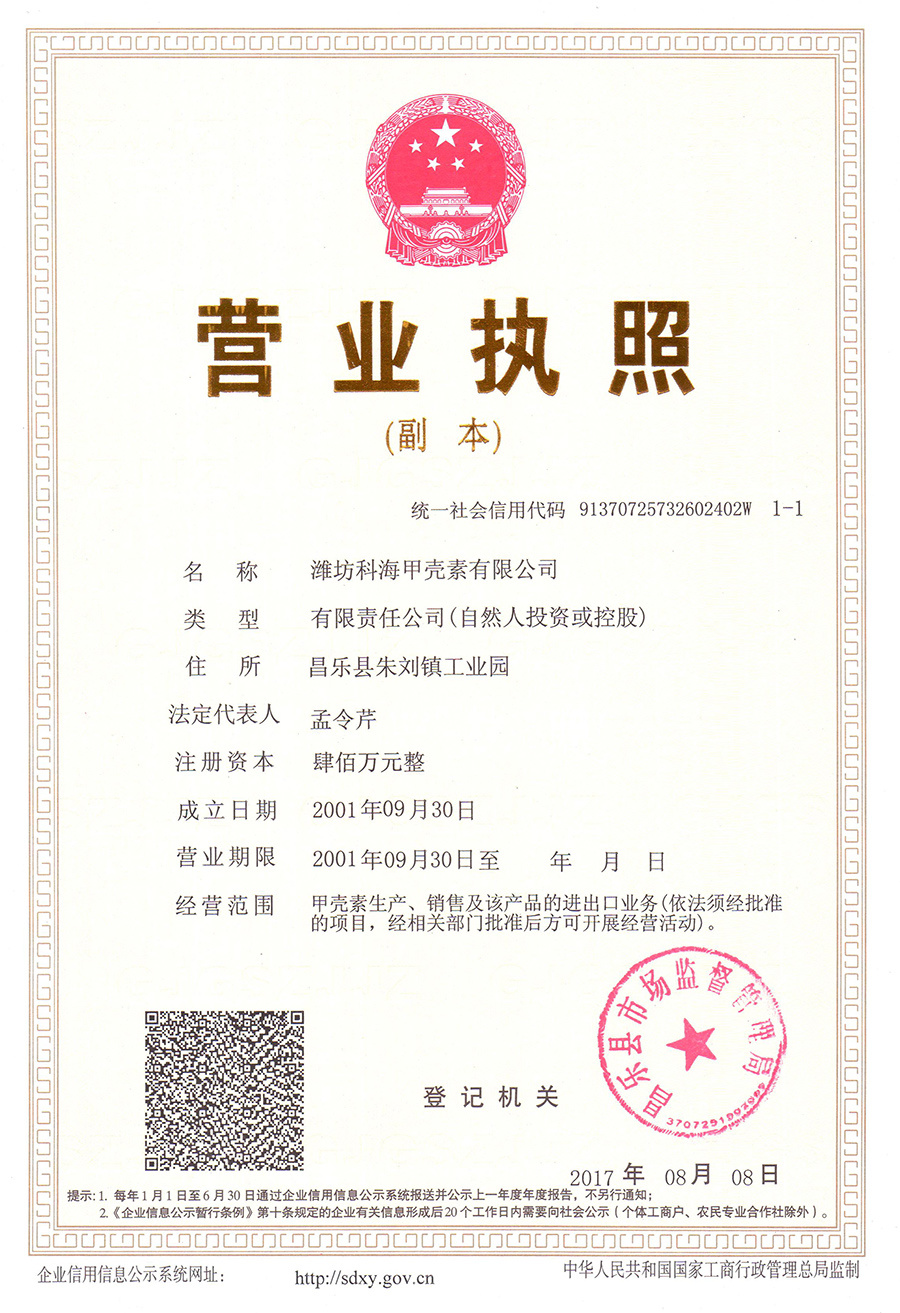
Weifang Kehai Chitosan Co., Ltd
Address: Zhuliu Industrial Park, Changle County, Weifang City, Shandong Province, China
General Manager: Ms Meng Ya
Mr. Meng: 86 13806497089
Ms Meng: 86 15563902222
Mr. Lee: 86 13011668883
Mail:kevinhbr888@gmail.com
General Manager: Ms Meng Ya
Mr. Meng: 86 13806497089
Ms Meng: 86 15563902222
Mr. Lee: 86 13011668883
Mail:kevinhbr888@gmail.com

QR CODE
MESSAGE