

Release time:
Food grade chitin is an intriguing compound that has found its way into the agricultural and food additives industry. Derived from the shells of crustaceans like shrimp, crab, and lobster, food grade chitin offers a range of benefits and applications without compromising safety or quality.
One of the key advantages of food grade chitin is its ability to act as a natural preservative. By inhibiting the growth of harmful bacteria and fungi, it helps extend the shelf life of various food products. This can be particularly beneficial in the agriculture industry, where crops and harvested produce are susceptible to spoilage. With food grade chitin, farmers and producers can ensure that their products remain fresh for longer periods, reducing waste and increasing profitability.
Food grade chitin is also valued for its ability to enhance the texture and stability of food products. It can be used as a thickening agent, improving the viscosity of sauces, dressings, and beverages. Additionally, its film-forming properties make it an ideal candidate for edible coatings, protecting fruits and vegetables from moisture loss and external contaminants.
Furthermore, food grade chitin has been recognized for its potential health benefits. It is known to possess hypoallergenic properties, making it suitable for individuals with food allergies or sensitivities. Additionally, studies suggest that chitin may have cholesterol-lowering effects and can contribute to weight management by promoting a feeling of fullness.
In the agricultural industry, food grade chitin is being utilized as a biopesticide and plant growth promoter. It acts as a natural defense mechanism against pests by boosting the plant's immune system, reducing the need for chemical pesticides. Moreover, it stimulates plant growth and enhances nutrient absorption, leading to healthier and more robust crops.
In conclusion, food grade chitin plays a vital role in the agricultural and food additives industry. Its natural preservative properties, texture-enhancing capabilities, and potential health benefits make it a valuable ingredient in various products. From extending shelf life to improving food texture and supporting sustainable agriculture, the applications of food grade chitin continue to expand, ensuring safer, healthier, and more appealing food options for consumers worldwide.
One of the key advantages of food grade chitin is its ability to act as a natural preservative. By inhibiting the growth of harmful bacteria and fungi, it helps extend the shelf life of various food products. This can be particularly beneficial in the agriculture industry, where crops and harvested produce are susceptible to spoilage. With food grade chitin, farmers and producers can ensure that their products remain fresh for longer periods, reducing waste and increasing profitability.
Food grade chitin is also valued for its ability to enhance the texture and stability of food products. It can be used as a thickening agent, improving the viscosity of sauces, dressings, and beverages. Additionally, its film-forming properties make it an ideal candidate for edible coatings, protecting fruits and vegetables from moisture loss and external contaminants.
Furthermore, food grade chitin has been recognized for its potential health benefits. It is known to possess hypoallergenic properties, making it suitable for individuals with food allergies or sensitivities. Additionally, studies suggest that chitin may have cholesterol-lowering effects and can contribute to weight management by promoting a feeling of fullness.
In the agricultural industry, food grade chitin is being utilized as a biopesticide and plant growth promoter. It acts as a natural defense mechanism against pests by boosting the plant's immune system, reducing the need for chemical pesticides. Moreover, it stimulates plant growth and enhances nutrient absorption, leading to healthier and more robust crops.
In conclusion, food grade chitin plays a vital role in the agricultural and food additives industry. Its natural preservative properties, texture-enhancing capabilities, and potential health benefits make it a valuable ingredient in various products. From extending shelf life to improving food texture and supporting sustainable agriculture, the applications of food grade chitin continue to expand, ensuring safer, healthier, and more appealing food options for consumers worldwide.
Related
CONTACT US
language
English
العربية
বাংলাদেশ
Български
Hrvatski
Česky
Dansk
Nederland
 Esperanto
Slovenski
Filipino
Suomi
Français
Maori
 Shqiptare
Georgian
 Euskara
Deutsch
Ελλάδα
ישראל
इंडिया
Magyarország
Ísland
Indonesia
Irlanda
Italia
日本語
Sovensko
Հայաստան
한국
Kyrgyz
ປະເທດລາວ
 Zulu
Zulu
Latvian
Lithuanian
Luxembourgish
 Latinus
Macedonian
Малайская
Maltese
Монгол улс
 Cymraeg
ဗမာ
 தமிழ்
தமிழ்
नेपाल
Norge
ایران
Polska
Portugal
România
Российская
Србија
 Slovak
Србија
 Slovak
Bosanski
Slovenian
Беларус
España
Sverige
Точик
ประเทศไทย
Türk
Azərbaycan
Uzbek
 Afrikaans
Việt Nam
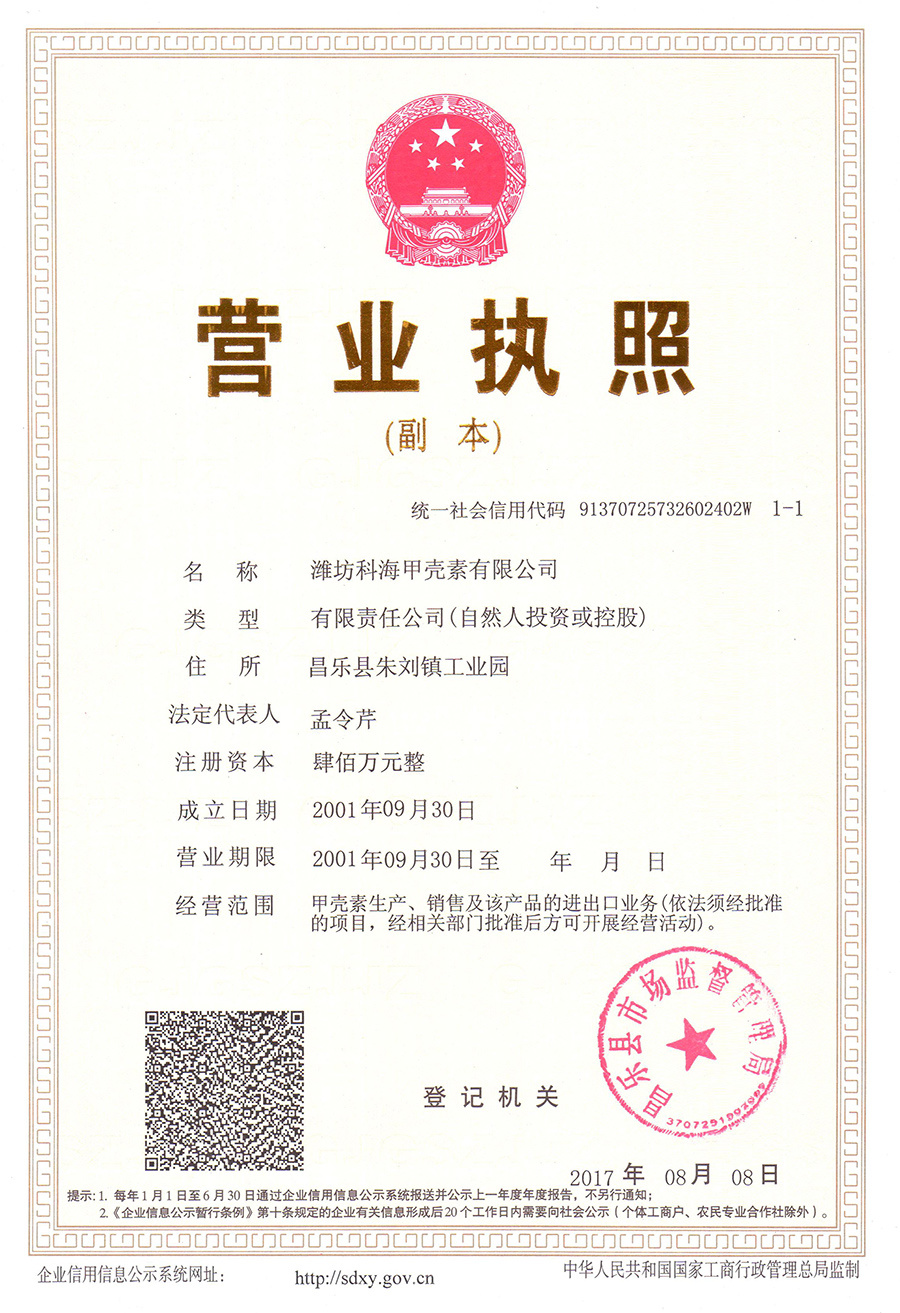
Weifang Kehai Chitosan Co., Ltd
Address: Zhuliu Industrial Park, Changle County, Weifang City, Shandong Province, China
General Manager: Ms Meng Ya
Mr. Meng: 86 13806497089
Ms Meng: 86 15563902222
Mr. Lee: 86 13011668883
Mail:kevinhbr888@gmail.com
General Manager: Ms Meng Ya
Mr. Meng: 86 13806497089
Ms Meng: 86 15563902222
Mr. Lee: 86 13011668883
Mail:kevinhbr888@gmail.com

QR CODE
MESSAGE