

Release time:
Introduction:
Chitin chitosan, derived from the exoskeletons of crustaceans like shrimp and crab, has emerged as a valuable food additive in the agricultural sector. With its unique properties and myriad benefits, chitin chitosan has become a go-to solution for farmers and food manufacturers. In this article, we delve into the fascinating world of chitin chitosan and its applications as a versatile food additive.
1. Enhancing Plant Growth:
Chitin chitosan acts as a biostimulant, promoting plant growth and development. It stimulates root growth, improves nutrient uptake, and enhances resistance to various environmental stresses. These factors collectively contribute to increased crop yields and improved overall plant health.
2. Natural Defense Mechanism:
By incorporating chitin chitosan into the soil or applying it as a foliar spray, farmers can activate the natural defense mechanisms of plants. Chitin chitosan induces the production of antimicrobial compounds, strengthens the plant's immune system, and enhances its ability to ward off pests and diseases. This sustainable approach reduces the reliance on harmful chemical pesticides and fosters a healthier agricultural ecosystem.
3. Improved Seed Germination:
Chitin chitosan coatings on seeds have shown remarkable results in improving germination rates. The biocompatible nature of chitin chitosan provides a protective barrier, preventing seed-borne infections and maximizing seed viability. This technology has proven particularly effective in challenging environmental conditions, enabling farmers to achieve better crop establishment.
4. Extended Shelf Life of Produce:
In the food industry, chitin chitosan finds application as a natural preservative. Its antimicrobial properties inhibit the growth of spoilage-causing microorganisms, thus extending the shelf life of perishable food products. This benefit not only reduces food waste but also enhances the efficiency of the supply chain.
5. Environmental Sustainability:
Chitin chitosan is an eco-friendly alternative to synthetic food additives. Being biodegradable and non-toxic, it poses minimal risks to the environment and human health. The utilization of chitin chitosan aligns with the principles of sustainable agriculture, contributing to a greener and more responsible food production system.
Conclusion:
Chitin chitosan, with its diverse applications as a food additive, plays a significant role in the agricultural industry. Its ability to enhance plant growth, activate natural defense mechanisms, improve seed germination, extend shelf life, and promote environmental sustainability makes it an invaluable asset for farmers and food manufacturers. Embracing the potential of chitin chitosan opens doors to a more productive, resilient, and sustainable agricultural future.
Chitin chitosan, derived from the exoskeletons of crustaceans like shrimp and crab, has emerged as a valuable food additive in the agricultural sector. With its unique properties and myriad benefits, chitin chitosan has become a go-to solution for farmers and food manufacturers. In this article, we delve into the fascinating world of chitin chitosan and its applications as a versatile food additive.
1. Enhancing Plant Growth:
Chitin chitosan acts as a biostimulant, promoting plant growth and development. It stimulates root growth, improves nutrient uptake, and enhances resistance to various environmental stresses. These factors collectively contribute to increased crop yields and improved overall plant health.
2. Natural Defense Mechanism:
By incorporating chitin chitosan into the soil or applying it as a foliar spray, farmers can activate the natural defense mechanisms of plants. Chitin chitosan induces the production of antimicrobial compounds, strengthens the plant's immune system, and enhances its ability to ward off pests and diseases. This sustainable approach reduces the reliance on harmful chemical pesticides and fosters a healthier agricultural ecosystem.
3. Improved Seed Germination:
Chitin chitosan coatings on seeds have shown remarkable results in improving germination rates. The biocompatible nature of chitin chitosan provides a protective barrier, preventing seed-borne infections and maximizing seed viability. This technology has proven particularly effective in challenging environmental conditions, enabling farmers to achieve better crop establishment.
4. Extended Shelf Life of Produce:
In the food industry, chitin chitosan finds application as a natural preservative. Its antimicrobial properties inhibit the growth of spoilage-causing microorganisms, thus extending the shelf life of perishable food products. This benefit not only reduces food waste but also enhances the efficiency of the supply chain.
5. Environmental Sustainability:
Chitin chitosan is an eco-friendly alternative to synthetic food additives. Being biodegradable and non-toxic, it poses minimal risks to the environment and human health. The utilization of chitin chitosan aligns with the principles of sustainable agriculture, contributing to a greener and more responsible food production system.
Conclusion:
Chitin chitosan, with its diverse applications as a food additive, plays a significant role in the agricultural industry. Its ability to enhance plant growth, activate natural defense mechanisms, improve seed germination, extend shelf life, and promote environmental sustainability makes it an invaluable asset for farmers and food manufacturers. Embracing the potential of chitin chitosan opens doors to a more productive, resilient, and sustainable agricultural future.
Related
CONTACT US
language
English
العربية
বাংলাদেশ
Български
Hrvatski
Česky
Dansk
Nederland
 Esperanto
Slovenski
Filipino
Suomi
Français
Maori
 Shqiptare
Georgian
 Euskara
Deutsch
Ελλάδα
ישראל
इंडिया
Magyarország
Ísland
Indonesia
Irlanda
Italia
日本語
Sovensko
Հայաստան
한국
Kyrgyz
ປະເທດລາວ
 Zulu
Zulu
Latvian
Lithuanian
Luxembourgish
 Latinus
Macedonian
Малайская
Maltese
Монгол улс
 Cymraeg
ဗမာ
 தமிழ்
தமிழ்
नेपाल
Norge
ایران
Polska
Portugal
România
Российская
Србија
 Slovak
Србија
 Slovak
Bosanski
Slovenian
Беларус
España
Sverige
Точик
ประเทศไทย
Türk
Azərbaycan
Uzbek
 Afrikaans
Việt Nam
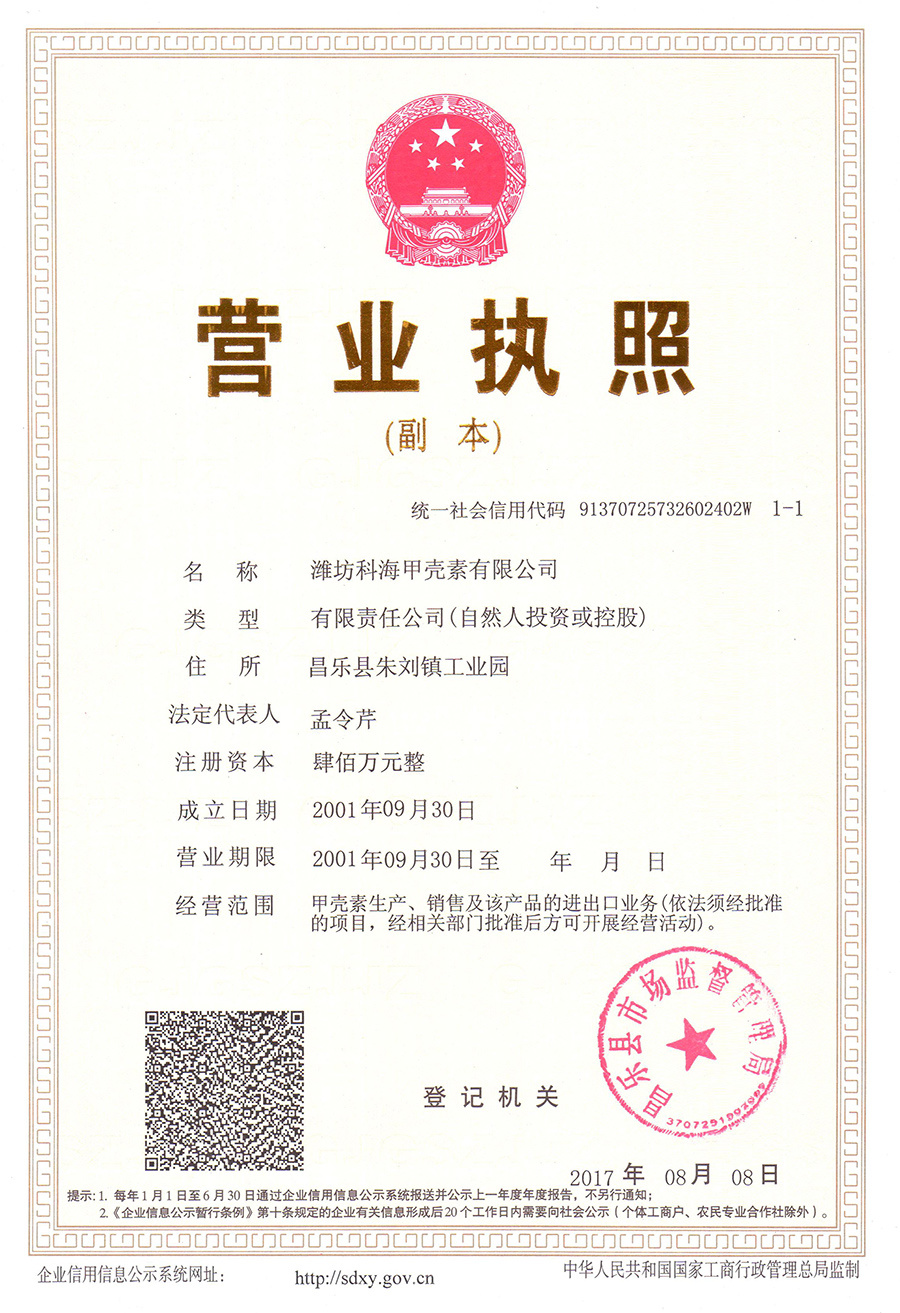
Weifang Kehai Chitosan Co., Ltd
Address: Zhuliu Industrial Park, Changle County, Weifang City, Shandong Province, China
General Manager: Ms Meng Ya
Mr. Meng: 86 13806497089
Ms Meng: 86 15563902222
Mr. Lee: 86 13011668883
Mail:kevinhbr888@gmail.com
General Manager: Ms Meng Ya
Mr. Meng: 86 13806497089
Ms Meng: 86 15563902222
Mr. Lee: 86 13011668883
Mail:kevinhbr888@gmail.com

QR CODE
MESSAGE