

Release time:
Table of Contents
1. Introduction: Understanding the Importance of Food Preservation
2. The Science Behind Chitin Chitosan
2.1 What is Chitin Chitosan?
2.2 How is Chitin Chitosan Obtained?
3. Antimicrobial Properties of Chitin Chitosan
3.1 Inhibition of Microbial Growth
3.2 Prevention of Spoilage
3.3 Control of Pathogenic Bacteria
4. Chitin Chitosan as a Natural Preservative
4.1 Reduction of Chemical Additives
4.2 Preservation of Nutritional Value
4.3 Enhanced Taste and Quality
5. Extending Shelf Life with Chitin Chitosan
5.1 Delaying Oxidation and Rancidity
5.2 Minimizing Enzymatic Browning
5.3 Preventing Mold and Fungus Growth
6. Applications of Chitin Chitosan in Food Preservation
6.1 Fresh Produce
6.2 Seafood and Meat Products
6.3 Dairy and Fermented Goods
7. Safety and Regulatory Considerations
7.1 Food Safety Standards
7.2 Allergenicity and Sensitivity
7.3 Environmental Impact
8. Frequently Asked Questions (FAQs)
8.1 Can Chitin Chitosan be used in organic food?
8.2 Is Chitin Chitosan safe for consumption?
8.3 How does Chitin Chitosan compare to synthetic preservatives?
8.4 What is the recommended dosage of Chitin Chitosan for food preservation?
8.5 Are there any potential side effects of Chitin Chitosan?
9. Conclusion: Unlocking the Potential of Chitin Chitosan in Food Preservation
1. Introduction: Understanding the Importance of Food Preservation
In today's fast-paced world, ensuring the safety and quality of our food is of utmost importance. Food preservation plays a vital role in maintaining the freshness and nutritional value of products while minimizing waste. One innovative solution that has gained considerable attention is the use of chitin chitosan, a naturally derived compound with remarkable properties.
2. The Science Behind Chitin Chitosan
2.1 What is Chitin Chitosan?
Chitin chitosan is a biopolymer that can be found in the exoskeletons of crustaceans, such as shrimp and crabs. It is a derivative of chitin, the second most abundant polysaccharide in nature. Chitin chitosan is known for its biocompatible, biodegradable, and non-toxic characteristics, making it an ideal candidate for various applications, including food preservation.
2.2 How is Chitin Chitosan Obtained?
To obtain chitin chitosan, chitin undergoes a deacetylation process, which removes acetyl groups and transforms chitin into chitosan. This process enhances the solubility and functionality of the compound, making it suitable for a wide range of food preservation applications.
3. Antimicrobial Properties of Chitin Chitosan
3.1 Inhibition of Microbial Growth
One of the key benefits of chitin chitosan is its ability to inhibit the growth of various microorganisms. Its antimicrobial properties are attributed to its cationic nature, which allows it to interact with the negatively charged cell membranes of bacteria, fungi, and yeast, leading to their disruption and subsequent inhibition.
3.2 Prevention of Spoilage
By inhibiting microbial growth, chitin chitosan helps prevent spoilage in food products. This is particularly beneficial in perishable items that are prone to rapid deterioration, such as fruits, vegetables, and seafood.
3.3 Control of Pathogenic Bacteria
In addition to preventing spoilage, chitin chitosan also has the potential to control pathogenic bacteria. Studies have shown its effectiveness against common foodborne pathogens like Escherichia coli and Salmonella, making it a promising natural alternative to synthetic preservatives.
4. Chitin Chitosan as a Natural Preservative
4.1 Reduction of Chemical Additives
One of the main advantages of using chitin chitosan as a food preservative is its ability to reduce the reliance on chemical additives. Traditional preservatives often contain synthetic compounds that may raise concerns regarding their long-term effects on human health. Chitin chitosan offers a natural alternative without compromising on effectiveness.
4.2 Preservation of Nutritional Value
Another noteworthy benefit of chitin chitosan is its ability to preserve the nutritional value of food products. Unlike some preservation methods that can cause nutrient loss, chitin chitosan helps retain vitamins, minerals, and other essential components that contribute to the overall quality of the food.
4.3 Enhanced Taste and Quality
In addition to preserving nutritional value, chitin chitosan has been shown to enhance the taste and quality of food products. Its use in fruits and vegetables, for example, can help maintain their crispness and flavor, resulting in a more enjoyable eating experience.
5. Extending Shelf Life with Chitin Chitosan
5.1 Delaying Oxidation and Rancidity
Oxidation and rancidity are common causes of food spoilage. Chitin chitosan acts as an effective antioxidant, helping to delay these processes and extend the shelf life of various food products. By reducing the oxidation of fats and oils, it can help maintain their freshness and prevent off-flavors.
5.2 Minimizing Enzymatic Browning
Enzymatic browning is a natural process that occurs when fruits and vegetables are exposed to oxygen. Chitin chitosan can help minimize enzymatic browning by inhibiting the activity of polyphenol oxidase, an enzyme responsible for the discoloration. This, in turn, helps preserve the visual appeal of fresh produce.
5.3 Preventing Mold and Fungus Growth
Mold and fungus growth can significantly impact the shelf life of food products. Chitin chitosan exhibits antifungal properties, making it effective in preventing the growth of common molds and fungi. Its use in baked goods, for example, can help prevent mold development and increase their shelf life.
6. Applications of Chitin Chitosan in Food Preservation
6.1 Fresh Produce
Chitin chitosan can be applied as a coating on fresh produce, forming a protective barrier that minimizes moisture loss and microbial contamination. This helps maintain the quality and extend the shelf life of fruits and vegetables.
6.2 Seafood and Meat Products
Seafood and meat products are highly perishable and susceptible to microbial spoilage. Chitin chitosan can be incorporated as an ingredient or applied as a coating to inhibit the growth of bacteria and extend the shelf life of these products.
6.3 Dairy and Fermented Goods
Dairy products and fermented goods can also benefit from the use of chitin chitosan. It can help prevent spoilage caused by bacteria and yeast, ensuring the product's quality and safety throughout its shelf life.
7. Safety and Regulatory Considerations
7.1 Food Safety Standards
Chitin chitosan has been extensively studied for its safety in food applications. Regulatory authorities worldwide, including the Food and Drug Administration (FDA), have approved its use as a food additive within specified limits. However, it is important to adhere to recommended dosages and follow relevant regulations to ensure consumer safety.
7.2 Allergenicity and Sensitivity
While chitin chitosan is generally considered safe for consumption, individuals with shellfish allergies or sensitivities should exercise caution. It is recommended to consult with a healthcare professional before consuming products containing chitin chitosan.
7.3 Environmental Impact
Chitin chitosan is derived from a renewable source, making it a more sustainable alternative to synthetic preservatives. Its biodegradability also reduces its impact on the environment, further emphasizing its potential in creating a greener food industry.
8. Frequently Asked Questions (FAQs)
8.1 Can Chitin Chitosan be used in organic food?
Yes, chitin chitosan can be used in organic food production as it is derived from natural sources and meets the requirements of organic certifications.
8.2 Is Chitin Chitosan safe for consumption?
Chitin chitosan is generally safe for consumption within recommended dosages. However, individuals with shellfish allergies or sensitivities should exercise caution and consult with a healthcare professional.
8.3 How does Chitin Chitosan compare to synthetic preservatives?
Chitin chitosan offers a natural alternative to synthetic preservatives, reducing the reliance on potentially harmful chemical additives. It is effective in inhibiting microbial growth, preserving nutritional value, and enhancing taste and quality.
8.4 What is the recommended dosage of Chitin Chitosan for food preservation?
The recommended dosage of chitin chitosan may vary depending on the specific application and product. It is advisable to follow manufacturer guidelines and relevant regulations for proper usage.
8.5 Are there any potential side effects of Chitin Chitosan?
When used within recommended limits, chitin chitosan is generally well-tolerated. However, excessive consumption may cause digestive discomfort. It is important to adhere to recommended dosages and consult with a healthcare professional if any concerns arise.
9. Conclusion: Unlocking the Potential of Chitin Chitosan in Food Preservation
Chitin chitosan holds tremendous promise in enhancing food preservation and extending shelf life. Its antimicrobial properties, natural origin, and ability to preserve nutritional value make it a compelling alternative to synthetic preservatives. By incorporating chitin chitosan into food preservation practices, we can create a more sustainable and efficient food industry while ensuring the safety and quality of our favorite products.
1. Introduction: Understanding the Importance of Food Preservation
2. The Science Behind Chitin Chitosan
2.1 What is Chitin Chitosan?
2.2 How is Chitin Chitosan Obtained?
3. Antimicrobial Properties of Chitin Chitosan
3.1 Inhibition of Microbial Growth
3.2 Prevention of Spoilage
3.3 Control of Pathogenic Bacteria
4. Chitin Chitosan as a Natural Preservative
4.1 Reduction of Chemical Additives
4.2 Preservation of Nutritional Value
4.3 Enhanced Taste and Quality
5. Extending Shelf Life with Chitin Chitosan
5.1 Delaying Oxidation and Rancidity
5.2 Minimizing Enzymatic Browning
5.3 Preventing Mold and Fungus Growth
6. Applications of Chitin Chitosan in Food Preservation
6.1 Fresh Produce
6.2 Seafood and Meat Products
6.3 Dairy and Fermented Goods
7. Safety and Regulatory Considerations
7.1 Food Safety Standards
7.2 Allergenicity and Sensitivity
7.3 Environmental Impact
8. Frequently Asked Questions (FAQs)
8.1 Can Chitin Chitosan be used in organic food?
8.2 Is Chitin Chitosan safe for consumption?
8.3 How does Chitin Chitosan compare to synthetic preservatives?
8.4 What is the recommended dosage of Chitin Chitosan for food preservation?
8.5 Are there any potential side effects of Chitin Chitosan?
9. Conclusion: Unlocking the Potential of Chitin Chitosan in Food Preservation
1. Introduction: Understanding the Importance of Food Preservation
In today's fast-paced world, ensuring the safety and quality of our food is of utmost importance. Food preservation plays a vital role in maintaining the freshness and nutritional value of products while minimizing waste. One innovative solution that has gained considerable attention is the use of chitin chitosan, a naturally derived compound with remarkable properties.
2. The Science Behind Chitin Chitosan
2.1 What is Chitin Chitosan?
Chitin chitosan is a biopolymer that can be found in the exoskeletons of crustaceans, such as shrimp and crabs. It is a derivative of chitin, the second most abundant polysaccharide in nature. Chitin chitosan is known for its biocompatible, biodegradable, and non-toxic characteristics, making it an ideal candidate for various applications, including food preservation.
2.2 How is Chitin Chitosan Obtained?
To obtain chitin chitosan, chitin undergoes a deacetylation process, which removes acetyl groups and transforms chitin into chitosan. This process enhances the solubility and functionality of the compound, making it suitable for a wide range of food preservation applications.
3. Antimicrobial Properties of Chitin Chitosan
3.1 Inhibition of Microbial Growth
One of the key benefits of chitin chitosan is its ability to inhibit the growth of various microorganisms. Its antimicrobial properties are attributed to its cationic nature, which allows it to interact with the negatively charged cell membranes of bacteria, fungi, and yeast, leading to their disruption and subsequent inhibition.
3.2 Prevention of Spoilage
By inhibiting microbial growth, chitin chitosan helps prevent spoilage in food products. This is particularly beneficial in perishable items that are prone to rapid deterioration, such as fruits, vegetables, and seafood.
3.3 Control of Pathogenic Bacteria
In addition to preventing spoilage, chitin chitosan also has the potential to control pathogenic bacteria. Studies have shown its effectiveness against common foodborne pathogens like Escherichia coli and Salmonella, making it a promising natural alternative to synthetic preservatives.
4. Chitin Chitosan as a Natural Preservative
4.1 Reduction of Chemical Additives
One of the main advantages of using chitin chitosan as a food preservative is its ability to reduce the reliance on chemical additives. Traditional preservatives often contain synthetic compounds that may raise concerns regarding their long-term effects on human health. Chitin chitosan offers a natural alternative without compromising on effectiveness.
4.2 Preservation of Nutritional Value
Another noteworthy benefit of chitin chitosan is its ability to preserve the nutritional value of food products. Unlike some preservation methods that can cause nutrient loss, chitin chitosan helps retain vitamins, minerals, and other essential components that contribute to the overall quality of the food.
4.3 Enhanced Taste and Quality
In addition to preserving nutritional value, chitin chitosan has been shown to enhance the taste and quality of food products. Its use in fruits and vegetables, for example, can help maintain their crispness and flavor, resulting in a more enjoyable eating experience.
5. Extending Shelf Life with Chitin Chitosan
5.1 Delaying Oxidation and Rancidity
Oxidation and rancidity are common causes of food spoilage. Chitin chitosan acts as an effective antioxidant, helping to delay these processes and extend the shelf life of various food products. By reducing the oxidation of fats and oils, it can help maintain their freshness and prevent off-flavors.
5.2 Minimizing Enzymatic Browning
Enzymatic browning is a natural process that occurs when fruits and vegetables are exposed to oxygen. Chitin chitosan can help minimize enzymatic browning by inhibiting the activity of polyphenol oxidase, an enzyme responsible for the discoloration. This, in turn, helps preserve the visual appeal of fresh produce.
5.3 Preventing Mold and Fungus Growth
Mold and fungus growth can significantly impact the shelf life of food products. Chitin chitosan exhibits antifungal properties, making it effective in preventing the growth of common molds and fungi. Its use in baked goods, for example, can help prevent mold development and increase their shelf life.
6. Applications of Chitin Chitosan in Food Preservation
6.1 Fresh Produce
Chitin chitosan can be applied as a coating on fresh produce, forming a protective barrier that minimizes moisture loss and microbial contamination. This helps maintain the quality and extend the shelf life of fruits and vegetables.
6.2 Seafood and Meat Products
Seafood and meat products are highly perishable and susceptible to microbial spoilage. Chitin chitosan can be incorporated as an ingredient or applied as a coating to inhibit the growth of bacteria and extend the shelf life of these products.
6.3 Dairy and Fermented Goods
Dairy products and fermented goods can also benefit from the use of chitin chitosan. It can help prevent spoilage caused by bacteria and yeast, ensuring the product's quality and safety throughout its shelf life.
7. Safety and Regulatory Considerations
7.1 Food Safety Standards
Chitin chitosan has been extensively studied for its safety in food applications. Regulatory authorities worldwide, including the Food and Drug Administration (FDA), have approved its use as a food additive within specified limits. However, it is important to adhere to recommended dosages and follow relevant regulations to ensure consumer safety.
7.2 Allergenicity and Sensitivity
While chitin chitosan is generally considered safe for consumption, individuals with shellfish allergies or sensitivities should exercise caution. It is recommended to consult with a healthcare professional before consuming products containing chitin chitosan.
7.3 Environmental Impact
Chitin chitosan is derived from a renewable source, making it a more sustainable alternative to synthetic preservatives. Its biodegradability also reduces its impact on the environment, further emphasizing its potential in creating a greener food industry.
8. Frequently Asked Questions (FAQs)
8.1 Can Chitin Chitosan be used in organic food?
Yes, chitin chitosan can be used in organic food production as it is derived from natural sources and meets the requirements of organic certifications.
8.2 Is Chitin Chitosan safe for consumption?
Chitin chitosan is generally safe for consumption within recommended dosages. However, individuals with shellfish allergies or sensitivities should exercise caution and consult with a healthcare professional.
8.3 How does Chitin Chitosan compare to synthetic preservatives?
Chitin chitosan offers a natural alternative to synthetic preservatives, reducing the reliance on potentially harmful chemical additives. It is effective in inhibiting microbial growth, preserving nutritional value, and enhancing taste and quality.
8.4 What is the recommended dosage of Chitin Chitosan for food preservation?
The recommended dosage of chitin chitosan may vary depending on the specific application and product. It is advisable to follow manufacturer guidelines and relevant regulations for proper usage.
8.5 Are there any potential side effects of Chitin Chitosan?
When used within recommended limits, chitin chitosan is generally well-tolerated. However, excessive consumption may cause digestive discomfort. It is important to adhere to recommended dosages and consult with a healthcare professional if any concerns arise.
9. Conclusion: Unlocking the Potential of Chitin Chitosan in Food Preservation
Chitin chitosan holds tremendous promise in enhancing food preservation and extending shelf life. Its antimicrobial properties, natural origin, and ability to preserve nutritional value make it a compelling alternative to synthetic preservatives. By incorporating chitin chitosan into food preservation practices, we can create a more sustainable and efficient food industry while ensuring the safety and quality of our favorite products.
Related
CONTACT US
language
English
العربية
বাংলাদেশ
Български
Hrvatski
Česky
Dansk
Nederland
 Esperanto
Slovenski
Filipino
Suomi
Français
Maori
 Shqiptare
Georgian
 Euskara
Deutsch
Ελλάδα
ישראל
इंडिया
Magyarország
Ísland
Indonesia
Irlanda
Italia
日本語
Sovensko
Հայաստան
한국
Kyrgyz
ປະເທດລາວ
 Zulu
Zulu
Latvian
Lithuanian
Luxembourgish
 Latinus
Macedonian
Малайская
Maltese
Монгол улс
 Cymraeg
ဗမာ
 தமிழ்
தமிழ்
नेपाल
Norge
ایران
Polska
Portugal
România
Российская
Србија
 Slovak
Србија
 Slovak
Bosanski
Slovenian
Беларус
España
Sverige
Точик
ประเทศไทย
Türk
Azərbaycan
Uzbek
 Afrikaans
Việt Nam
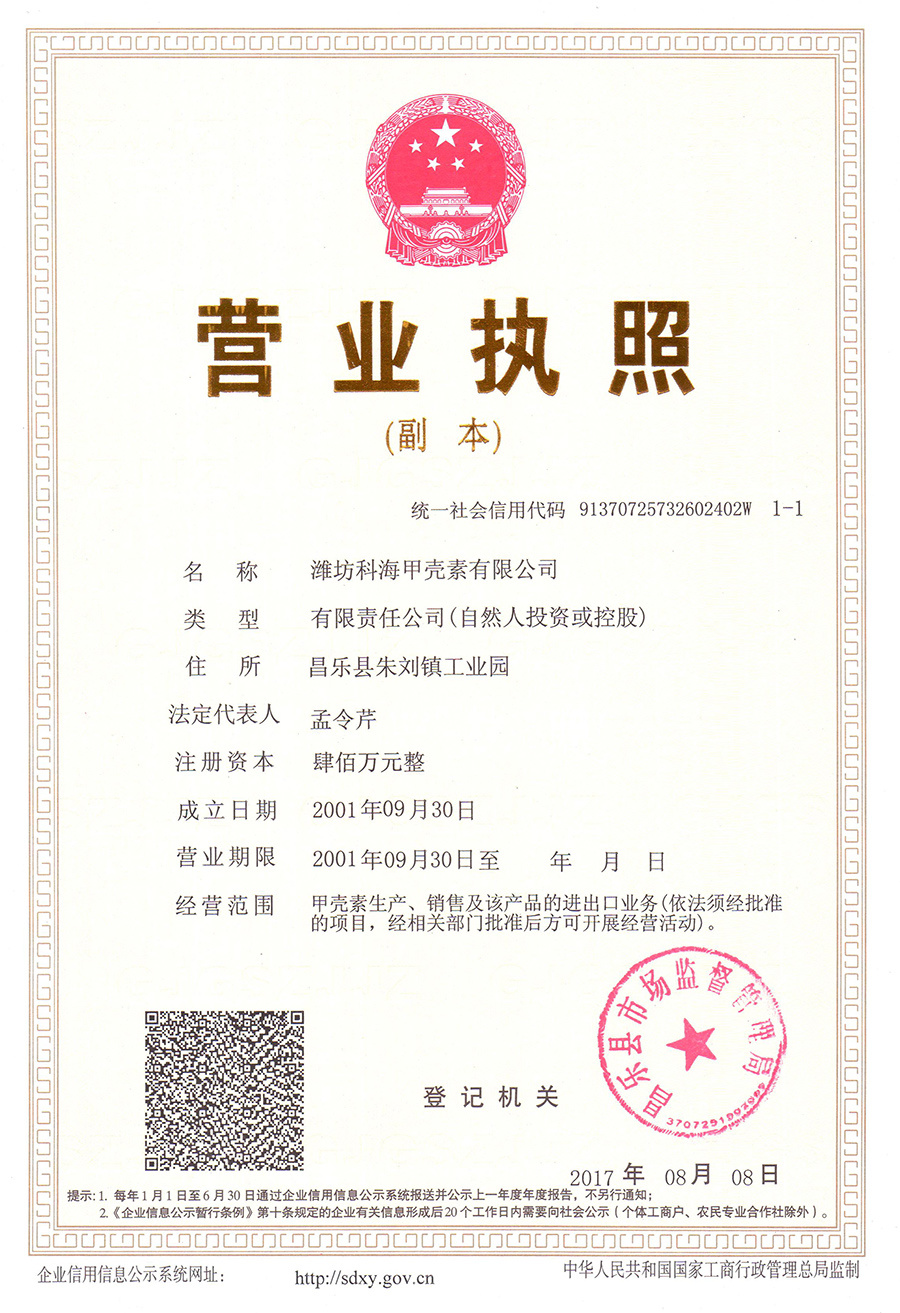
Weifang Kehai Chitosan Co., Ltd
Address: Zhuliu Industrial Park, Changle County, Weifang City, Shandong Province, China
General Manager: Ms Meng Ya
Mr. Meng: 86 13806497089
Ms Meng: 86 15563902222
Mr. Lee: 86 13011668883
Mail:kevinhbr888@gmail.com
General Manager: Ms Meng Ya
Mr. Meng: 86 13806497089
Ms Meng: 86 15563902222
Mr. Lee: 86 13011668883
Mail:kevinhbr888@gmail.com

QR CODE
MESSAGE