

Release time:
Food Grade Chitosan: A Versatile Food Additive for Sustainable Agriculture
Introduction:
Food grade chitosan, an innovative food additive, has gained significant attention in the agricultural industry for its multifunctional properties. This article explores the benefits of food grade chitosan and its role as a sustainable solution for enhancing crop production, improving soil health, and promoting eco-friendly farming practices.
1. Enhancing Crop Growth:
Food grade chitosan has been proven to enhance plant growth and development. Its unique properties, such as biodegradability and biocompatibility, make it an ideal choice for sustainable agriculture. When applied as a foliar spray or soil amendment, chitosan improves nutrient uptake, increases root growth, and enhances the overall vigor of plants. This leads to higher crop yields and improved quality.
2. Improving Soil Health:
The use of food grade chitosan in agriculture contributes to the improvement of soil health. Chitosan acts as a natural bio-stimulator, promoting the growth of beneficial soil microorganisms, such as mycorrhizal fungi. These microorganisms form symbiotic relationships with plant roots, enhancing nutrient absorption and improving soil structure. Additionally, chitosan helps to suppress harmful pathogens, reducing the need for chemical pesticides and fostering a sustainable farming environment.
3. Promoting Eco-Friendly Farming Practices:
In an era where sustainable farming practices are increasingly important, food grade chitosan offers numerous environmental benefits. Its biodegradable nature ensures minimal environmental impact, unlike synthetic additives. By reducing the reliance on chemical fertilizers and pesticides, chitosan aids in preventing soil and water pollution, thus safeguarding ecosystems and promoting biodiversity. Furthermore, chitosan-based solutions are compatible with organic farming systems, aligning with the principles of sustainable agriculture.
Conclusion:
Food grade chitosan is revolutionizing the agricultural industry as a versatile food additive. Its ability to enhance crop growth, improve soil health, and promote eco-friendly farming practices makes it a valuable tool for sustainable agriculture. By harnessing the potential of food grade chitosan, farmers can optimize their agricultural practices, increase productivity, and contribute to a more sustainable and environmentally conscious future.
Introduction:
Food grade chitosan, an innovative food additive, has gained significant attention in the agricultural industry for its multifunctional properties. This article explores the benefits of food grade chitosan and its role as a sustainable solution for enhancing crop production, improving soil health, and promoting eco-friendly farming practices.
1. Enhancing Crop Growth:
Food grade chitosan has been proven to enhance plant growth and development. Its unique properties, such as biodegradability and biocompatibility, make it an ideal choice for sustainable agriculture. When applied as a foliar spray or soil amendment, chitosan improves nutrient uptake, increases root growth, and enhances the overall vigor of plants. This leads to higher crop yields and improved quality.
2. Improving Soil Health:
The use of food grade chitosan in agriculture contributes to the improvement of soil health. Chitosan acts as a natural bio-stimulator, promoting the growth of beneficial soil microorganisms, such as mycorrhizal fungi. These microorganisms form symbiotic relationships with plant roots, enhancing nutrient absorption and improving soil structure. Additionally, chitosan helps to suppress harmful pathogens, reducing the need for chemical pesticides and fostering a sustainable farming environment.
3. Promoting Eco-Friendly Farming Practices:
In an era where sustainable farming practices are increasingly important, food grade chitosan offers numerous environmental benefits. Its biodegradable nature ensures minimal environmental impact, unlike synthetic additives. By reducing the reliance on chemical fertilizers and pesticides, chitosan aids in preventing soil and water pollution, thus safeguarding ecosystems and promoting biodiversity. Furthermore, chitosan-based solutions are compatible with organic farming systems, aligning with the principles of sustainable agriculture.
Conclusion:
Food grade chitosan is revolutionizing the agricultural industry as a versatile food additive. Its ability to enhance crop growth, improve soil health, and promote eco-friendly farming practices makes it a valuable tool for sustainable agriculture. By harnessing the potential of food grade chitosan, farmers can optimize their agricultural practices, increase productivity, and contribute to a more sustainable and environmentally conscious future.
Related
CONTACT US
language
English
العربية
বাংলাদেশ
Български
Hrvatski
Česky
Dansk
Nederland
 Esperanto
Slovenski
Filipino
Suomi
Français
Maori
 Shqiptare
Georgian
 Euskara
Deutsch
Ελλάδα
ישראל
इंडिया
Magyarország
Ísland
Indonesia
Irlanda
Italia
日本語
Sovensko
Հայաստան
한국
Kyrgyz
ປະເທດລາວ
 Zulu
Zulu
Latvian
Lithuanian
Luxembourgish
 Latinus
Macedonian
Малайская
Maltese
Монгол улс
 Cymraeg
ဗမာ
 தமிழ்
தமிழ்
नेपाल
Norge
ایران
Polska
Portugal
România
Российская
Србија
 Slovak
Србија
 Slovak
Bosanski
Slovenian
Беларус
España
Sverige
Точик
ประเทศไทย
Türk
Azərbaycan
Uzbek
 Afrikaans
Việt Nam
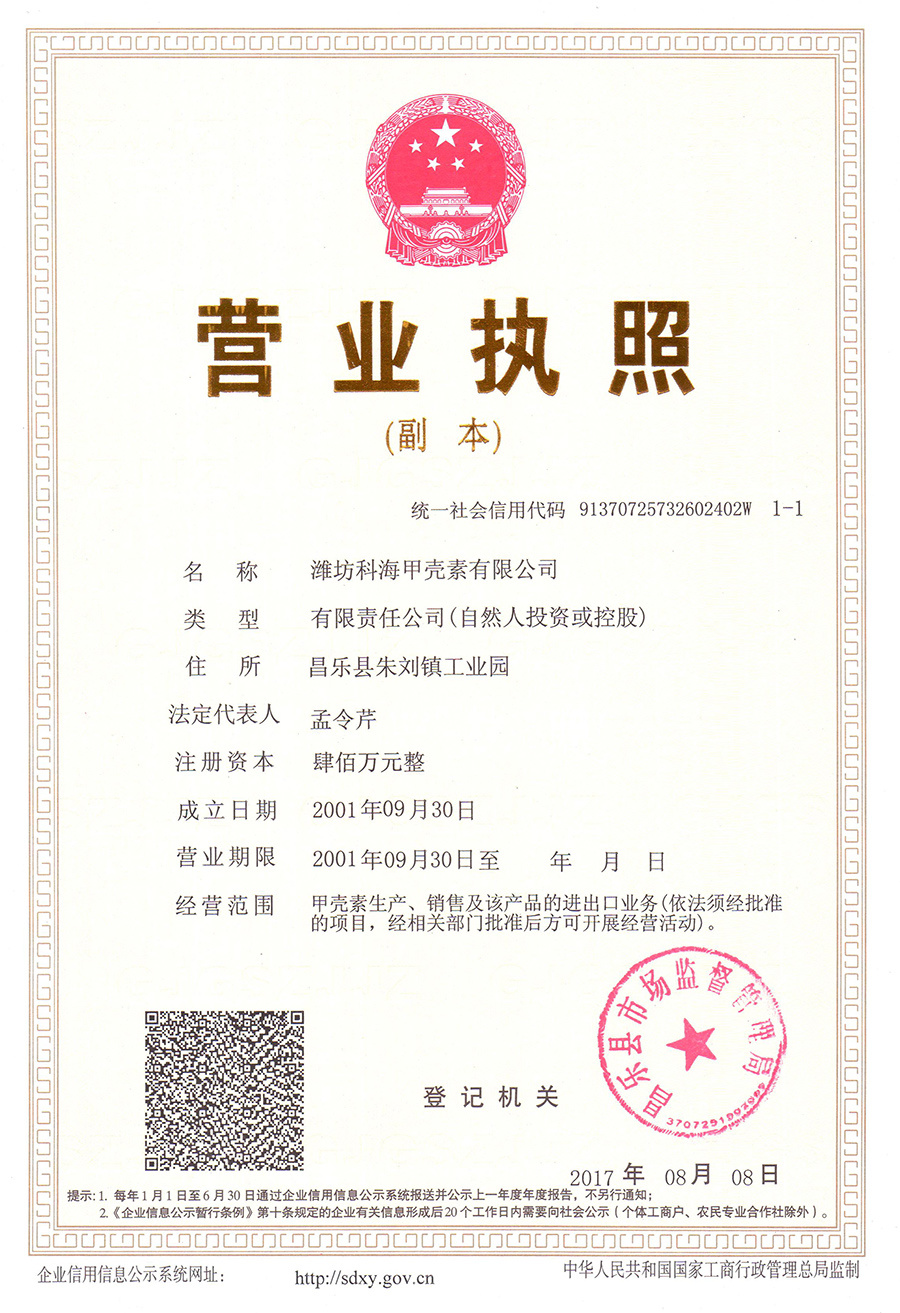
Weifang Kehai Chitosan Co., Ltd
Address: Zhuliu Industrial Park, Changle County, Weifang City, Shandong Province, China
General Manager: Ms Meng Ya
Mr. Meng: 86 13806497089
Ms Meng: 86 15563902222
Mr. Lee: 86 13011668883
Mail:kevinhbr888@gmail.com
General Manager: Ms Meng Ya
Mr. Meng: 86 13806497089
Ms Meng: 86 15563902222
Mr. Lee: 86 13011668883
Mail:kevinhbr888@gmail.com

QR CODE
MESSAGE