

Release time:
Table of Contents:
1. Introduction to Paper Making Chitosan
2. Understanding Paper Strength and Durability
3. The Role of Chitosan in Paper Making
4. Enhancing Paper Strength with Chitosan
5. Improving Paper Durability with Chitosan
6. Frequently Asked Questions about Paper Making Chitosan
7. Conclusion
1. Introduction to Paper Making Chitosan
In the world of paper production, advancements are constantly being made to improve the quality and durability of paper products. One such innovation is the utilization of chitosan in the papermaking process. Chitosan, derived from chitin, a natural polymer found in the exoskeletons of crustaceans, has shown great potential in enhancing paper strength and durability. In this article, we will explore the benefits of using chitosan in papermaking and how it contributes to the overall quality of paper products.
2. Understanding Paper Strength and Durability
Before delving into the role of chitosan, it is essential to understand the concepts of paper strength and durability. Paper strength refers to the ability of paper to withstand external forces without tearing or breaking. On the other hand, durability refers to the paper's resistance to aging, yellowing, and degradation over time. Both these factors are crucial in determining the quality and longevity of paper products.
3. The Role of Chitosan in Paper Making
Chitosan, with its unique chemical composition and properties, has gained recognition as a valuable additive in the papermaking industry. When added to the paper pulp during the manufacturing process, chitosan forms a thin film on the surface of the paper fibers, enhancing their bonding and increasing the overall strength of the paper. Additionally, chitosan's positively charged molecules attract negatively charged pigment particles, resulting in improved color retention and brightness in the final paper product.
4. Enhancing Paper Strength with Chitosan
The addition of chitosan to the papermaking process significantly enhances the strength of the paper. The thin film formed by chitosan improves the bonding between the paper fibers, making the paper more resistant to tearing and breaking. This increased strength is particularly beneficial in applications where paper needs to withstand heavy usage, such as packaging materials, industrial filters, and specialty papers.
Furthermore, chitosan's film-forming properties create a smoother surface on the paper, reducing the roughness that can weaken the paper structure. This smoothness improves the printability of the paper, allowing for sharper and more vibrant printed images.
5. Improving Paper Durability with Chitosan
In addition to enhancing paper strength, chitosan also plays a crucial role in improving the durability of paper products. The thin film formed by chitosan acts as a protective barrier, preventing the penetration of moisture and other harmful substances into the paper fibers. This barrier helps to prevent yellowing, degradation, and deterioration of the paper over time, resulting in papers that retain their quality and appearance for longer periods.
Chitosan's antimicrobial properties also contribute to the preservation of paper durability. It inhibits the growth of bacteria and fungi on the paper surface, reducing the risk of microbial degradation and extending the lifespan of paper products.
6. Frequently Asked Questions about Paper Making Chitosan
Q1: Is chitosan safe for the environment?
A1: Yes, chitosan is a biodegradable and environmentally friendly material. It is derived from natural sources and does not pose any significant harm to the environment when used in papermaking.
Q2: Can chitosan be used in all types of paper production?
A2: Chitosan can be incorporated into various types of paper production, including packaging papers, printing papers, and specialty papers. Its versatility makes it suitable for different papermaking applications.
Q3: Does chitosan affect the recyclability of paper?
A3: No, chitosan does not negatively impact the recyclability of paper. The thin film formed by chitosan can be easily removed during the recycling process, allowing the paper to be recycled without any complications.
Q4: Can chitosan be used in combination with other paper additives?
A4: Yes, chitosan can be used in conjunction with other paper additives to further enhance paper properties. It can complement the effects of other additives and contribute to the overall improvement of paper strength and durability.
Q5: Are there any limitations to using chitosan in papermaking?
A5: While chitosan offers numerous benefits, it is important to consider factors such as cost, availability, and compatibility with existing papermaking processes when incorporating it into paper production.
7. Conclusion
In conclusion, the utilization of chitosan in papermaking brings about significant improvements in both paper strength and durability. Its film-forming properties enhance the bonding between paper fibers, resulting in stronger and more resilient paper products. Additionally, the protective barrier formed by chitosan preserves the quality of paper, making it more resistant to aging and environmental factors. By incorporating chitosan into the papermaking process, manufacturers can produce high-quality papers that meet the demands of various applications.
1. Introduction to Paper Making Chitosan
2. Understanding Paper Strength and Durability
3. The Role of Chitosan in Paper Making
4. Enhancing Paper Strength with Chitosan
5. Improving Paper Durability with Chitosan
6. Frequently Asked Questions about Paper Making Chitosan
7. Conclusion
1. Introduction to Paper Making Chitosan
In the world of paper production, advancements are constantly being made to improve the quality and durability of paper products. One such innovation is the utilization of chitosan in the papermaking process. Chitosan, derived from chitin, a natural polymer found in the exoskeletons of crustaceans, has shown great potential in enhancing paper strength and durability. In this article, we will explore the benefits of using chitosan in papermaking and how it contributes to the overall quality of paper products.
2. Understanding Paper Strength and Durability
Before delving into the role of chitosan, it is essential to understand the concepts of paper strength and durability. Paper strength refers to the ability of paper to withstand external forces without tearing or breaking. On the other hand, durability refers to the paper's resistance to aging, yellowing, and degradation over time. Both these factors are crucial in determining the quality and longevity of paper products.
3. The Role of Chitosan in Paper Making
Chitosan, with its unique chemical composition and properties, has gained recognition as a valuable additive in the papermaking industry. When added to the paper pulp during the manufacturing process, chitosan forms a thin film on the surface of the paper fibers, enhancing their bonding and increasing the overall strength of the paper. Additionally, chitosan's positively charged molecules attract negatively charged pigment particles, resulting in improved color retention and brightness in the final paper product.
4. Enhancing Paper Strength with Chitosan
The addition of chitosan to the papermaking process significantly enhances the strength of the paper. The thin film formed by chitosan improves the bonding between the paper fibers, making the paper more resistant to tearing and breaking. This increased strength is particularly beneficial in applications where paper needs to withstand heavy usage, such as packaging materials, industrial filters, and specialty papers.
Furthermore, chitosan's film-forming properties create a smoother surface on the paper, reducing the roughness that can weaken the paper structure. This smoothness improves the printability of the paper, allowing for sharper and more vibrant printed images.
5. Improving Paper Durability with Chitosan
In addition to enhancing paper strength, chitosan also plays a crucial role in improving the durability of paper products. The thin film formed by chitosan acts as a protective barrier, preventing the penetration of moisture and other harmful substances into the paper fibers. This barrier helps to prevent yellowing, degradation, and deterioration of the paper over time, resulting in papers that retain their quality and appearance for longer periods.
Chitosan's antimicrobial properties also contribute to the preservation of paper durability. It inhibits the growth of bacteria and fungi on the paper surface, reducing the risk of microbial degradation and extending the lifespan of paper products.
6. Frequently Asked Questions about Paper Making Chitosan
Q1: Is chitosan safe for the environment?
A1: Yes, chitosan is a biodegradable and environmentally friendly material. It is derived from natural sources and does not pose any significant harm to the environment when used in papermaking.
Q2: Can chitosan be used in all types of paper production?
A2: Chitosan can be incorporated into various types of paper production, including packaging papers, printing papers, and specialty papers. Its versatility makes it suitable for different papermaking applications.
Q3: Does chitosan affect the recyclability of paper?
A3: No, chitosan does not negatively impact the recyclability of paper. The thin film formed by chitosan can be easily removed during the recycling process, allowing the paper to be recycled without any complications.
Q4: Can chitosan be used in combination with other paper additives?
A4: Yes, chitosan can be used in conjunction with other paper additives to further enhance paper properties. It can complement the effects of other additives and contribute to the overall improvement of paper strength and durability.
Q5: Are there any limitations to using chitosan in papermaking?
A5: While chitosan offers numerous benefits, it is important to consider factors such as cost, availability, and compatibility with existing papermaking processes when incorporating it into paper production.
7. Conclusion
In conclusion, the utilization of chitosan in papermaking brings about significant improvements in both paper strength and durability. Its film-forming properties enhance the bonding between paper fibers, resulting in stronger and more resilient paper products. Additionally, the protective barrier formed by chitosan preserves the quality of paper, making it more resistant to aging and environmental factors. By incorporating chitosan into the papermaking process, manufacturers can produce high-quality papers that meet the demands of various applications.
Related
CONTACT US
language
English
العربية
বাংলাদেশ
Български
Hrvatski
Česky
Dansk
Nederland
 Esperanto
Slovenski
Filipino
Suomi
Français
Maori
 Shqiptare
Georgian
 Euskara
Deutsch
Ελλάδα
ישראל
इंडिया
Magyarország
Ísland
Indonesia
Irlanda
Italia
日本語
Sovensko
Հայաստան
한국
Kyrgyz
ປະເທດລາວ
 Zulu
Zulu
Latvian
Lithuanian
Luxembourgish
 Latinus
Macedonian
Малайская
Maltese
Монгол улс
 Cymraeg
ဗမာ
 தமிழ்
தமிழ்
नेपाल
Norge
ایران
Polska
Portugal
România
Российская
Србија
 Slovak
Србија
 Slovak
Bosanski
Slovenian
Беларус
España
Sverige
Точик
ประเทศไทย
Türk
Azərbaycan
Uzbek
 Afrikaans
Việt Nam
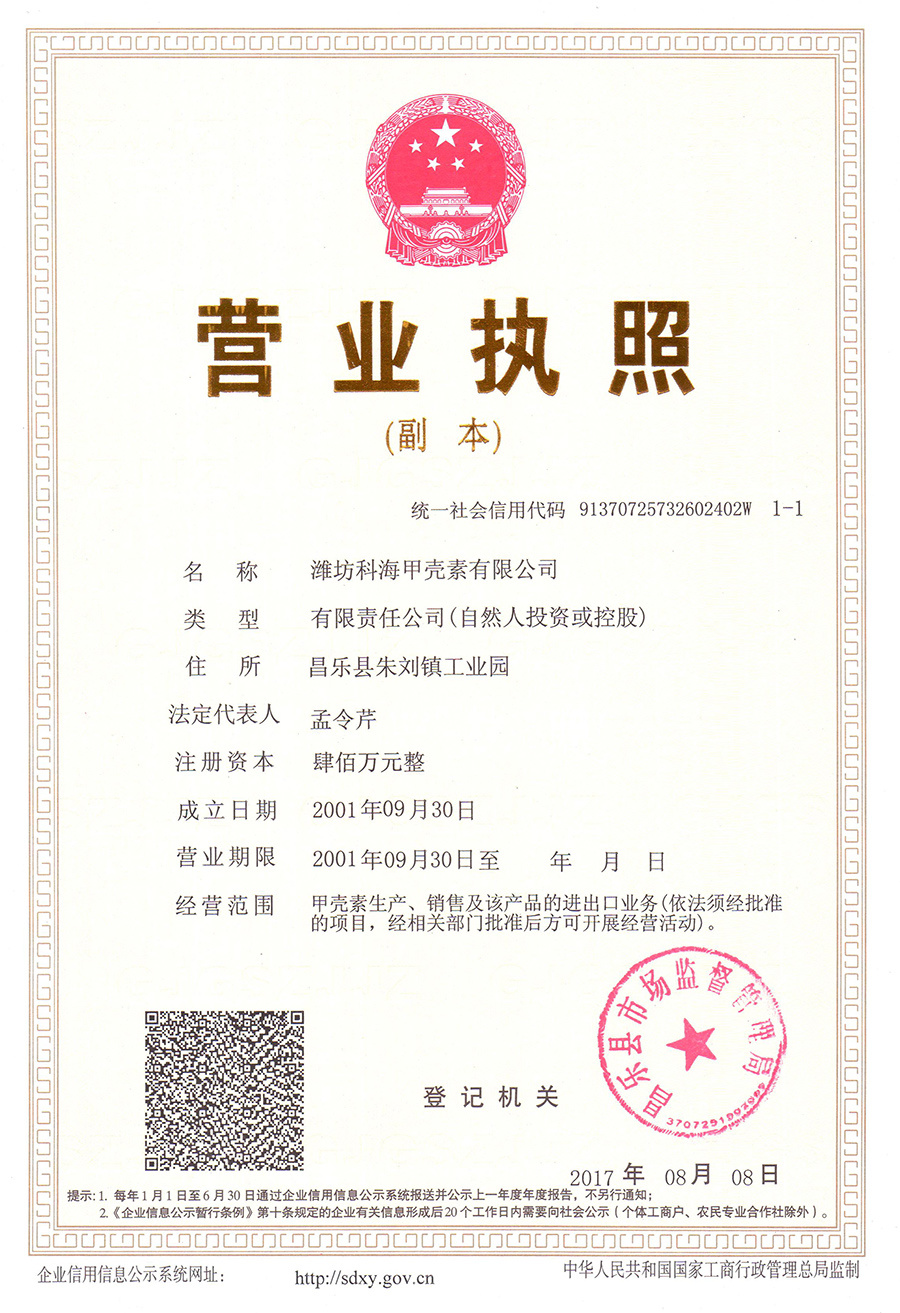
Weifang Kehai Chitosan Co., Ltd
Address: Zhuliu Industrial Park, Changle County, Weifang City, Shandong Province, China
General Manager: Ms Meng Ya
Mr. Meng: 86 13806497089
Ms Meng: 86 15563902222
Mr. Lee: 86 13011668883
Mail:kevinhbr888@gmail.com
General Manager: Ms Meng Ya
Mr. Meng: 86 13806497089
Ms Meng: 86 15563902222
Mr. Lee: 86 13011668883
Mail:kevinhbr888@gmail.com

QR CODE
MESSAGE