

Release time:
Table of Contents
1. Introduction: The Versatility of Chitin Industrial Grade
2. Understanding Chitin: Properties and Sources
3. Chitin in Food Industry: Advantages and Applications
4. Unleashing the Potential: Innovative Food Additives
5. Chitin as a Natural Preservative: Extending Shelf Life
6. Chitin and Enhanced Food Texture: The Perfect Combination
7. Chitin's Impact on Food Safety and Quality
8. Chitin's Future in Food Applications: Promising Developments
9. Frequently Asked Questions (FAQs)
10. Conclusion
1. Introduction: The Versatility of Chitin Industrial Grade
Chitin, a biopolymer derived from the shells of crustaceans and other marine organisms, has emerged as a game-changer in the food industry. With its unique properties and diverse applications, chitin industrial grade has the potential to revolutionize the way we approach food additives and enhance the overall quality of various food products.
2. Understanding Chitin: Properties and Sources
Chitin is a naturally occurring polysaccharide that provides structural support to the exoskeletons of crustaceans, insects, and fungi. Its strong and flexible nature makes it an ideal ingredient for industrial applications. Chitin can be extracted from various sources, including shrimp shells, crab shells, and fungal cell walls, making it a sustainable and renewable resource.
3. Chitin in Food Industry: Advantages and Applications
The food industry has recognized the potential of chitin in enhancing food products. Chitin and its derivatives offer numerous advantages, such as improved texture, extended shelf life, and enhanced food safety. Its applications range from thickening agents and emulsifiers to natural preservatives and antimicrobial agents.
4. Unleashing the Potential: Innovative Food Additives
Chitin industrial grade opens up new possibilities for creating innovative food additives. Its unique properties allow for the development of functional ingredients, such as chitosan-based coatings for fruits and vegetables, which provide a protective barrier against microbial contamination and maintain freshness.
5. Chitin as a Natural Preservative: Extending Shelf Life
One of the key advantages of chitin is its ability to act as a natural preservative. Chitosan, a derivative of chitin, has antimicrobial properties that inhibit the growth of spoilage-causing bacteria and fungi. Incorporating chitosan into food packaging materials can significantly extend the shelf life of perishable products.
6. Chitin and Enhanced Food Texture: The Perfect Combination
Texture plays a crucial role in the sensory experience of food. Chitin can be used as a texturizing agent to improve the mouthfeel and overall quality of food products. Its ability to form gels, films, and foams makes it an ideal ingredient for creating smooth and creamy textures in various food applications.
7. Chitin's Impact on Food Safety and Quality
Food safety is a top priority in the food industry. Chitosan, derived from chitin, has been widely studied for its antimicrobial properties, making it an effective tool for reducing microbial contamination and enhancing food safety. Chitin-based additives can help maintain the quality and integrity of food products throughout the supply chain.
8. Chitin's Future in Food Applications: Promising Developments
The potential of chitin in the food industry is far from fully realized. Ongoing research and development efforts are exploring new applications and refining existing ones. From innovative packaging solutions to novel functional ingredients, chitin holds immense promise for creating safer, healthier, and more sustainable food products.
9. Frequently Asked Questions (FAQs)
Q1: What is chitin industrial grade?
Chitin industrial grade is a refined form of chitin that meets specific quality standards for use in industrial applications, including the food industry.
Q2: How is chitin extracted from natural sources?
Chitin is extracted from natural sources, such as shrimp shells and crab shells, through a series of chemical and enzymatic processes.
Q3: Can chitin-based additives replace synthetic food additives?
Chitin-based additives offer a natural alternative to synthetic food additives, providing similar functionalities while reducing the reliance on artificial ingredients.
Q4: Is chitosan safe for consumption?
Chitosan, derived from chitin, is generally recognized as safe for consumption. However, individuals with shellfish allergies should exercise caution.
Q5: What are the environmental benefits of using chitin?
Chitin is a sustainable and renewable resource that can help reduce waste from seafood processing and promote a more circular economy.
10. Conclusion
In conclusion, chitin industrial grade presents a world of opportunities for the food industry. Its versatility, natural origin, and unique properties make it an excellent candidate for a wide range of food applications. From enhancing texture and extending shelf life to improving food safety and quality, chitin has the potential to revolutionize the way we approach food additives. As research and development continue to unlock new possibilities, the future of chitin in the food industry looks promising.
Chitin, a biopolymer derived from the shells of crustaceans and other marine organisms, has emerged as a game-changer in the food industry. With its unique properties and diverse applications, chitin industrial grade has the potential to revolutionize the way we approach food additives and enhance the overall quality of various food products.
2. Understanding Chitin: Properties and Sources
Chitin is a naturally occurring polysaccharide that provides structural support to the exoskeletons of crustaceans, insects, and fungi. Its strong and flexible nature makes it an ideal ingredient for industrial applications. Chitin can be extracted from various sources, including shrimp shells, crab shells, and fungal cell walls, making it a sustainable and renewable resource.
3. Chitin in Food Industry: Advantages and Applications
The food industry has recognized the potential of chitin in enhancing food products. Chitin and its derivatives offer numerous advantages, such as improved texture, extended shelf life, and enhanced food safety. Its applications range from thickening agents and emulsifiers to natural preservatives and antimicrobial agents.
4. Unleashing the Potential: Innovative Food Additives
Chitin industrial grade opens up new possibilities for creating innovative food additives. Its unique properties allow for the development of functional ingredients, such as chitosan-based coatings for fruits and vegetables, which provide a protective barrier against microbial contamination and maintain freshness.
5. Chitin as a Natural Preservative: Extending Shelf Life
One of the key advantages of chitin is its ability to act as a natural preservative. Chitosan, a derivative of chitin, has antimicrobial properties that inhibit the growth of spoilage-causing bacteria and fungi. Incorporating chitosan into food packaging materials can significantly extend the shelf life of perishable products.
6. Chitin and Enhanced Food Texture: The Perfect Combination
Texture plays a crucial role in the sensory experience of food. Chitin can be used as a texturizing agent to improve the mouthfeel and overall quality of food products. Its ability to form gels, films, and foams makes it an ideal ingredient for creating smooth and creamy textures in various food applications.
7. Chitin's Impact on Food Safety and Quality
Food safety is a top priority in the food industry. Chitosan, derived from chitin, has been widely studied for its antimicrobial properties, making it an effective tool for reducing microbial contamination and enhancing food safety. Chitin-based additives can help maintain the quality and integrity of food products throughout the supply chain.
8. Chitin's Future in Food Applications: Promising Developments
The potential of chitin in the food industry is far from fully realized. Ongoing research and development efforts are exploring new applications and refining existing ones. From innovative packaging solutions to novel functional ingredients, chitin holds immense promise for creating safer, healthier, and more sustainable food products.
9. Frequently Asked Questions (FAQs)
Q1: What is chitin industrial grade?
Chitin industrial grade is a refined form of chitin that meets specific quality standards for use in industrial applications, including the food industry.
Q2: How is chitin extracted from natural sources?
Chitin is extracted from natural sources, such as shrimp shells and crab shells, through a series of chemical and enzymatic processes.
Q3: Can chitin-based additives replace synthetic food additives?
Chitin-based additives offer a natural alternative to synthetic food additives, providing similar functionalities while reducing the reliance on artificial ingredients.
Q4: Is chitosan safe for consumption?
Chitosan, derived from chitin, is generally recognized as safe for consumption. However, individuals with shellfish allergies should exercise caution.
Q5: What are the environmental benefits of using chitin?
Chitin is a sustainable and renewable resource that can help reduce waste from seafood processing and promote a more circular economy.
10. Conclusion
In conclusion, chitin industrial grade presents a world of opportunities for the food industry. Its versatility, natural origin, and unique properties make it an excellent candidate for a wide range of food applications. From enhancing texture and extending shelf life to improving food safety and quality, chitin has the potential to revolutionize the way we approach food additives. As research and development continue to unlock new possibilities, the future of chitin in the food industry looks promising.
The food industry has recognized the potential of chitin in enhancing food products. Chitin and its derivatives offer numerous advantages, such as improved texture, extended shelf life, and enhanced food safety. Its applications range from thickening agents and emulsifiers to natural preservatives and antimicrobial agents.
4. Unleashing the Potential: Innovative Food Additives
Chitin industrial grade opens up new possibilities for creating innovative food additives. Its unique properties allow for the development of functional ingredients, such as chitosan-based coatings for fruits and vegetables, which provide a protective barrier against microbial contamination and maintain freshness.
5. Chitin as a Natural Preservative: Extending Shelf Life
One of the key advantages of chitin is its ability to act as a natural preservative. Chitosan, a derivative of chitin, has antimicrobial properties that inhibit the growth of spoilage-causing bacteria and fungi. Incorporating chitosan into food packaging materials can significantly extend the shelf life of perishable products.
6. Chitin and Enhanced Food Texture: The Perfect Combination
Texture plays a crucial role in the sensory experience of food. Chitin can be used as a texturizing agent to improve the mouthfeel and overall quality of food products. Its ability to form gels, films, and foams makes it an ideal ingredient for creating smooth and creamy textures in various food applications.
7. Chitin's Impact on Food Safety and Quality
Food safety is a top priority in the food industry. Chitosan, derived from chitin, has been widely studied for its antimicrobial properties, making it an effective tool for reducing microbial contamination and enhancing food safety. Chitin-based additives can help maintain the quality and integrity of food products throughout the supply chain.
8. Chitin's Future in Food Applications: Promising Developments
The potential of chitin in the food industry is far from fully realized. Ongoing research and development efforts are exploring new applications and refining existing ones. From innovative packaging solutions to novel functional ingredients, chitin holds immense promise for creating safer, healthier, and more sustainable food products.
9. Frequently Asked Questions (FAQs)
Q1: What is chitin industrial grade?
Chitin industrial grade is a refined form of chitin that meets specific quality standards for use in industrial applications, including the food industry.
Q2: How is chitin extracted from natural sources?
Chitin is extracted from natural sources, such as shrimp shells and crab shells, through a series of chemical and enzymatic processes.
Q3: Can chitin-based additives replace synthetic food additives?
Chitin-based additives offer a natural alternative to synthetic food additives, providing similar functionalities while reducing the reliance on artificial ingredients.
Q4: Is chitosan safe for consumption?
Chitosan, derived from chitin, is generally recognized as safe for consumption. However, individuals with shellfish allergies should exercise caution.
Q5: What are the environmental benefits of using chitin?
Chitin is a sustainable and renewable resource that can help reduce waste from seafood processing and promote a more circular economy.
10. Conclusion
In conclusion, chitin industrial grade presents a world of opportunities for the food industry. Its versatility, natural origin, and unique properties make it an excellent candidate for a wide range of food applications. From enhancing texture and extending shelf life to improving food safety and quality, chitin has the potential to revolutionize the way we approach food additives. As research and development continue to unlock new possibilities, the future of chitin in the food industry looks promising.
One of the key advantages of chitin is its ability to act as a natural preservative. Chitosan, a derivative of chitin, has antimicrobial properties that inhibit the growth of spoilage-causing bacteria and fungi. Incorporating chitosan into food packaging materials can significantly extend the shelf life of perishable products.
6. Chitin and Enhanced Food Texture: The Perfect Combination
Texture plays a crucial role in the sensory experience of food. Chitin can be used as a texturizing agent to improve the mouthfeel and overall quality of food products. Its ability to form gels, films, and foams makes it an ideal ingredient for creating smooth and creamy textures in various food applications.
7. Chitin's Impact on Food Safety and Quality
Food safety is a top priority in the food industry. Chitosan, derived from chitin, has been widely studied for its antimicrobial properties, making it an effective tool for reducing microbial contamination and enhancing food safety. Chitin-based additives can help maintain the quality and integrity of food products throughout the supply chain.
8. Chitin's Future in Food Applications: Promising Developments
The potential of chitin in the food industry is far from fully realized. Ongoing research and development efforts are exploring new applications and refining existing ones. From innovative packaging solutions to novel functional ingredients, chitin holds immense promise for creating safer, healthier, and more sustainable food products.
9. Frequently Asked Questions (FAQs)
Q1: What is chitin industrial grade?
Chitin industrial grade is a refined form of chitin that meets specific quality standards for use in industrial applications, including the food industry.
Q2: How is chitin extracted from natural sources?
Chitin is extracted from natural sources, such as shrimp shells and crab shells, through a series of chemical and enzymatic processes.
Q3: Can chitin-based additives replace synthetic food additives?
Chitin-based additives offer a natural alternative to synthetic food additives, providing similar functionalities while reducing the reliance on artificial ingredients.
Q4: Is chitosan safe for consumption?
Chitosan, derived from chitin, is generally recognized as safe for consumption. However, individuals with shellfish allergies should exercise caution.
Q5: What are the environmental benefits of using chitin?
Chitin is a sustainable and renewable resource that can help reduce waste from seafood processing and promote a more circular economy.
10. Conclusion
In conclusion, chitin industrial grade presents a world of opportunities for the food industry. Its versatility, natural origin, and unique properties make it an excellent candidate for a wide range of food applications. From enhancing texture and extending shelf life to improving food safety and quality, chitin has the potential to revolutionize the way we approach food additives. As research and development continue to unlock new possibilities, the future of chitin in the food industry looks promising.
Food safety is a top priority in the food industry. Chitosan, derived from chitin, has been widely studied for its antimicrobial properties, making it an effective tool for reducing microbial contamination and enhancing food safety. Chitin-based additives can help maintain the quality and integrity of food products throughout the supply chain.
8. Chitin's Future in Food Applications: Promising Developments
The potential of chitin in the food industry is far from fully realized. Ongoing research and development efforts are exploring new applications and refining existing ones. From innovative packaging solutions to novel functional ingredients, chitin holds immense promise for creating safer, healthier, and more sustainable food products.
9. Frequently Asked Questions (FAQs)
Q1: What is chitin industrial grade?
Chitin industrial grade is a refined form of chitin that meets specific quality standards for use in industrial applications, including the food industry.
Q2: How is chitin extracted from natural sources?
Chitin is extracted from natural sources, such as shrimp shells and crab shells, through a series of chemical and enzymatic processes.
Q3: Can chitin-based additives replace synthetic food additives?
Chitin-based additives offer a natural alternative to synthetic food additives, providing similar functionalities while reducing the reliance on artificial ingredients.
Q4: Is chitosan safe for consumption?
Chitosan, derived from chitin, is generally recognized as safe for consumption. However, individuals with shellfish allergies should exercise caution.
Q5: What are the environmental benefits of using chitin?
Chitin is a sustainable and renewable resource that can help reduce waste from seafood processing and promote a more circular economy.
10. Conclusion
In conclusion, chitin industrial grade presents a world of opportunities for the food industry. Its versatility, natural origin, and unique properties make it an excellent candidate for a wide range of food applications. From enhancing texture and extending shelf life to improving food safety and quality, chitin has the potential to revolutionize the way we approach food additives. As research and development continue to unlock new possibilities, the future of chitin in the food industry looks promising.
Q1: What is chitin industrial grade?
Chitin industrial grade is a refined form of chitin that meets specific quality standards for use in industrial applications, including the food industry.
Q2: How is chitin extracted from natural sources?
Chitin is extracted from natural sources, such as shrimp shells and crab shells, through a series of chemical and enzymatic processes.
Q3: Can chitin-based additives replace synthetic food additives?
Chitin-based additives offer a natural alternative to synthetic food additives, providing similar functionalities while reducing the reliance on artificial ingredients.
Q4: Is chitosan safe for consumption?
Chitosan, derived from chitin, is generally recognized as safe for consumption. However, individuals with shellfish allergies should exercise caution.
Q5: What are the environmental benefits of using chitin?
Chitin is a sustainable and renewable resource that can help reduce waste from seafood processing and promote a more circular economy.
10. Conclusion
In conclusion, chitin industrial grade presents a world of opportunities for the food industry. Its versatility, natural origin, and unique properties make it an excellent candidate for a wide range of food applications. From enhancing texture and extending shelf life to improving food safety and quality, chitin has the potential to revolutionize the way we approach food additives. As research and development continue to unlock new possibilities, the future of chitin in the food industry looks promising.
Chitin is extracted from natural sources, such as shrimp shells and crab shells, through a series of chemical and enzymatic processes.
Q3: Can chitin-based additives replace synthetic food additives?
Chitin-based additives offer a natural alternative to synthetic food additives, providing similar functionalities while reducing the reliance on artificial ingredients.
Q4: Is chitosan safe for consumption?
Chitosan, derived from chitin, is generally recognized as safe for consumption. However, individuals with shellfish allergies should exercise caution.
Q5: What are the environmental benefits of using chitin?
Chitin is a sustainable and renewable resource that can help reduce waste from seafood processing and promote a more circular economy.
10. Conclusion
In conclusion, chitin industrial grade presents a world of opportunities for the food industry. Its versatility, natural origin, and unique properties make it an excellent candidate for a wide range of food applications. From enhancing texture and extending shelf life to improving food safety and quality, chitin has the potential to revolutionize the way we approach food additives. As research and development continue to unlock new possibilities, the future of chitin in the food industry looks promising.
Chitosan, derived from chitin, is generally recognized as safe for consumption. However, individuals with shellfish allergies should exercise caution.
Q5: What are the environmental benefits of using chitin?
Chitin is a sustainable and renewable resource that can help reduce waste from seafood processing and promote a more circular economy.
10. Conclusion
In conclusion, chitin industrial grade presents a world of opportunities for the food industry. Its versatility, natural origin, and unique properties make it an excellent candidate for a wide range of food applications. From enhancing texture and extending shelf life to improving food safety and quality, chitin has the potential to revolutionize the way we approach food additives. As research and development continue to unlock new possibilities, the future of chitin in the food industry looks promising.
In conclusion, chitin industrial grade presents a world of opportunities for the food industry. Its versatility, natural origin, and unique properties make it an excellent candidate for a wide range of food applications. From enhancing texture and extending shelf life to improving food safety and quality, chitin has the potential to revolutionize the way we approach food additives. As research and development continue to unlock new possibilities, the future of chitin in the food industry looks promising.
Related
CONTACT US
language
English
العربية
বাংলাদেশ
Български
Hrvatski
Česky
Dansk
Nederland
 Esperanto
Slovenski
Filipino
Suomi
Français
Maori
 Shqiptare
Georgian
 Euskara
Deutsch
Ελλάδα
ישראל
इंडिया
Magyarország
Ísland
Indonesia
Irlanda
Italia
日本語
Sovensko
Հայաստան
한국
Kyrgyz
ປະເທດລາວ
 Zulu
Zulu
Latvian
Lithuanian
Luxembourgish
 Latinus
Macedonian
Малайская
Maltese
Монгол улс
 Cymraeg
ဗမာ
 தமிழ்
தமிழ்
नेपाल
Norge
ایران
Polska
Portugal
România
Российская
Србија
 Slovak
Србија
 Slovak
Bosanski
Slovenian
Беларус
España
Sverige
Точик
ประเทศไทย
Türk
Azərbaycan
Uzbek
 Afrikaans
Việt Nam
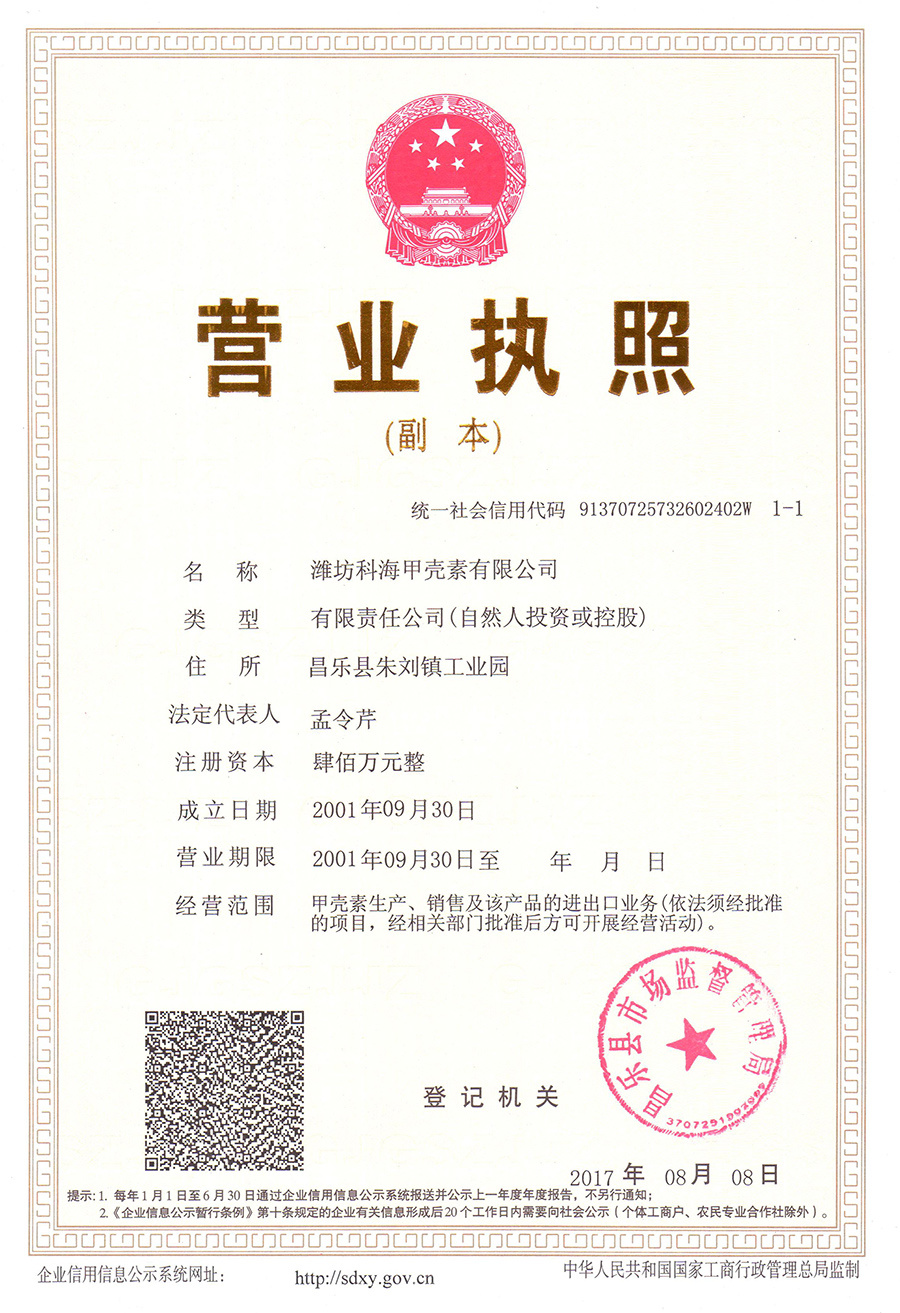
Weifang Kehai Chitosan Co., Ltd
Address: Zhuliu Industrial Park, Changle County, Weifang City, Shandong Province, China
General Manager: Ms Meng Ya
Mr. Meng: 86 13806497089
Ms Meng: 86 15563902222
Mr. Lee: 86 13011668883
Mail:kevinhbr888@gmail.com
General Manager: Ms Meng Ya
Mr. Meng: 86 13806497089
Ms Meng: 86 15563902222
Mr. Lee: 86 13011668883
Mail:kevinhbr888@gmail.com

QR CODE
MESSAGE