

Release time:
Introduction:
Agriculture grade chitosan is a valuable food additive that plays a crucial role in the agricultural industry, specifically in the realm of food additives. It offers numerous benefits and is widely used in various applications within the field. This article will delve into the versatility of agriculture grade chitosan and its significant contributions to sustainable farming practices.
1. Enhancing Crop Yield and Quality:
Agriculture grade chitosan has gained recognition as an effective tool for enhancing crop yield and quality. Its antimicrobial and antifungal properties help protect plants from various pests and diseases, reducing the need for harmful chemical pesticides. It stimulates plant growth, improves nutrient uptake, and enhances the overall health and resilience of crops.
2. Promoting Soil Health:
Maintaining healthy soil is essential for sustainable farming, and agriculture grade chitosan assists in this endeavor. It acts as a soil conditioner, enhancing soil structure and water retention capabilities, which in turn promotes optimal plant growth. Chitosan also aids in the decomposition of organic matter, contributing to the nutrient cycling process and supporting a healthy soil ecosystem.
3. Biopesticide and Biostimulant Properties:
As a biopesticide, agriculture grade chitosan offers an eco-friendly alternative to conventional chemical pesticides. It effectively controls pests and insects, reducing crop damage without harming beneficial organisms. Additionally, chitosan acts as a biostimulant, triggering natural defense mechanisms in plants and promoting their resistance to environmental stressors.
4. Post-Harvest Applications:
Chitosan's remarkable properties extend beyond the growing season. It finds applications in post-harvest treatments, such as coating fruits and vegetables. The biodegradable chitosan film acts as a protective barrier, extending the shelf life of perishable produce, reducing spoilage, and minimizing post-harvest losses. Such applications contribute to sustainable food production and reduce waste.
5. Environmental Sustainability:
One of the key advantages of agriculture grade chitosan is its environmental sustainability. Being derived from abundant marine resources, such as crustacean shells, chitosan offers a renewable and biodegradable alternative to synthetic products. Its use in farming practices aligns with the principles of eco-friendly and sustainable agriculture, reducing the environmental impact of chemical additives.
In conclusion, agriculture grade chitosan serves as a versatile and sustainable food additive in the agricultural industry. Its applications range from enhancing crop yield and quality to promoting soil health, acting as a biopesticide, and improving post-harvest practices. Incorporating chitosan into farming practices supports ecological balance, reduces chemical dependence, and fosters sustainable food production for a better future.
Agriculture grade chitosan is a valuable food additive that plays a crucial role in the agricultural industry, specifically in the realm of food additives. It offers numerous benefits and is widely used in various applications within the field. This article will delve into the versatility of agriculture grade chitosan and its significant contributions to sustainable farming practices.
1. Enhancing Crop Yield and Quality:
Agriculture grade chitosan has gained recognition as an effective tool for enhancing crop yield and quality. Its antimicrobial and antifungal properties help protect plants from various pests and diseases, reducing the need for harmful chemical pesticides. It stimulates plant growth, improves nutrient uptake, and enhances the overall health and resilience of crops.
2. Promoting Soil Health:
Maintaining healthy soil is essential for sustainable farming, and agriculture grade chitosan assists in this endeavor. It acts as a soil conditioner, enhancing soil structure and water retention capabilities, which in turn promotes optimal plant growth. Chitosan also aids in the decomposition of organic matter, contributing to the nutrient cycling process and supporting a healthy soil ecosystem.
3. Biopesticide and Biostimulant Properties:
As a biopesticide, agriculture grade chitosan offers an eco-friendly alternative to conventional chemical pesticides. It effectively controls pests and insects, reducing crop damage without harming beneficial organisms. Additionally, chitosan acts as a biostimulant, triggering natural defense mechanisms in plants and promoting their resistance to environmental stressors.
4. Post-Harvest Applications:
Chitosan's remarkable properties extend beyond the growing season. It finds applications in post-harvest treatments, such as coating fruits and vegetables. The biodegradable chitosan film acts as a protective barrier, extending the shelf life of perishable produce, reducing spoilage, and minimizing post-harvest losses. Such applications contribute to sustainable food production and reduce waste.
5. Environmental Sustainability:
One of the key advantages of agriculture grade chitosan is its environmental sustainability. Being derived from abundant marine resources, such as crustacean shells, chitosan offers a renewable and biodegradable alternative to synthetic products. Its use in farming practices aligns with the principles of eco-friendly and sustainable agriculture, reducing the environmental impact of chemical additives.
In conclusion, agriculture grade chitosan serves as a versatile and sustainable food additive in the agricultural industry. Its applications range from enhancing crop yield and quality to promoting soil health, acting as a biopesticide, and improving post-harvest practices. Incorporating chitosan into farming practices supports ecological balance, reduces chemical dependence, and fosters sustainable food production for a better future.
Related
CONTACT US
language
English
العربية
বাংলাদেশ
Български
Hrvatski
Česky
Dansk
Nederland
 Esperanto
Slovenski
Filipino
Suomi
Français
Maori
 Shqiptare
Georgian
 Euskara
Deutsch
Ελλάδα
ישראל
इंडिया
Magyarország
Ísland
Indonesia
Irlanda
Italia
日本語
Sovensko
Հայաստան
한국
Kyrgyz
ປະເທດລາວ
 Zulu
Zulu
Latvian
Lithuanian
Luxembourgish
 Latinus
Macedonian
Малайская
Maltese
Монгол улс
 Cymraeg
ဗမာ
 தமிழ்
தமிழ்
नेपाल
Norge
ایران
Polska
Portugal
România
Российская
Србија
 Slovak
Србија
 Slovak
Bosanski
Slovenian
Беларус
España
Sverige
Точик
ประเทศไทย
Türk
Azərbaycan
Uzbek
 Afrikaans
Việt Nam
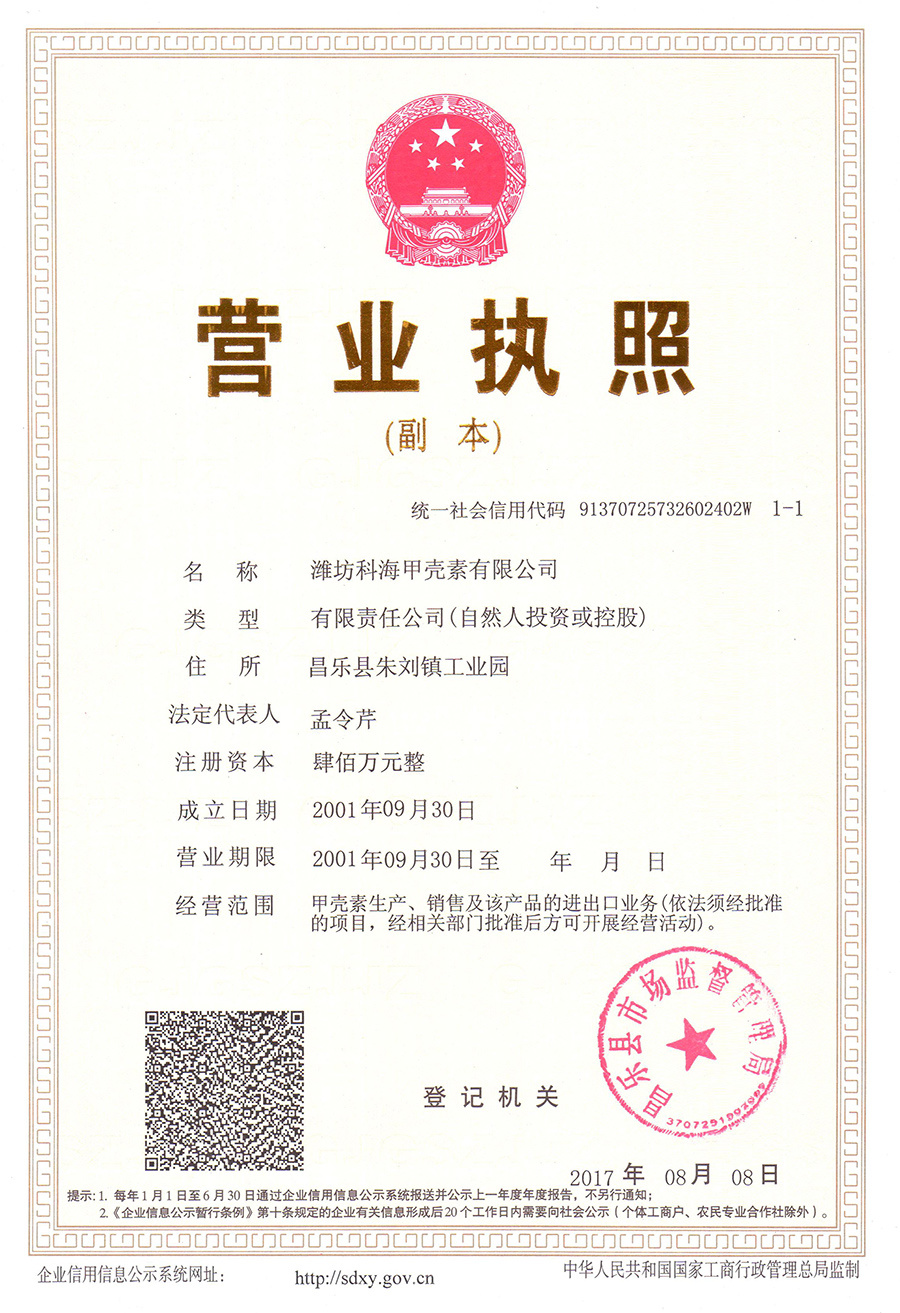
Weifang Kehai Chitosan Co., Ltd
Address: Zhuliu Industrial Park, Changle County, Weifang City, Shandong Province, China
General Manager: Ms Meng Ya
Mr. Meng: 86 13806497089
Ms Meng: 86 15563902222
Mr. Lee: 86 13011668883
Mail:kevinhbr888@gmail.com
General Manager: Ms Meng Ya
Mr. Meng: 86 13806497089
Ms Meng: 86 15563902222
Mr. Lee: 86 13011668883
Mail:kevinhbr888@gmail.com

QR CODE
MESSAGE