

Release time:
Introduction:
Agriculture grade chitosan is a vital food additive used in the agricultural food industry. Its unique properties and versatility make it an essential ingredient for food processing. In this article, we will delve into the specifics of agriculture grade chitosan, its benefits, and its various applications in the food industry.
1. What is agriculture grade chitosan?
Agriculture grade chitosan is a derivative of chitin, a natural compound found in the exoskeletons of crustaceans such as shrimp and crabs. It is a biodegradable and non-toxic substance that has gained popularity in the food industry due to its numerous beneficial properties.
2. Benefits of agriculture grade chitosan:
- Natural antimicrobial agent: Agriculture grade chitosan possesses antimicrobial properties, effectively inhibiting the growth of bacteria and fungi in food products. This property extends the shelf life of perishable foods and reduces the need for chemical preservatives.
- Improved food quality and texture: Chitosan helps retain moisture in food, preventing dehydration and maintaining freshness. It also enhances the texture and mouthfeel of processed foods, giving them a desirable consistency.
- Enhanced nutritional value: When used as a coating on fruits and vegetables, agriculture grade chitosan acts as a barrier, preventing nutrient loss during post-harvest storage and transportation. This ensures that the produce retains its nutritional value for longer periods.
- Environmentally friendly: As a naturally derived substance, agriculture grade chitosan is biodegradable, making it an eco-friendly choice for food manufacturers.
3. Applications of agriculture grade chitosan in the food industry:
- Food preservation: Agriculture grade chitosan is commonly used as a natural preservative in various food products, including meat, poultry, seafood, and dairy. It effectively extends their shelf life while maintaining their quality.
- Edible films and coatings: Chitosan-based films and coatings are used to create a protective layer on fresh produce, preventing microbial contamination and dehydration. This application is particularly useful for fruits and vegetables, helping to preserve their freshness and extend their shelf life.
- Clarification of juices and wines: Chitosan acts as a clarifying agent, removing impurities and haze-forming particles from juices and wines. It improves their clarity and enhances their quality.
- Fat and cholesterol reduction: When added to food formulations, agriculture grade chitosan can bind with dietary fats and cholesterol, reducing their absorption in the digestive system. This makes it a valuable ingredient for producing healthier food products.
Conclusion:
Agriculture grade chitosan plays a vital role in the food industry as a natural and versatile food additive. Its antimicrobial properties, ability to enhance food quality, and various applications make it an indispensable ingredient in the production of a wide range of food products. By incorporating agriculture grade chitosan, food manufacturers can improve food safety, extend shelf life, enhance nutritional value, and promote sustainability in the industry.
Agriculture grade chitosan is a vital food additive used in the agricultural food industry. Its unique properties and versatility make it an essential ingredient for food processing. In this article, we will delve into the specifics of agriculture grade chitosan, its benefits, and its various applications in the food industry.
1. What is agriculture grade chitosan?
Agriculture grade chitosan is a derivative of chitin, a natural compound found in the exoskeletons of crustaceans such as shrimp and crabs. It is a biodegradable and non-toxic substance that has gained popularity in the food industry due to its numerous beneficial properties.
2. Benefits of agriculture grade chitosan:
- Natural antimicrobial agent: Agriculture grade chitosan possesses antimicrobial properties, effectively inhibiting the growth of bacteria and fungi in food products. This property extends the shelf life of perishable foods and reduces the need for chemical preservatives.
- Improved food quality and texture: Chitosan helps retain moisture in food, preventing dehydration and maintaining freshness. It also enhances the texture and mouthfeel of processed foods, giving them a desirable consistency.
- Enhanced nutritional value: When used as a coating on fruits and vegetables, agriculture grade chitosan acts as a barrier, preventing nutrient loss during post-harvest storage and transportation. This ensures that the produce retains its nutritional value for longer periods.
- Environmentally friendly: As a naturally derived substance, agriculture grade chitosan is biodegradable, making it an eco-friendly choice for food manufacturers.
3. Applications of agriculture grade chitosan in the food industry:
- Food preservation: Agriculture grade chitosan is commonly used as a natural preservative in various food products, including meat, poultry, seafood, and dairy. It effectively extends their shelf life while maintaining their quality.
- Edible films and coatings: Chitosan-based films and coatings are used to create a protective layer on fresh produce, preventing microbial contamination and dehydration. This application is particularly useful for fruits and vegetables, helping to preserve their freshness and extend their shelf life.
- Clarification of juices and wines: Chitosan acts as a clarifying agent, removing impurities and haze-forming particles from juices and wines. It improves their clarity and enhances their quality.
- Fat and cholesterol reduction: When added to food formulations, agriculture grade chitosan can bind with dietary fats and cholesterol, reducing their absorption in the digestive system. This makes it a valuable ingredient for producing healthier food products.
Conclusion:
Agriculture grade chitosan plays a vital role in the food industry as a natural and versatile food additive. Its antimicrobial properties, ability to enhance food quality, and various applications make it an indispensable ingredient in the production of a wide range of food products. By incorporating agriculture grade chitosan, food manufacturers can improve food safety, extend shelf life, enhance nutritional value, and promote sustainability in the industry.
Related
CONTACT US
language
English
العربية
বাংলাদেশ
Български
Hrvatski
Česky
Dansk
Nederland
 Esperanto
Slovenski
Filipino
Suomi
Français
Maori
 Shqiptare
Georgian
 Euskara
Deutsch
Ελλάδα
ישראל
इंडिया
Magyarország
Ísland
Indonesia
Irlanda
Italia
日本語
Sovensko
Հայաստան
한국
Kyrgyz
ປະເທດລາວ
 Zulu
Zulu
Latvian
Lithuanian
Luxembourgish
 Latinus
Macedonian
Малайская
Maltese
Монгол улс
 Cymraeg
ဗမာ
 தமிழ்
தமிழ்
नेपाल
Norge
ایران
Polska
Portugal
România
Российская
Србија
 Slovak
Србија
 Slovak
Bosanski
Slovenian
Беларус
España
Sverige
Точик
ประเทศไทย
Türk
Azərbaycan
Uzbek
 Afrikaans
Việt Nam
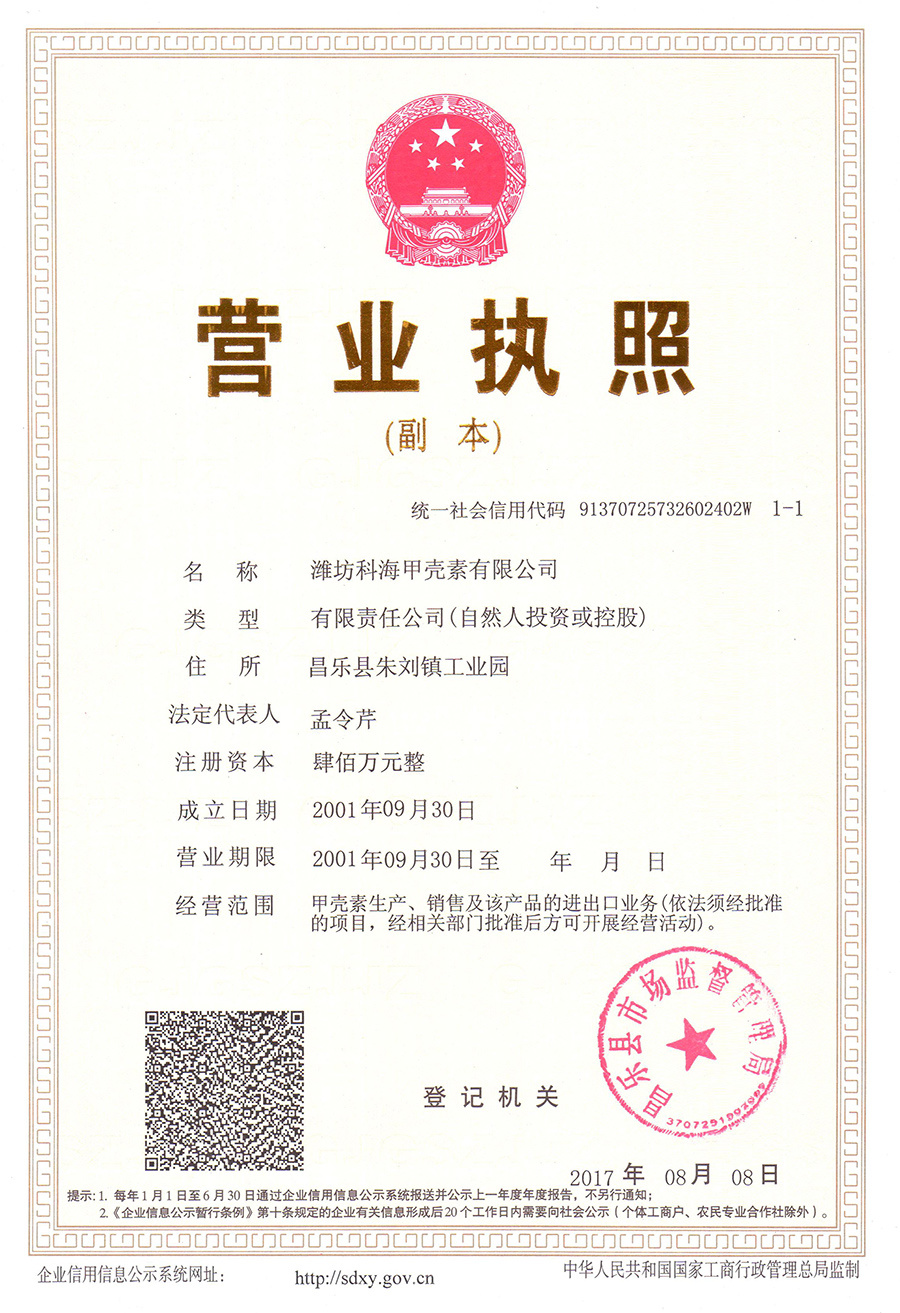
Weifang Kehai Chitosan Co., Ltd
Address: Zhuliu Industrial Park, Changle County, Weifang City, Shandong Province, China
General Manager: Ms Meng Ya
Mr. Meng: 86 13806497089
Ms Meng: 86 15563902222
Mr. Lee: 86 13011668883
Mail:kevinhbr888@gmail.com
General Manager: Ms Meng Ya
Mr. Meng: 86 13806497089
Ms Meng: 86 15563902222
Mr. Lee: 86 13011668883
Mail:kevinhbr888@gmail.com

QR CODE
MESSAGE