

Release time:
Table of Contents
1. Introduction
2. What is Chitosan?
3. Chitosan in Paper Making
3.1 Enhancing Paper Strength
3.2 Improving Paper Whiteness
3.3 Increasing Paper Porosity
3.4 Enhancing Paper Coating
4. Sustainability of Chitosan
5. Applications of Chitosan in the Paper Industry
5.1 Printing and Writing Paper
5.2 Packaging Materials
5.3 Specialty Papers
6. Future Prospects of Chitosan-based Paper Making
7. Frequently Asked Questions (FAQs)
8. Conclusion
1. Introduction
In recent years, the paper-making industry has been striving to find innovative and sustainable solutions to improve the quality and environmental impact of paper production. One such solution is the utilization of chitosan, a natural product derived from shellfish, which has shown remarkable potential in revolutionizing paper-making processes. This article explores the power of chitosan in paper making, discussing its benefits, applications, and the promising future it holds for the industry.
2. What is Chitosan?
Chitosan is a derivative of chitin, a natural substance found abundantly in the exoskeletons of crustaceans such as shrimp and crabs. It is a polysaccharide composed of glucosamine and N-acetylglucosamine, making it biodegradable, non-toxic, and environmentally friendly. Chitosan has gained significant attention in various industries due to its unique properties, such as its antimicrobial, biocompatible, and film-forming capabilities.
3. Chitosan in Paper Making
3.1 Enhancing Paper Strength
Chitosan can significantly increase the strength and durability of paper products. By incorporating chitosan into the paper pulp, it acts as a reinforcing agent, improving the tensile strength and tear resistance of the final paper. This allows for the production of stronger and more durable paper, reducing the risk of tearing and ensuring longevity.
3.2 Improving Paper Whiteness
Chitosan possesses excellent whitening properties, making it a valuable addition to the paper-making process. Its ability to remove impurities and brighten the paper surface enhances the overall whiteness and brightness of the final product. This improvement in whiteness not only enhances the visual appeal of the paper but also allows for better print quality.
3.3 Increasing Paper Porosity
Chitosan can be used to increase the porosity of paper, allowing for better ink absorption and improved printing performance. By incorporating chitosan nanoparticles into the paper fibers, the resulting paper becomes more receptive to ink, resulting in crisper and more vibrant prints. This makes chitosan a valuable additive for printing and writing paper.
3.4 Enhancing Paper Coating
Chitosan-based coatings have shown exceptional properties when applied to paper surfaces. These coatings provide a protective layer, improving resistance to moisture, oil, and other external elements. Additionally, chitosan coatings can enhance the smoothness and glossiness of the paper, further enhancing its visual appeal.
4. Sustainability of Chitosan
Chitosan is a sustainable alternative to traditional paper-making additives. As it is derived from shellfish waste, its production does not require additional resources or contribute to environmental degradation. Moreover, chitosan is biodegradable, reducing the environmental impact of paper products during their lifecycle. By harnessing the power of chitosan, the paper-making industry can move towards a greener and more sustainable future.
5. Applications of Chitosan in the Paper Industry
5.1 Printing and Writing Paper
Chitosan finds extensive use in the production of printing and writing paper. With its ability to improve paper strength, whiteness, and porosity, chitosan-infused paper offers excellent printability, producing sharp and vibrant prints. This makes it an ideal choice for various printing applications, including books, magazines, and brochures.
5.2 Packaging Materials
Chitosan-based paper is also well-suited for packaging materials. The enhanced strength and durability of chitosan-infused paper make it an excellent choice for packaging fragile and delicate items. Its biodegradability ensures that packaging waste does not contribute to long-term environmental pollution.
5.3 Specialty Papers
Chitosan has opened avenues for the production of specialty papers with unique characteristics. For example, chitosan can be incorporated into paper intended for water filtration, providing antimicrobial properties and enhancing filtration efficiency. Similarly, chitosan-infused paper can be utilized for medical packaging, ensuring the sterility and safety of the contents.
6. Future Prospects of Chitosan-based Paper Making
The utilization of chitosan in the paper-making industry is still in its early stages, but the future holds great promise. Continued research and development efforts aim to enhance the properties of chitosan, further expanding its applications in paper production. As the demand for sustainable and eco-friendly paper products continues to grow, chitosan-based paper making is poised to play a significant role in meeting these needs.
7. Frequently Asked Questions (FAQs)
Q1. Is chitosan safe for the environment and human health?
Q2. Can chitosan be used in the production of recycled paper?
Q3. How does chitosan enhance paper strength?
Q4. Are there any drawbacks or limitations of using chitosan in paper making?
Q5. What is the cost comparison of chitosan-based paper versus traditional paper?
8. Conclusion
Innovative paper making techniques harnessing the power of chitosan are transforming the industry's landscape. The unique properties of chitosan, such as its ability to enhance paper strength, improve whiteness, increase porosity, and provide protective coatings, make it a valuable additive in paper production. With its sustainability and wide range of applications, chitosan-based paper making is set to revolutionize the industry, paving the way for greener and more efficient paper production processes. Embracing this innovation will not only lead to superior paper products but also contribute to a more sustainable future.
1. Introduction
2. What is Chitosan?
3. Chitosan in Paper Making
3.1 Enhancing Paper Strength
3.2 Improving Paper Whiteness
3.3 Increasing Paper Porosity
3.4 Enhancing Paper Coating
4. Sustainability of Chitosan
5. Applications of Chitosan in the Paper Industry
5.1 Printing and Writing Paper
5.2 Packaging Materials
5.3 Specialty Papers
6. Future Prospects of Chitosan-based Paper Making
7. Frequently Asked Questions (FAQs)
8. Conclusion
1. Introduction
In recent years, the paper-making industry has been striving to find innovative and sustainable solutions to improve the quality and environmental impact of paper production. One such solution is the utilization of chitosan, a natural product derived from shellfish, which has shown remarkable potential in revolutionizing paper-making processes. This article explores the power of chitosan in paper making, discussing its benefits, applications, and the promising future it holds for the industry.
2. What is Chitosan?
Chitosan is a derivative of chitin, a natural substance found abundantly in the exoskeletons of crustaceans such as shrimp and crabs. It is a polysaccharide composed of glucosamine and N-acetylglucosamine, making it biodegradable, non-toxic, and environmentally friendly. Chitosan has gained significant attention in various industries due to its unique properties, such as its antimicrobial, biocompatible, and film-forming capabilities.
3. Chitosan in Paper Making
3.1 Enhancing Paper Strength
Chitosan can significantly increase the strength and durability of paper products. By incorporating chitosan into the paper pulp, it acts as a reinforcing agent, improving the tensile strength and tear resistance of the final paper. This allows for the production of stronger and more durable paper, reducing the risk of tearing and ensuring longevity.
3.2 Improving Paper Whiteness
Chitosan possesses excellent whitening properties, making it a valuable addition to the paper-making process. Its ability to remove impurities and brighten the paper surface enhances the overall whiteness and brightness of the final product. This improvement in whiteness not only enhances the visual appeal of the paper but also allows for better print quality.
3.3 Increasing Paper Porosity
Chitosan can be used to increase the porosity of paper, allowing for better ink absorption and improved printing performance. By incorporating chitosan nanoparticles into the paper fibers, the resulting paper becomes more receptive to ink, resulting in crisper and more vibrant prints. This makes chitosan a valuable additive for printing and writing paper.
3.4 Enhancing Paper Coating
Chitosan-based coatings have shown exceptional properties when applied to paper surfaces. These coatings provide a protective layer, improving resistance to moisture, oil, and other external elements. Additionally, chitosan coatings can enhance the smoothness and glossiness of the paper, further enhancing its visual appeal.
4. Sustainability of Chitosan
Chitosan is a sustainable alternative to traditional paper-making additives. As it is derived from shellfish waste, its production does not require additional resources or contribute to environmental degradation. Moreover, chitosan is biodegradable, reducing the environmental impact of paper products during their lifecycle. By harnessing the power of chitosan, the paper-making industry can move towards a greener and more sustainable future.
5. Applications of Chitosan in the Paper Industry
5.1 Printing and Writing Paper
Chitosan finds extensive use in the production of printing and writing paper. With its ability to improve paper strength, whiteness, and porosity, chitosan-infused paper offers excellent printability, producing sharp and vibrant prints. This makes it an ideal choice for various printing applications, including books, magazines, and brochures.
5.2 Packaging Materials
Chitosan-based paper is also well-suited for packaging materials. The enhanced strength and durability of chitosan-infused paper make it an excellent choice for packaging fragile and delicate items. Its biodegradability ensures that packaging waste does not contribute to long-term environmental pollution.
5.3 Specialty Papers
Chitosan has opened avenues for the production of specialty papers with unique characteristics. For example, chitosan can be incorporated into paper intended for water filtration, providing antimicrobial properties and enhancing filtration efficiency. Similarly, chitosan-infused paper can be utilized for medical packaging, ensuring the sterility and safety of the contents.
6. Future Prospects of Chitosan-based Paper Making
The utilization of chitosan in the paper-making industry is still in its early stages, but the future holds great promise. Continued research and development efforts aim to enhance the properties of chitosan, further expanding its applications in paper production. As the demand for sustainable and eco-friendly paper products continues to grow, chitosan-based paper making is poised to play a significant role in meeting these needs.
7. Frequently Asked Questions (FAQs)
Q1. Is chitosan safe for the environment and human health?
Q2. Can chitosan be used in the production of recycled paper?
Q3. How does chitosan enhance paper strength?
Q4. Are there any drawbacks or limitations of using chitosan in paper making?
Q5. What is the cost comparison of chitosan-based paper versus traditional paper?
8. Conclusion
Innovative paper making techniques harnessing the power of chitosan are transforming the industry's landscape. The unique properties of chitosan, such as its ability to enhance paper strength, improve whiteness, increase porosity, and provide protective coatings, make it a valuable additive in paper production. With its sustainability and wide range of applications, chitosan-based paper making is set to revolutionize the industry, paving the way for greener and more efficient paper production processes. Embracing this innovation will not only lead to superior paper products but also contribute to a more sustainable future.
Related
CONTACT US
language
English
العربية
বাংলাদেশ
Български
Hrvatski
Česky
Dansk
Nederland
 Esperanto
Slovenski
Filipino
Suomi
Français
Maori
 Shqiptare
Georgian
 Euskara
Deutsch
Ελλάδα
ישראל
इंडिया
Magyarország
Ísland
Indonesia
Irlanda
Italia
日本語
Sovensko
Հայաստան
한국
Kyrgyz
ປະເທດລາວ
 Zulu
Zulu
Latvian
Lithuanian
Luxembourgish
 Latinus
Macedonian
Малайская
Maltese
Монгол улс
 Cymraeg
ဗမာ
 தமிழ்
தமிழ்
नेपाल
Norge
ایران
Polska
Portugal
România
Российская
Србија
 Slovak
Србија
 Slovak
Bosanski
Slovenian
Беларус
España
Sverige
Точик
ประเทศไทย
Türk
Azərbaycan
Uzbek
 Afrikaans
Việt Nam
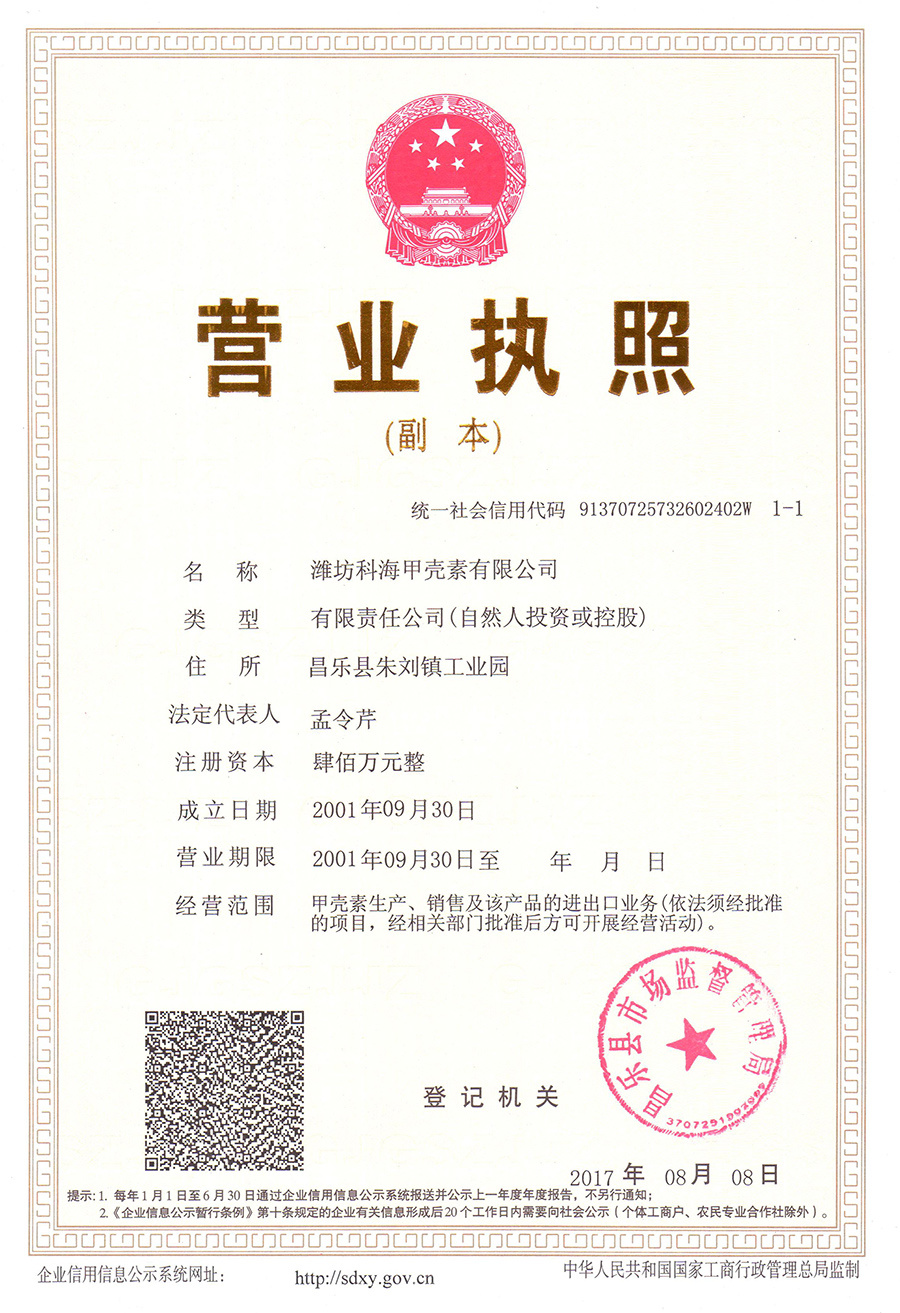
Weifang Kehai Chitosan Co., Ltd
Address: Zhuliu Industrial Park, Changle County, Weifang City, Shandong Province, China
General Manager: Ms Meng Ya
Mr. Meng: 86 13806497089
Ms Meng: 86 15563902222
Mr. Lee: 86 13011668883
Mail:kevinhbr888@gmail.com
General Manager: Ms Meng Ya
Mr. Meng: 86 13806497089
Ms Meng: 86 15563902222
Mr. Lee: 86 13011668883
Mail:kevinhbr888@gmail.com

QR CODE
MESSAGE