

Release time:
Chitin industrial grade material has emerged as a versatile food additive, finding extensive use in the agricultural sector, particularly as a valuable ingredient in various food products. Derived from the exoskeletons of crustaceans such as shrimp, crab, and lobster, this unique material offers a range of benefits that enhance food quality, shelf life, and agricultural practices. In this article, we will explore the applications and advantages of chitin industrial grade material in the context of the agricultural food industry.
One of the key benefits of chitin industrial grade material lies in its ability to act as a natural preservative. Due to its antimicrobial properties, it helps inhibit the growth of spoilage-causing microorganisms in food products. By incorporating chitin industrial grade material into various agricultural food products, manufacturers can extend their shelf life without relying heavily on artificial preservatives. This not only ensures the freshness and quality of the food but also reduces the need for chemical additives, promoting a healthier and more natural approach to food production.
In addition to its preservative properties, chitin industrial grade material also acts as an effective thickening agent. By improving the viscosity and texture of food products, it enhances their overall sensory experience. From sauces and dressings to processed meats and dairy products, chitin industrial grade material lends a desirable consistency, making these products more appealing to consumers. Moreover, its natural origin adds to the marketability of the final food offerings, responding to the growing demand for clean label and natural ingredients.
Furthermore, chitin industrial grade material exhibits film-forming properties, making it an ideal material for edible coatings. These coatings can be applied to fruits, vegetables, and other agricultural produce, forming a protective layer that helps reduce moisture loss, enhance product appearance, and improve resistance to microbial attacks. By utilizing chitin industrial grade material as a coating agent, farmers and food processors can prolong the freshness of their produce, minimize post-harvest losses, and meet the increasing consumer expectations for visually appealing fruits and vegetables.
Beyond its direct applications in food products, chitin industrial grade material can also play a vital role in promoting sustainable agricultural practices. As a byproduct of the seafood industry, it offers a valuable opportunity for waste utilization and environmental conservation. By incorporating chitin industrial grade material into agricultural processes, farmers can enhance soil quality, improve water retention, and foster beneficial microbial activity. Additionally, the biodegradability of chitin industrial grade material ensures that its use does not contribute to long-term environmental pollution, making it a sustainable choice for the agricultural industry.
In conclusion, chitin industrial grade material serves as a versatile and sustainable food additive for the agricultural sector. Its applications range from preserving food quality and extending shelf life to enhancing sensory attributes and promoting eco-friendly agricultural practices. By harnessing the potential of chitin industrial grade material, the food industry can meet consumer demands for natural and high-quality products while minimizing environmental impact. Embrace the benefits of this remarkable substance and pave the way for a future of innovative and sustainable agricultural practices.
One of the key benefits of chitin industrial grade material lies in its ability to act as a natural preservative. Due to its antimicrobial properties, it helps inhibit the growth of spoilage-causing microorganisms in food products. By incorporating chitin industrial grade material into various agricultural food products, manufacturers can extend their shelf life without relying heavily on artificial preservatives. This not only ensures the freshness and quality of the food but also reduces the need for chemical additives, promoting a healthier and more natural approach to food production.
In addition to its preservative properties, chitin industrial grade material also acts as an effective thickening agent. By improving the viscosity and texture of food products, it enhances their overall sensory experience. From sauces and dressings to processed meats and dairy products, chitin industrial grade material lends a desirable consistency, making these products more appealing to consumers. Moreover, its natural origin adds to the marketability of the final food offerings, responding to the growing demand for clean label and natural ingredients.
Furthermore, chitin industrial grade material exhibits film-forming properties, making it an ideal material for edible coatings. These coatings can be applied to fruits, vegetables, and other agricultural produce, forming a protective layer that helps reduce moisture loss, enhance product appearance, and improve resistance to microbial attacks. By utilizing chitin industrial grade material as a coating agent, farmers and food processors can prolong the freshness of their produce, minimize post-harvest losses, and meet the increasing consumer expectations for visually appealing fruits and vegetables.
Beyond its direct applications in food products, chitin industrial grade material can also play a vital role in promoting sustainable agricultural practices. As a byproduct of the seafood industry, it offers a valuable opportunity for waste utilization and environmental conservation. By incorporating chitin industrial grade material into agricultural processes, farmers can enhance soil quality, improve water retention, and foster beneficial microbial activity. Additionally, the biodegradability of chitin industrial grade material ensures that its use does not contribute to long-term environmental pollution, making it a sustainable choice for the agricultural industry.
In conclusion, chitin industrial grade material serves as a versatile and sustainable food additive for the agricultural sector. Its applications range from preserving food quality and extending shelf life to enhancing sensory attributes and promoting eco-friendly agricultural practices. By harnessing the potential of chitin industrial grade material, the food industry can meet consumer demands for natural and high-quality products while minimizing environmental impact. Embrace the benefits of this remarkable substance and pave the way for a future of innovative and sustainable agricultural practices.
Related
CONTACT US
language
English
العربية
বাংলাদেশ
Български
Hrvatski
Česky
Dansk
Nederland
 Esperanto
Slovenski
Filipino
Suomi
Français
Maori
 Shqiptare
Georgian
 Euskara
Deutsch
Ελλάδα
ישראל
इंडिया
Magyarország
Ísland
Indonesia
Irlanda
Italia
日本語
Sovensko
Հայաստան
한국
Kyrgyz
ປະເທດລາວ
 Zulu
Zulu
Latvian
Lithuanian
Luxembourgish
 Latinus
Macedonian
Малайская
Maltese
Монгол улс
 Cymraeg
ဗမာ
 தமிழ்
தமிழ்
नेपाल
Norge
ایران
Polska
Portugal
România
Российская
Србија
 Slovak
Србија
 Slovak
Bosanski
Slovenian
Беларус
España
Sverige
Точик
ประเทศไทย
Türk
Azərbaycan
Uzbek
 Afrikaans
Việt Nam
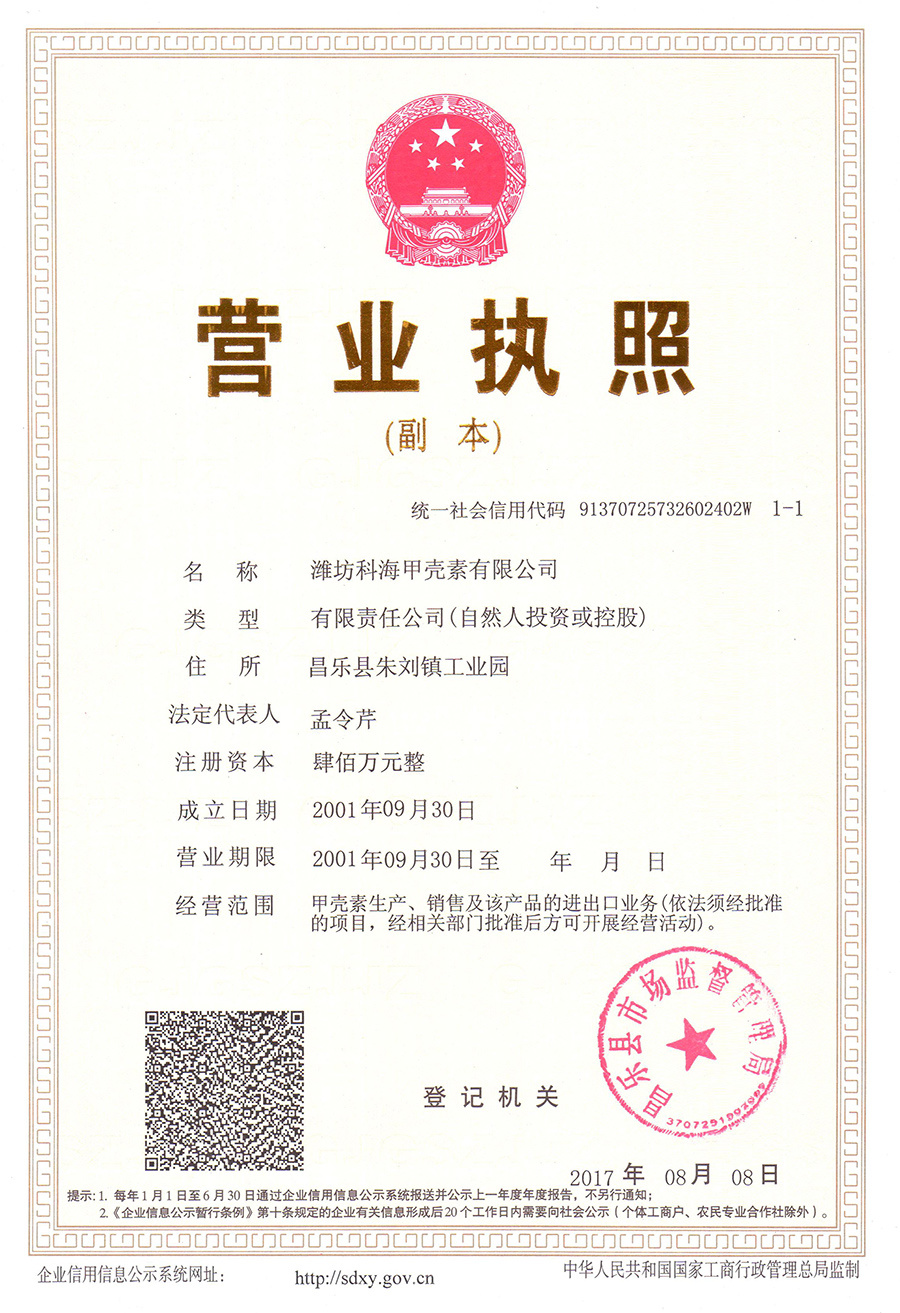
Weifang Kehai Chitosan Co., Ltd
Address: Zhuliu Industrial Park, Changle County, Weifang City, Shandong Province, China
General Manager: Ms Meng Ya
Mr. Meng: 86 13806497089
Ms Meng: 86 15563902222
Mr. Lee: 86 13011668883
Mail:kevinhbr888@gmail.com
General Manager: Ms Meng Ya
Mr. Meng: 86 13806497089
Ms Meng: 86 15563902222
Mr. Lee: 86 13011668883
Mail:kevinhbr888@gmail.com

QR CODE
MESSAGE