

Release time:
Table of Contents:
1. Introduction: Understanding Chitin and its Industrial Grade
2. Chitin in Food Production: A Versatile Food Additive
3. Enhancing Product Quality with Chitin
3.1 Chitin's Role in Texture and Shelf Life Enhancement
3.2 Chitin's Contribution to Food Stability and Preservation
4. Chitin's Impact on Food Safety
4.1 Chitin as a Natural Antimicrobial Agent
4.2 Chitin's Ability to Reduce Contaminants and Toxins
5. Chitin's Sustainable Nature and Environmental Benefits
6. FAQs: Answering Common Questions on Chitin Industrial Grade
6.1 How is chitin sourced for industrial use?
6.2 Is chitin safe for consumption?
6.3 What food products can benefit from chitin incorporation?
6.4 Does chitin have any potential allergenic effects?
6.5 How does chitin contribute to waste reduction in food production?
7. Conclusion: Embracing the Advantages of Chitin Industrial Grade
1. Introduction: Understanding Chitin and its Industrial Grade
Chitin is a naturally abundant biopolymer found in the exoskeletons of crustaceans, insects, and fungi. This polysaccharide possesses unique properties that make it highly valuable in various industries, including food production. Chitin's industrial grade refers to its purified and refined form, suitable for incorporation as an additive in food processing.
2. Chitin in Food Production: A Versatile Food Additive
Chitin offers numerous benefits when utilized as a food additive. Its versatility stems from its ability to modify and enhance various aspects of food products, ranging from texture and shelf life to safety and sustainability.
3. Enhancing Product Quality with Chitin
3.1 Chitin's Role in Texture and Shelf Life Enhancement
By incorporating chitin into food formulations, manufacturers can improve the texture and consistency of their products. Chitin acts as a thickening agent, contributing to the desired mouthfeel and viscosity in sauces, dressings, and dairy products. Additionally, chitin's water-binding properties enhance moisture retention, thereby extending the shelf life of perishable goods.
3.2 Chitin's Contribution to Food Stability and Preservation
Chitin's antimicrobial properties make it an excellent natural preservative. When added to food products, chitin inhibits the growth of harmful bacteria, fungi, and yeasts, thus preventing spoilage and maintaining freshness. This natural preservation method reduces the need for synthetic additives, promoting cleaner labels and healthier food choices.
4. Chitin's Impact on Food Safety
4.1 Chitin as a Natural Antimicrobial Agent
Chitin possesses inherent antimicrobial properties that can effectively combat foodborne pathogens. Its ability to inhibit the growth of microorganisms, such as Salmonella and E. coli, reduces the risk of foodborne illnesses associated with contaminated products. By incorporating chitin, food manufacturers can enhance the safety and integrity of their offerings.
4.2 Chitin's Ability to Reduce Contaminants and Toxins
In addition to its antimicrobial properties, chitin acts as a toxin binder. It can effectively trap and eliminate contaminants, such as heavy metals and mycotoxins, from food matrices. This capability contributes to improved food safety, ensuring that consumers are protected from potentially harmful substances.
5. Chitin's Sustainable Nature and Environmental Benefits
Chitin is a renewable resource that can be responsibly sourced from waste streams generated by the seafood and agricultural industries. By utilizing chitin, food producers can reduce waste and promote sustainability. Moreover, chitin's biodegradability ensures that its use has minimal impact on the environment, aligning with the principles of a greener and more sustainable future.
6. FAQs: Answering Common Questions on Chitin Industrial Grade
6.1 How is chitin sourced for industrial use?
Chitin is predominantly sourced from the shells of crustaceans, such as shrimp and crab. These by-products of the seafood industry undergo a rigorous purification process to obtain chitin of industrial grade quality.
6.2 Is chitin safe for consumption?
Yes, chitin is considered safe for consumption. Extensive research has demonstrated its non-toxic nature, making it a viable food additive option. However, individuals with shellfish allergies should exercise caution since chitin is derived from crustacean shells.
6.3 What food products can benefit from chitin incorporation?
Chitin can be incorporated into a wide range of food products, including sauces, dressings, dairy products, bakery goods, and meat-based products. Its versatility allows for various applications based on the desired enhancement or preservation requirement.
6.4 Does chitin have any potential allergenic effects?
While chitin itself is not considered allergenic, individuals with shellfish allergies may experience adverse reactions when exposed to chitin-derived additives. It is essential to consider allergen labeling and inform consumers accordingly.
6.5 How does chitin contribute to waste reduction in food production?
By utilizing chitin derived from waste streams, food manufacturers can reduce waste generated by the seafood and agricultural industries. This sustainable approach promotes resource efficiency and minimizes environmental impact.
7. Conclusion: Embracing the Advantages of Chitin Industrial Grade
Incorporating chitin industrial grade material in food production offers numerous benefits, ranging from texture enhancement to improved food safety and sustainability. By leveraging chitin's unique properties, food manufacturers can create products that meet consumer demands for quality, safety, and environmental responsibility. Embrace the advantages of chitin and pave the way for a healthier and more sustainable future in the agricultural food industry.
1. Introduction: Understanding Chitin and its Industrial Grade
2. Chitin in Food Production: A Versatile Food Additive
3. Enhancing Product Quality with Chitin
3.1 Chitin's Role in Texture and Shelf Life Enhancement
3.2 Chitin's Contribution to Food Stability and Preservation
4. Chitin's Impact on Food Safety
4.1 Chitin as a Natural Antimicrobial Agent
4.2 Chitin's Ability to Reduce Contaminants and Toxins
5. Chitin's Sustainable Nature and Environmental Benefits
6. FAQs: Answering Common Questions on Chitin Industrial Grade
6.1 How is chitin sourced for industrial use?
6.2 Is chitin safe for consumption?
6.3 What food products can benefit from chitin incorporation?
6.4 Does chitin have any potential allergenic effects?
6.5 How does chitin contribute to waste reduction in food production?
7. Conclusion: Embracing the Advantages of Chitin Industrial Grade
1. Introduction: Understanding Chitin and its Industrial Grade
Chitin is a naturally abundant biopolymer found in the exoskeletons of crustaceans, insects, and fungi. This polysaccharide possesses unique properties that make it highly valuable in various industries, including food production. Chitin's industrial grade refers to its purified and refined form, suitable for incorporation as an additive in food processing.
2. Chitin in Food Production: A Versatile Food Additive
Chitin offers numerous benefits when utilized as a food additive. Its versatility stems from its ability to modify and enhance various aspects of food products, ranging from texture and shelf life to safety and sustainability.
3. Enhancing Product Quality with Chitin
3.1 Chitin's Role in Texture and Shelf Life Enhancement
By incorporating chitin into food formulations, manufacturers can improve the texture and consistency of their products. Chitin acts as a thickening agent, contributing to the desired mouthfeel and viscosity in sauces, dressings, and dairy products. Additionally, chitin's water-binding properties enhance moisture retention, thereby extending the shelf life of perishable goods.
3.2 Chitin's Contribution to Food Stability and Preservation
Chitin's antimicrobial properties make it an excellent natural preservative. When added to food products, chitin inhibits the growth of harmful bacteria, fungi, and yeasts, thus preventing spoilage and maintaining freshness. This natural preservation method reduces the need for synthetic additives, promoting cleaner labels and healthier food choices.
4. Chitin's Impact on Food Safety
4.1 Chitin as a Natural Antimicrobial Agent
Chitin possesses inherent antimicrobial properties that can effectively combat foodborne pathogens. Its ability to inhibit the growth of microorganisms, such as Salmonella and E. coli, reduces the risk of foodborne illnesses associated with contaminated products. By incorporating chitin, food manufacturers can enhance the safety and integrity of their offerings.
4.2 Chitin's Ability to Reduce Contaminants and Toxins
In addition to its antimicrobial properties, chitin acts as a toxin binder. It can effectively trap and eliminate contaminants, such as heavy metals and mycotoxins, from food matrices. This capability contributes to improved food safety, ensuring that consumers are protected from potentially harmful substances.
5. Chitin's Sustainable Nature and Environmental Benefits
Chitin is a renewable resource that can be responsibly sourced from waste streams generated by the seafood and agricultural industries. By utilizing chitin, food producers can reduce waste and promote sustainability. Moreover, chitin's biodegradability ensures that its use has minimal impact on the environment, aligning with the principles of a greener and more sustainable future.
6. FAQs: Answering Common Questions on Chitin Industrial Grade
6.1 How is chitin sourced for industrial use?
Chitin is predominantly sourced from the shells of crustaceans, such as shrimp and crab. These by-products of the seafood industry undergo a rigorous purification process to obtain chitin of industrial grade quality.
6.2 Is chitin safe for consumption?
Yes, chitin is considered safe for consumption. Extensive research has demonstrated its non-toxic nature, making it a viable food additive option. However, individuals with shellfish allergies should exercise caution since chitin is derived from crustacean shells.
6.3 What food products can benefit from chitin incorporation?
Chitin can be incorporated into a wide range of food products, including sauces, dressings, dairy products, bakery goods, and meat-based products. Its versatility allows for various applications based on the desired enhancement or preservation requirement.
6.4 Does chitin have any potential allergenic effects?
While chitin itself is not considered allergenic, individuals with shellfish allergies may experience adverse reactions when exposed to chitin-derived additives. It is essential to consider allergen labeling and inform consumers accordingly.
6.5 How does chitin contribute to waste reduction in food production?
By utilizing chitin derived from waste streams, food manufacturers can reduce waste generated by the seafood and agricultural industries. This sustainable approach promotes resource efficiency and minimizes environmental impact.
7. Conclusion: Embracing the Advantages of Chitin Industrial Grade
Incorporating chitin industrial grade material in food production offers numerous benefits, ranging from texture enhancement to improved food safety and sustainability. By leveraging chitin's unique properties, food manufacturers can create products that meet consumer demands for quality, safety, and environmental responsibility. Embrace the advantages of chitin and pave the way for a healthier and more sustainable future in the agricultural food industry.
Related
CONTACT US
language
English
العربية
বাংলাদেশ
Български
Hrvatski
Česky
Dansk
Nederland
 Esperanto
Slovenski
Filipino
Suomi
Français
Maori
 Shqiptare
Georgian
 Euskara
Deutsch
Ελλάδα
ישראל
इंडिया
Magyarország
Ísland
Indonesia
Irlanda
Italia
日本語
Sovensko
Հայաստան
한국
Kyrgyz
ປະເທດລາວ
 Zulu
Zulu
Latvian
Lithuanian
Luxembourgish
 Latinus
Macedonian
Малайская
Maltese
Монгол улс
 Cymraeg
ဗမာ
 தமிழ்
தமிழ்
नेपाल
Norge
ایران
Polska
Portugal
România
Российская
Србија
 Slovak
Србија
 Slovak
Bosanski
Slovenian
Беларус
España
Sverige
Точик
ประเทศไทย
Türk
Azərbaycan
Uzbek
 Afrikaans
Việt Nam
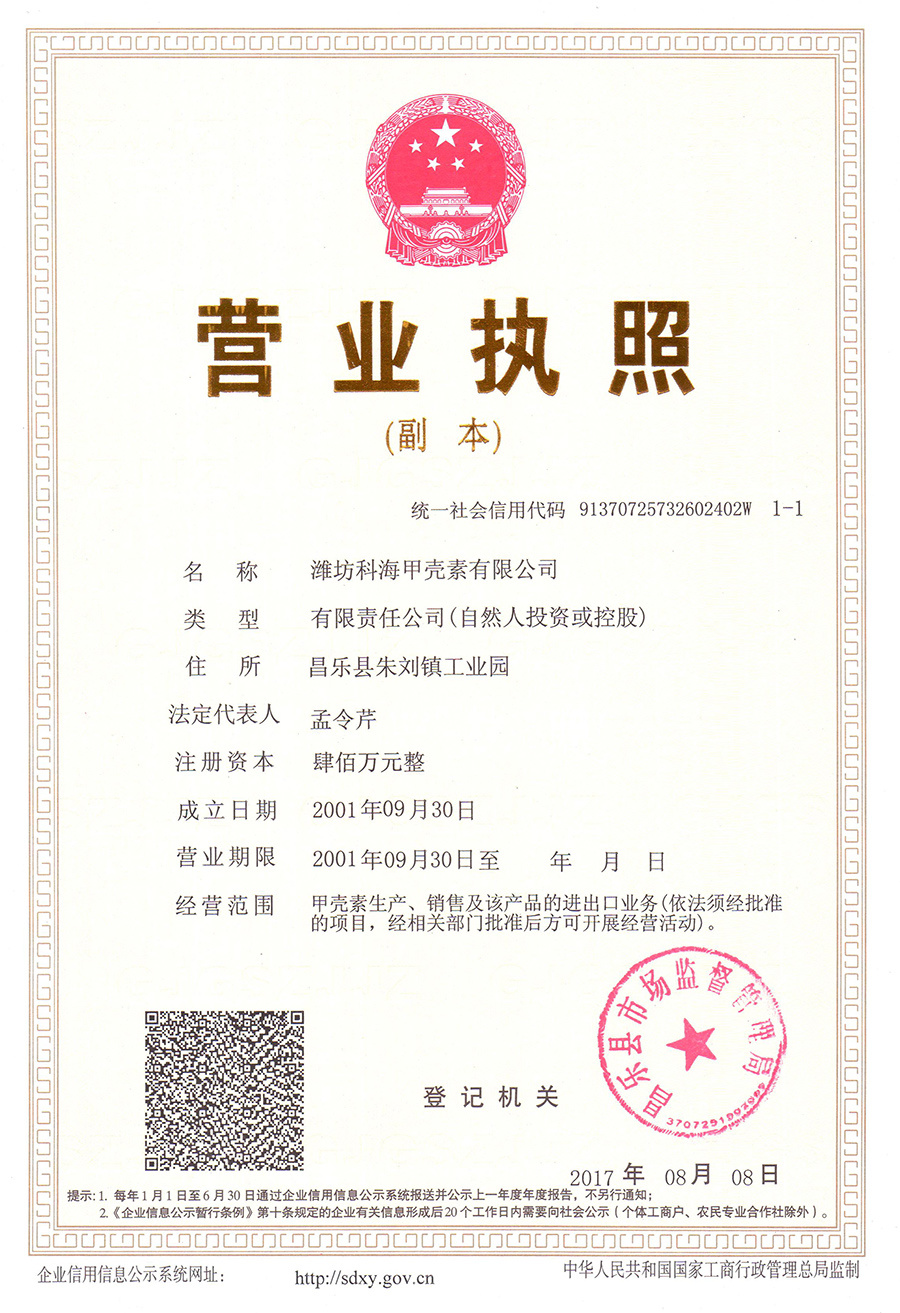
Weifang Kehai Chitosan Co., Ltd
Address: Zhuliu Industrial Park, Changle County, Weifang City, Shandong Province, China
General Manager: Ms Meng Ya
Mr. Meng: 86 13806497089
Ms Meng: 86 15563902222
Mr. Lee: 86 13011668883
Mail:kevinhbr888@gmail.com
General Manager: Ms Meng Ya
Mr. Meng: 86 13806497089
Ms Meng: 86 15563902222
Mr. Lee: 86 13011668883
Mail:kevinhbr888@gmail.com

QR CODE
MESSAGE