

Release time:
**Introduction**
In the ever-evolving landscape of the food industry, the demand for clean label ingredients is on the rise. Consumers are becoming more conscious of what goes into their food, seeking products that are free from artificial additives and preservatives. This shift in consumer preferences has led to a growing interest in natural alternatives, such as industrial grade chitin, as a food additive.
**What is Industrial Grade Chitin?**
Industrial grade chitin is a biopolymer that is derived from the exoskeletons of shellfish, such as shrimp and crab. It is a natural, renewable resource that has a wide range of applications across various industries, including food and pharmaceuticals. Chitin is known for its biodegradability, biocompatibility, and non-toxicity, making it an attractive option for manufacturers looking to enhance the quality and sustainability of their products.
**Benefits of Industrial Grade Chitin in Food Additives**
1. **Improved Texture and Stability**: Industrial grade chitin can be used as a thickening agent in food products, providing a smooth and creamy texture. It also helps improve the stability of emulsions and suspensions, extending the shelf life of products.
2. **Enhanced Nutritional Profile**: Chitin is a source of dietary fiber, which can help support digestive health and promote satiety. It can also be used to fortify products with essential nutrients, such as calcium and magnesium.
3. **Natural Preservative**: Chitin exhibits antimicrobial properties, making it an effective natural preservative in food products. It can help inhibit the growth of harmful bacteria and fungi, reducing the need for synthetic preservatives.
4. **Allergen-Free**: Industrial grade chitin is hypoallergenic, making it a safe alternative for individuals with food allergies or sensitivities. It is also free from gluten, dairy, and other common allergens.
**Applications of Industrial Grade Chitin in Food Additives**
1. **Bakery Products**: Chitin can be used as a dough conditioner in bakery products, improving the texture, volume, and shelf life of bread and pastries.
2. **Beverages**: Chitin can be added to beverages to enhance their mouthfeel and stability. It can also be used as a clarifying agent to remove impurities and improve clarity.
3. **Meat and Seafood**: Chitin can be used as a coating for meat and seafood products to extend their shelf life and reduce microbial contamination. It can also help retain moisture and enhance flavor.
4. **Dairy and Plant-Based Alternatives**: Chitin can be used in dairy products and plant-based alternatives as a stabilizer and thickening agent. It can improve the texture and mouthfeel of products like yogurt, cheese, and milk substitutes.
**FAQs**
1. **Is industrial grade chitin safe for consumption?**
- Yes, industrial grade chitin is considered safe for consumption and has been approved for use in food products by regulatory authorities.
2. **Does chitin have any taste or odor?**
- Chitin is tasteless and odorless, making it an ideal ingredient for enhancing food products without altering their flavor.
3. **Can chitin be used in organic food products?**
- Yes, industrial grade chitin can be used in organic food products as it is a natural, plant-based ingredient.
4. **Is chitin suitable for vegan and vegetarian diets?**
- While chitin is derived from shellfish, there are vegan-friendly sources of chitin available, such as fungal sources.
5. **Are there any potential allergens in industrial grade chitin?**
- Industrial grade chitin is hypoallergenic and does not contain common allergens, making it safe for individuals with food sensitivities.
**Conclusion**
Industrial grade chitin offers a unique set of benefits and applications as a food additive, providing manufacturers with a natural and sustainable solution to meet consumer demand for clean label ingredients. Its versatility, safety, and functionality make it an attractive option for enhancing the quality and nutritional profile of a wide range of food products. By exploring the potential of industrial grade chitin in food additives, manufacturers can innovate and differentiate their products in an increasingly competitive market.
In the ever-evolving landscape of the food industry, the demand for clean label ingredients is on the rise. Consumers are becoming more conscious of what goes into their food, seeking products that are free from artificial additives and preservatives. This shift in consumer preferences has led to a growing interest in natural alternatives, such as industrial grade chitin, as a food additive.
**What is Industrial Grade Chitin?**
Industrial grade chitin is a biopolymer that is derived from the exoskeletons of shellfish, such as shrimp and crab. It is a natural, renewable resource that has a wide range of applications across various industries, including food and pharmaceuticals. Chitin is known for its biodegradability, biocompatibility, and non-toxicity, making it an attractive option for manufacturers looking to enhance the quality and sustainability of their products.
**Benefits of Industrial Grade Chitin in Food Additives**
1. **Improved Texture and Stability**: Industrial grade chitin can be used as a thickening agent in food products, providing a smooth and creamy texture. It also helps improve the stability of emulsions and suspensions, extending the shelf life of products.
2. **Enhanced Nutritional Profile**: Chitin is a source of dietary fiber, which can help support digestive health and promote satiety. It can also be used to fortify products with essential nutrients, such as calcium and magnesium.
3. **Natural Preservative**: Chitin exhibits antimicrobial properties, making it an effective natural preservative in food products. It can help inhibit the growth of harmful bacteria and fungi, reducing the need for synthetic preservatives.
4. **Allergen-Free**: Industrial grade chitin is hypoallergenic, making it a safe alternative for individuals with food allergies or sensitivities. It is also free from gluten, dairy, and other common allergens.
**Applications of Industrial Grade Chitin in Food Additives**
1. **Bakery Products**: Chitin can be used as a dough conditioner in bakery products, improving the texture, volume, and shelf life of bread and pastries.
2. **Beverages**: Chitin can be added to beverages to enhance their mouthfeel and stability. It can also be used as a clarifying agent to remove impurities and improve clarity.
3. **Meat and Seafood**: Chitin can be used as a coating for meat and seafood products to extend their shelf life and reduce microbial contamination. It can also help retain moisture and enhance flavor.
4. **Dairy and Plant-Based Alternatives**: Chitin can be used in dairy products and plant-based alternatives as a stabilizer and thickening agent. It can improve the texture and mouthfeel of products like yogurt, cheese, and milk substitutes.
**FAQs**
1. **Is industrial grade chitin safe for consumption?**
- Yes, industrial grade chitin is considered safe for consumption and has been approved for use in food products by regulatory authorities.
2. **Does chitin have any taste or odor?**
- Chitin is tasteless and odorless, making it an ideal ingredient for enhancing food products without altering their flavor.
3. **Can chitin be used in organic food products?**
- Yes, industrial grade chitin can be used in organic food products as it is a natural, plant-based ingredient.
4. **Is chitin suitable for vegan and vegetarian diets?**
- While chitin is derived from shellfish, there are vegan-friendly sources of chitin available, such as fungal sources.
5. **Are there any potential allergens in industrial grade chitin?**
- Industrial grade chitin is hypoallergenic and does not contain common allergens, making it safe for individuals with food sensitivities.
**Conclusion**
Industrial grade chitin offers a unique set of benefits and applications as a food additive, providing manufacturers with a natural and sustainable solution to meet consumer demand for clean label ingredients. Its versatility, safety, and functionality make it an attractive option for enhancing the quality and nutritional profile of a wide range of food products. By exploring the potential of industrial grade chitin in food additives, manufacturers can innovate and differentiate their products in an increasingly competitive market.
Related
CONTACT US
language
English
العربية
বাংলাদেশ
Български
Hrvatski
Česky
Dansk
Nederland
 Esperanto
Slovenski
Filipino
Suomi
Français
Maori
 Shqiptare
Georgian
 Euskara
Deutsch
Ελλάδα
ישראל
इंडिया
Magyarország
Ísland
Indonesia
Irlanda
Italia
日本語
Sovensko
Հայաստան
한국
Kyrgyz
ປະເທດລາວ
 Zulu
Zulu
Latvian
Lithuanian
Luxembourgish
 Latinus
Macedonian
Малайская
Maltese
Монгол улс
 Cymraeg
ဗမာ
 தமிழ்
தமிழ்
नेपाल
Norge
ایران
Polska
Portugal
România
Российская
Србија
 Slovak
Србија
 Slovak
Bosanski
Slovenian
Беларус
España
Sverige
Точик
ประเทศไทย
Türk
Azərbaycan
Uzbek
 Afrikaans
Việt Nam
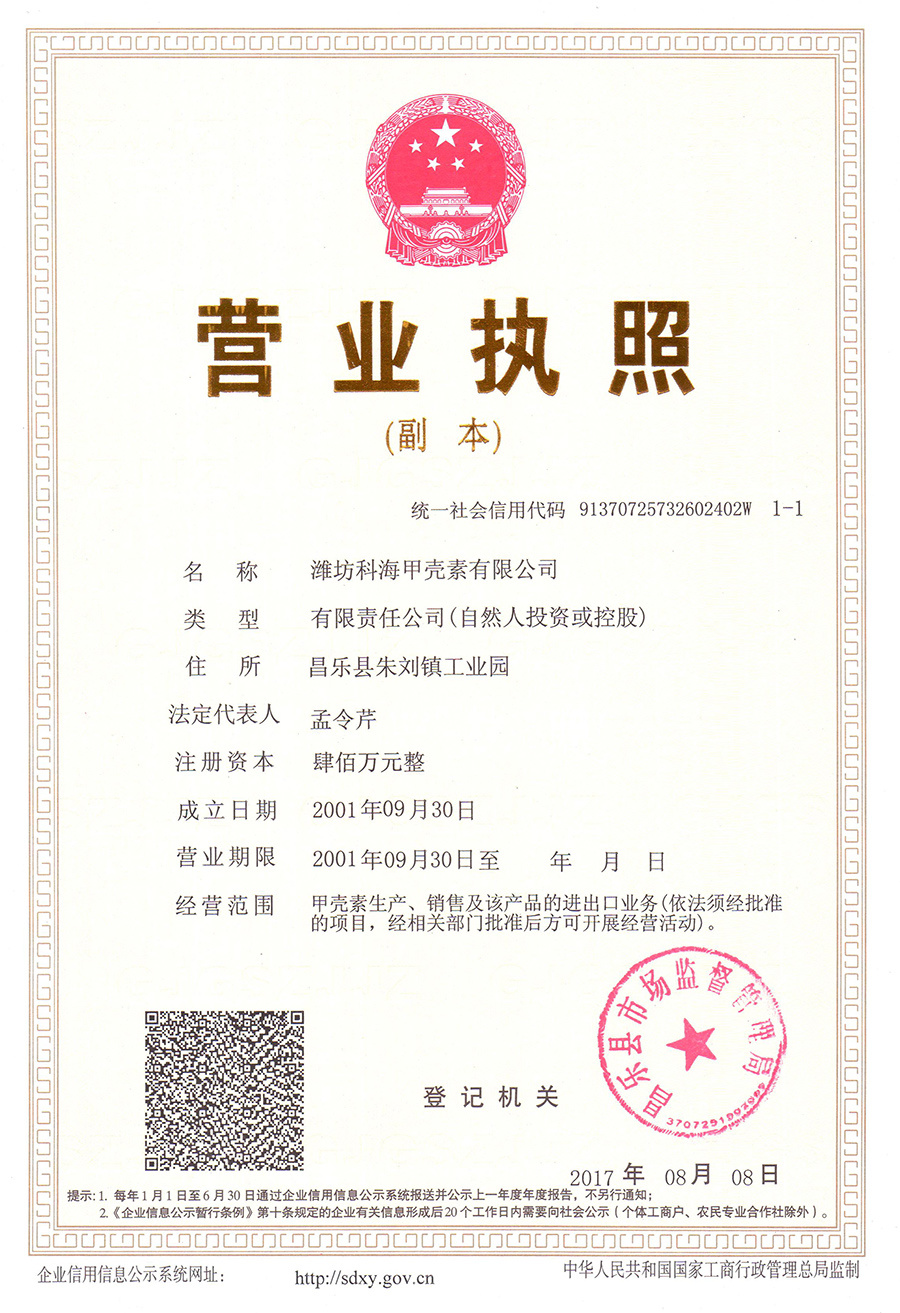
Weifang Kehai Chitosan Co., Ltd
Address: Zhuliu Industrial Park, Changle County, Weifang City, Shandong Province, China
General Manager: Ms Meng Ya
Mr. Meng: 86 13806497089
Ms Meng: 86 15563902222
Mr. Lee: 86 13011668883
Mail:kevinhbr888@gmail.com
General Manager: Ms Meng Ya
Mr. Meng: 86 13806497089
Ms Meng: 86 15563902222
Mr. Lee: 86 13011668883
Mail:kevinhbr888@gmail.com

QR CODE
MESSAGE