

Release time:
Unlocking the Potential: Food Grade Chitin and Agricultural Innovation
Table of Contents
- 1. Introduction to Food Grade Chitin
- 2. What is Food Grade Chitin?
- 3. Key Benefits of Food Grade Chitin
- 4. Applications of Food Grade Chitin in Agriculture
- 5. Chitin and Sustainable Farming Practices
- 6. The Future of Food Grade Chitin in Agriculture
- 7. Frequently Asked Questions
- 8. Conclusion
1. Introduction to Food Grade Chitin
The world of agriculture is ever-evolving, with innovations continuously steering the industry toward sustainable practices. Among these advancements, **food-grade chitin** has emerged as a game-changer, offering numerous benefits for crop enhancement and sustainability. This article delves into the potential of food-grade chitin, exploring its properties, applications, and future prospects in agricultural innovation.
2. What is Food Grade Chitin?
Chitin, a natural polymer found in the exoskeletons of crustaceans, insects, and fungi, is the second most abundant biopolymer in nature. When processed for food applications, chitin can be transformed into **chitosan**, a more soluble form. This conversion unlocks its potential as a versatile additive in agriculture.
Food-grade chitin is recognized for its **biocompatibility**, **biodegradability**, and **non-toxic** properties, making it an ideal candidate for use in soil enhancement, pest control, and more. Its sustainable nature aligns well with the increasing demand for eco-friendly agricultural solutions.
3. Key Benefits of Food Grade Chitin
The incorporation of food-grade chitin into agricultural practices brings forth several advantages:
3.1 Enhancing Soil Health
Food-grade chitin contributes to improving soil health by promoting microbial activity. It serves as a food source for beneficial soil microorganisms, leading to healthier soil ecosystems. Enhanced microbial diversity aids in nutrient cycling and improves soil structure.
3.2 Pest and Disease Management
Chitin exhibits antimicrobial properties, which can help manage pests and diseases in crops. By applying chitin-based products, farmers can reduce their reliance on synthetic pesticides, promoting a more sustainable approach to pest management.
3.3 Nutrient Release and Absorption
Chitin facilitates the slow release of nutrients, ensuring continuous availability for plant uptake. This slow-release mechanism reduces nutrient leaching, making fertilizers more effective and promoting sustainable nutrient management.
3.4 Biodegradable Alternatives
As the agricultural sector strives to minimize plastic usage, food-grade chitin presents a biodegradable alternative for various applications, including biodegradable film and plant pots. This shift can significantly reduce agricultural waste and promote environmental sustainability.
4. Applications of Food Grade Chitin in Agriculture
Food-grade chitin has found numerous applications across the agricultural spectrum:
4.1 Fertilizers and Soil Amendments
Chitin can be utilized as an organic fertilizer or soil amendment, enhancing nutrient availability and microbial activity in the soil. Application methods include mixing chitin directly into the soil or using it in formulations of compost.
4.2 Biopesticides
The antimicrobial properties of chitin make it an effective ingredient in biopesticide formulations. By inhibiting the growth of harmful pathogens and pests, it helps maintain crop health while minimizing chemical inputs.
4.3 Seed Coatings
Chitin can be used to formulate seed coatings, enhancing germination rates and seedling vigor. This application not only improves crop establishment but also promotes early plant development.
4.4 Controlled Release Systems
Food-grade chitin can be employed in controlled-release systems for fertilizers and pesticides. By encapsulating nutrients or active ingredients in chitin-based matrices, farmers can achieve more precise application and reduce environmental impact.
5. Chitin and Sustainable Farming Practices
The integration of food-grade chitin into farming practices aligns perfectly with sustainable agriculture principles. Its multifaceted benefits contribute to:
5.1 Reduced Chemical Inputs
By utilizing chitin-based products, farmers can reduce their dependence on chemical fertilizers and pesticides. This transition not only lowers production costs but also mitigates environmental pollution.
5.2 Improved Crop Resilience
Chitin enhances soil health and plant vigor, leading to improved crop resilience against abiotic and biotic stressors. Healthier plants are better positioned to withstand drought, pests, and diseases.
5.3 Circular Economy in Agriculture
As a biodegradable product, food-grade chitin supports the circular economy concept in agriculture. Utilizing waste materials from the seafood industry to produce chitin reduces waste and promotes resource efficiency.
6. The Future of Food Grade Chitin in Agriculture
The future of food-grade chitin in agriculture looks promising, with ongoing research and development paving the way for new applications. As consumer demand for organic and sustainable products rises, the agricultural sector is likely to adopt chitin-based solutions more widely.
Innovative formulations and delivery methods are expected to enhance the effectiveness of chitin in various agricultural practices. Moreover, collaborations between academia and industry will drive further advancements, ensuring that food-grade chitin becomes a staple in sustainable agriculture.
7. Frequently Asked Questions
7.1 What is the source of food-grade chitin?
Food-grade chitin is primarily sourced from the exoskeletons of crustaceans such as shrimp and crabs, as well as from fungal cell walls.
7.2 Is food-grade chitin safe for crops and humans?
Yes, food-grade chitin is non-toxic and biodegradable, making it safe for use in agricultural applications.
7.3 How does chitin improve soil health?
Chitin enhances soil health by promoting microbial activity and diversity, which aids in nutrient cycling and soil structure improvement.
7.4 Can chitin replace chemical fertilizers?
While chitin can enhance nutrient availability, it is typically used as a supplement to chemical fertilizers, promoting a more sustainable nutrient management approach.
7.5 What are the environmental benefits of using chitin in agriculture?
Using food-grade chitin reduces chemical inputs, improves crop resilience, and supports a circular economy by utilizing waste materials.
8. Conclusion
In conclusion, food-grade chitin holds significant potential for transforming agricultural practices toward sustainability. Its multifunctional properties offer a myriad of benefits, from enhancing soil health to improving pest management and promoting eco-friendly alternatives. As we unlock the potential of food-grade chitin, we pave the way for a more sustainable and innovative agricultural landscape, ensuring a healthier future for both crops and consumers. Embracing this natural biopolymer will undoubtedly lead to advancements in agricultural practices that align with the global push for sustainability and environmental stewardship.
Related
CONTACT US
language
English
العربية
বাংলাদেশ
Български
Hrvatski
Česky
Dansk
Nederland
 Esperanto
Slovenski
Filipino
Suomi
Français
Maori
 Shqiptare
Georgian
 Euskara
Deutsch
Ελλάδα
ישראל
इंडिया
Magyarország
Ísland
Indonesia
Irlanda
Italia
日本語
Sovensko
Հայաստան
한국
Kyrgyz
ປະເທດລາວ
 Zulu
Zulu
Latvian
Lithuanian
Luxembourgish
 Latinus
Macedonian
Малайская
Maltese
Монгол улс
 Cymraeg
ဗမာ
 தமிழ்
தமிழ்
नेपाल
Norge
ایران
Polska
Portugal
România
Российская
Србија
 Slovak
Србија
 Slovak
Bosanski
Slovenian
Беларус
España
Sverige
Точик
ประเทศไทย
Türk
Azərbaycan
Uzbek
 Afrikaans
Việt Nam
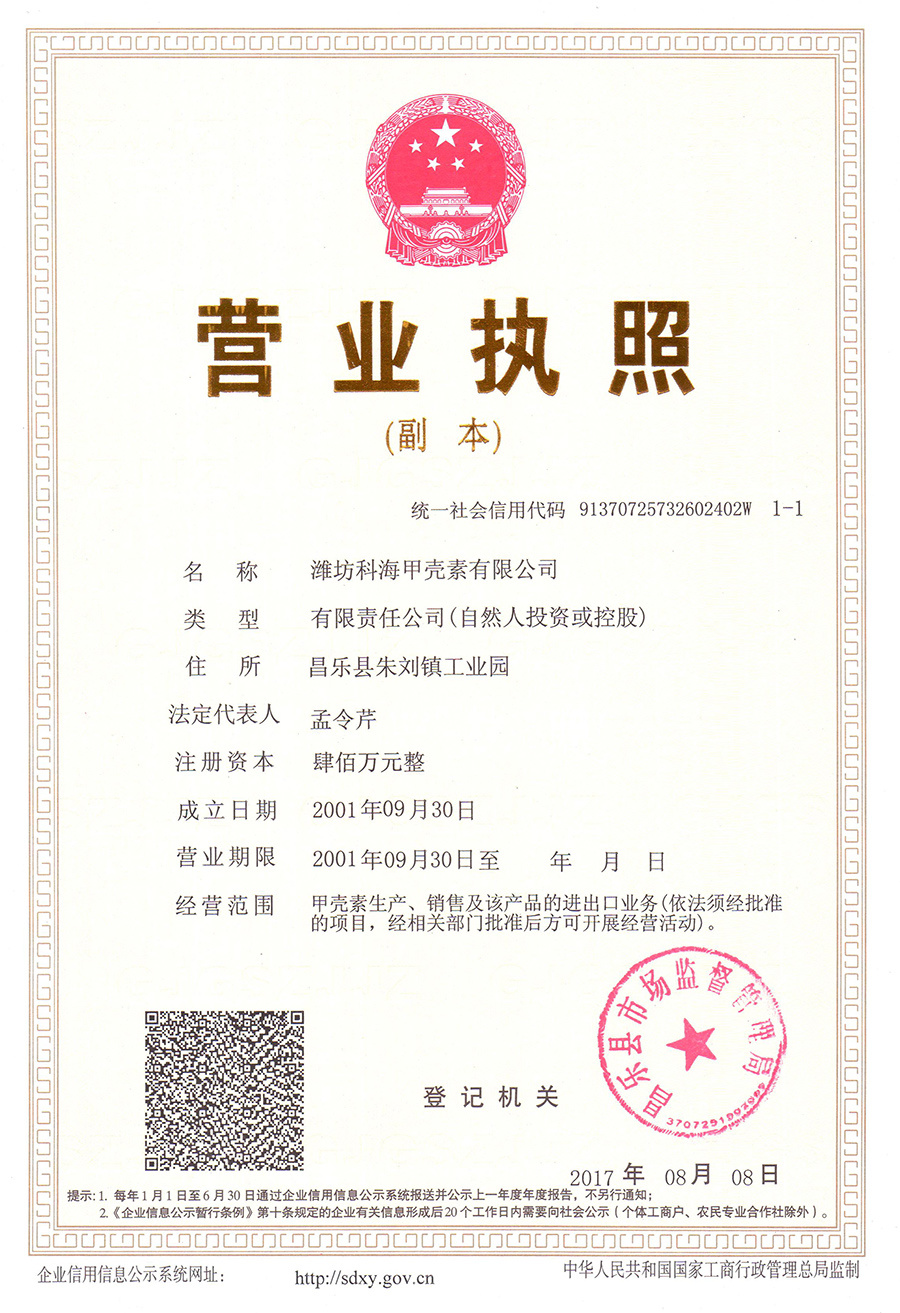
Weifang Kehai Chitosan Co., Ltd
Address: Zhuliu Industrial Park, Changle County, Weifang City, Shandong Province, China
General Manager: Ms Meng Ya
Mr. Meng: 86 13806497089
Ms Meng: 86 15563902222
Mr. Lee: 86 13011668883
Mail:kevinhbr888@gmail.com
General Manager: Ms Meng Ya
Mr. Meng: 86 13806497089
Ms Meng: 86 15563902222
Mr. Lee: 86 13011668883
Mail:kevinhbr888@gmail.com

QR CODE
MESSAGE